Looking for the next tech titan


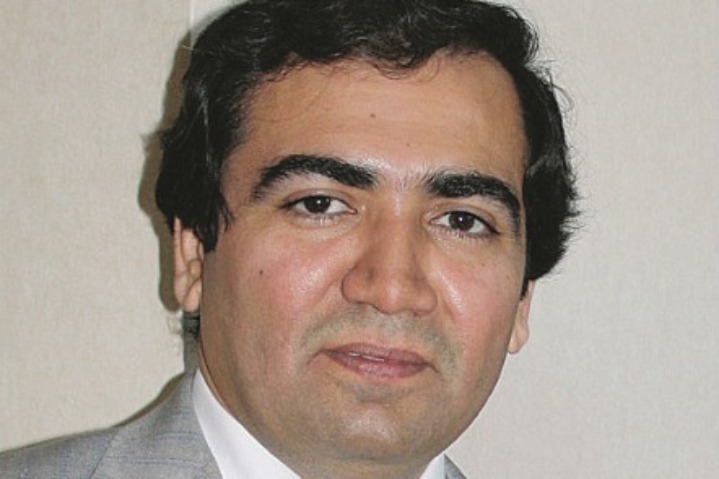
| Stephen Bell says he enjoys creating companies more than working for one and turns his attention to angel investing and venture capitalism. Zhang Tao / China Daily |

BEIJING - In front of a crowd of computer engineering students, Stephen Bell preaches the values of entrepreneurship in hopes to inspire and find the next great tech icon of the world.
He isn't doing it at Stanford, Massachusetts Institute of Technology(MIT) or Harvard. Instead, Bell, 48, a venture capitalist from the United States, has taken his message and search to China.
Wearing khakis and sneakers and sporting a shaved head and rimmed glasses, Bell doesn't look at all like a high-powered technology investor; he looks more like a college professor.
Originally from Austin, Texas, Bell graduated from Georgia Tech with a degree in biochemistry. He decided to start a company when his first job out of college became routine.
"I was at GE plastics first, but I wanted to be an entrepreneur. And I should've done it right away, but I wasted time at a big company," Bell said. "I learned some things there, but I should've done it earlier."
After leaving GE, Bell started Core Products GmbH, a company that supplies the automotive industry with parts and equipment. Soon after, Bell realized that he needed a more efficient way to link automotive companies to part suppliers, so he sold GmbH and created a new company, Supply Solutions Inc.
Using the Internet as the basis for Supply Solutions' management operations, Bell developed an interest in technology. Nearly three years later, he sold the company and moved to California to learn more about the high-tech world.
"After my second start, I went to this big Internet company called Trilogy, which was heavily involved with consumer Internet," Bell said. "I learned a lot about technology and marketing those kinds of things."
Using his newfound skills, Bell founded his third startup, Shangby, an online video retail store. Consumers could log on to the Internet and shop in a Shanghai store using a webcam.
Despite his efforts, Shangby fizzled out two years later.
Realizing that he enjoyed creating companies more than working for one, Bell turned his attention to angel investing and venture capitalism.
Seeing a void in Chinese tech startup companies, particularly those created by students, Bell co-founded TrilogyVC, a venture fund that attempts to spur entrepreneurship among Chinese students.
His brother is in the same line of work in the United States.
"He's got 100 times the competition and has to spend seven times more money, and the US will become a smaller market than China in 10 years. So I'm investing in a bigger market with 100 times less competition at a price that's seven times cheaper."
Bell visits schools with computer engineering programs, such as Tsinghua University and Peking University.
He recounted a recent event where Lee Kai-fu, founder of the venture capital fund Innovation Works, was speaking.
Lee told Chinese students they should wait three years before starting their own businesses. One student asked why students in the US start earlier. Lee said it was "because students at Stanford and MIT are different, and that's why Apple, Google, and Microsoft can come from the US", a statement Bell disagrees with.
"I am 100 percent positive that he is wrong, and I invest my money where my mouth is," Bell said. "It's not about comparing Chinese society to US society. It just takes one guy to create the next Google, Microsoft or Apple, one student with passion, a dream and idea. It takes one.
"So I will invest in 120 startups within the next year and I just need one to be like that."
At a recent gathering at Tsinghua University, Bell told this tale and his own experiences of running a business in a lecture hall filled with more than 70 undergraduates. He gave examples of what kinds of companies he wants to invest in.
Living in China is not an excuse for not developing a good product, he said.
"If it's a great product, part of being great means it's going to do good things for people and society. And China's pro doing good things for people and society."
After a quick round of questions from students, Bell's event begins. One by one, students have one minute to pitch their ideas in front of their peers. Bell gives the student with the best idea 3,000 yuan ($462).
The prize was awarded to Xu Di, 22, a student at Tsinghua University. His idea is an automated medical alert system for people with disabilities and the elderly. Xu has met Bell at a previous lecture and was very happy to be able to make his pitch.
"Unfortunately I'm graduating this year. It was a great experience for me to have met Stephen and to take part in the program. He has given each of us lessons that will help us in the future, and a chance to chase our dreams."
Tang Tao, 20, Wang Baokang, 20, and Zhao Tao, 21, three juniors at Tsinghua, were amazed by both Bell's lecture and the spirit of entrepreneurship among their peers. They did not compete in the contest, but haven't ruled out participating in the future.
"This event has got us thinking," Tang said. "We all have another year left and they do at least two of these a semester. I think it's very possible that we will enter ourselves in the future."
Bell's rounds at Chinese universities have yielded good results. Since he started about a year and a half ago, 12 startups in his investment portfolio are student-led companies, such as social sharing service JiaThis and photo editing service Tucia.com.
While Bell doesn't talk much about the money-making aspects of entrepreneurship, he said Trilogy ventures stands to make a profit should one of his companies succeed in becoming the next great tech titan. Even with the multiple prospects of profits, Bell maintains that the focus is for companies and Chinese students to take risks and make great products.
"I don't care about the public markets; I don't care about Nasdaq; I don't care. It's got nothing to do with my world, because we're so far away from that when we invest," Bell said. "It's just about building great products. Is this team going to create the next Apple, Microsoft, Google? That's what I'm betting on."
China Daily