Thinking outside the cube


|
|
In 1956, Pablo Picasso swapped paintings with Chinese artist Zhang Daqian in Picasso's house in Antibes, France.
Picasso gave Zhang five collections of nearly 600 works, all of which were his imitations of Chinese paintings.
He asked Zhang to teach him how to draw Chinese bamboo that afternoon. The two became friends and exchanged letters after Zhang returned to China. Nearly 60 years later, the two late masters meet again - though not in person.
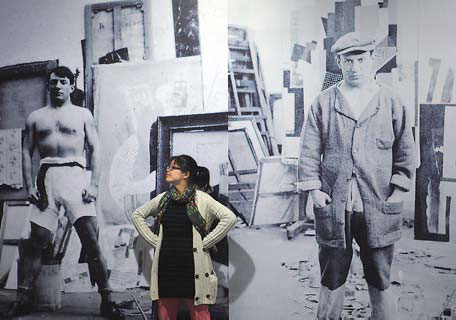
Picasso: Masterpieces from the Musee National Picasso Paris, one of the best exhibitions in Sichuan province's capital Chengdu, runs until May 1 at the Chengdu Contemporary Art Museum. It showcases 62 paintings, sculptures and drawings by Picasso alongside Zhang's ink masterpieces.
"Zhang visited Picasso's hometown in 1956, and now Picasso's works are visiting Zhang's hometown," curator Cui Bo says.
"This is the largest-ever exhibition of Picasso's artworks in China. We want to give Chinese viewers insight into the world of this talented and legendary artist. We also hope they can learn about the friendship between Picasso and Zhang."
Widely hailed as the most potent single force in 20th-century art, Picasso created nearly 40,000 works during a career that spanned more than 70 years, until his 1973 death. The exhibition covers Picasso's different periods, including his Expressionist, Cubist, Neoclassical and Surreal periods.
"It's a rare opportunity for Chengdu's art lovers," 31-year-old middle school art teacher Zhu Changjuan says on her second visit.
"It's immensely accessible, thrilling and highly revealing."
She says she tried to replicate the artist's works in university, including Paul as Pierrot, Portrait of Dora Maar and The Embrace. Those pieces showcase major influences in Picasso's creative process - namely, his affection for his lovers and children.
The show also explodes some widely held assumptions. One is that Picasso changed styles whenever he changed lovers and that those styles correspond to the women's personalities. But Picasso never truly threw out one style for another.
The end of the exhibition shows a photo of Zhang and Picasso, and a painting by Central Academy of Fine Arts professor Bi Jianxun entitled East Zhang and West Picasso. It's a spoof on one of Picasso's works, Two Women Running On the Beach - aka The Race - in which Zhang and Picasso dash along sandy shores.
The exhibition will visit Hong Kong next.