Designing ethics


More awards are being given to masterminds who use natural fabrics and more sustainable methodologies, Xu Junqian reports in Hong Kong.
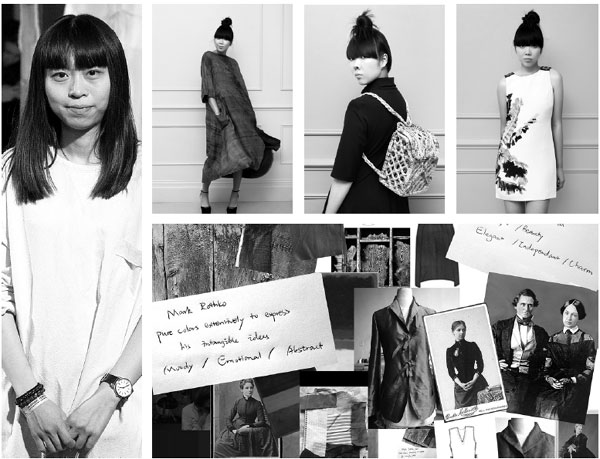
The dress dyed in yam juice is Chinese designer Su Renli's statement of cool comfort. She drew inspiration from the country's ancient craftsmen while stitching the chocolate-brown piece. To organizers of the YES fashion awards for environmental protection, any "eco-conscious designer" is good news.
After all, the fashion industry is a top global polluter. It is also a big consumer of resources. It is estimated by World Wildlife Fund that to produce 1 kilogram of cotton, sufficient for the making of a T-shirt or part of a pair of jeans, as many as 20,000 liters of water may be needed. And the popularity of such clothing has fueled unsustainable consumerism.
The environmental and social problems arising from the fashion industry can be blamed on a key reason - cheap fashion is "too cheap" while most of the luxury fashion companies "are not being responsible" either, says Orsola de Castro, founder of Estethica, a part of London Fashion Week that has promoted sustainable fashion since 2006.
This year, Estethica is partnering with online luxury retailer Yoox.com to launch fashion awards aimed at supporting and promoting designers in Asia who are committed to social and environmental responsibilities without compromising their signature styles.
"For all these years, we have been talking about the rising power of Asia's fashion and luxury industry from a retail point of view. I think it's time to look squarely at the power of creativity here," De Castro said prior to the event's launch in Hong Kong.
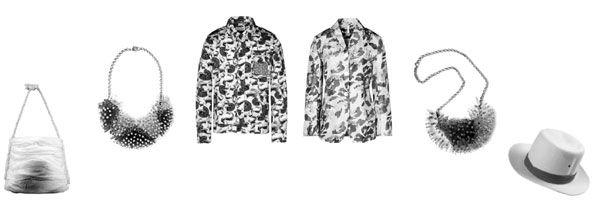
A shortlist of six emerging designers from Asia was made from hundreds of candidates to compete for the final Yoox Estethica Sustainability awards that were announced in November.
The winners were Kain Picken and Fiona Lau, founders of the Hong Kong-based FFIXXED Studio.
The other nominees were: Su, who started her eponymous brand, Renli Su, in London in 2013; Thuy Duong Nguyen, who is behind Vietnamese brand Thu Thu; Ken Samudio from the Philippines; South Korean brand ReCode; and Japanese designer Suzuki Takayuki.
Despite their different styles and backgrounds, all six candidates showed commitment to "ethical" designing and production processes-from the use of materials like natural fabrics that are not petroleum-based or treated with chemicals for softening and coloring to workplace conditions such as not using child labor, according to the awards committee.
In Su's case, her promotion and persistent use of organic fabrics and traditional handicrafts set a fine Chinese example of ethical fashion, according to the panel of judges.
"We are not asking people not to buy, but to buy better," says De Castro.
Other than De Castro, the panel included Luca Martines, president of Yoox.com, and Susanna Lau, commonly known as Susie Bubble, who, with 238,000 followers on Instagram, is among the world's leading fashion bloggers.
The winning duo will be offered both business support and international mentorship, aside from the prize's monetary component. The works of all six designers created exclusively for the awards, will be put for sale on Yoox's website for a limited time.
"It's all about building awareness, from designers and retailers to consumers. As a consumer, essentially, you cannot ignore how what you wear is made," Lau says.
"It (eco-friendly fashion) is still at an infant stage. In retrospect, the industry, since evolving from the age of haute couture to the widely accessible ready-to-wear, hasn't had any big revolutions in the past few decades. It might be a force to push fashion forward," says the fashion guru with a signature top-knot hairstyle.
But De Castro, who is credited with raising the profile of eco-friendly design in the United Kingdom, says style is being married to sustainability both in Europe and Asia.
"One of the challenges for eco-fashion is that it has to be more fashionable than fashion, so that people are going to love it even more-not only because it causes little trouble to the world but is actually beautiful," she says.
Chinese designers could do well in this regard by combining their "very different aesthetics, nurtured by thousands of years of culture" with forward-thinking modernism.
Su, a 28-year-old native of East China's Fujian province, received her master's degree in fashion design and technology for women swear from London College of Fashion, before setting up her own brand. Every year, she spends six months in China, looking for natural fabrics and "disappearing craftsmanship".
She discovered the technique of dyeing fabrics with yam juice near her hometown. The process is believed to date back to the Eastern Jin Dynasty (AD317-420).
The designer's interest in looking at nature and Chinese craftsmanship came from her childhood.
"It's easy to just put a label on a product, calling it eco-friendly. What's challenging is to sustain sustainable fashion," says Su.
Contact the writer at xujunqian@chinadaily.com.cn
|
Clockwise from left: Su Renli is one of the six shortlisted Asian designers of the Yoox Estethica Sustainability awards. Fashion blogger Susie Bubble displays three creations by the YES awardwinning designers. A mood board shows the inspiration for designer Su Renli. Photos Provided To China Daily |
(China Daily USA 01/21/2016 page10)