


Workforce rides AI wave as new roles emerge
Fast-moving technology pushes employees toward more creative, high-value jobs










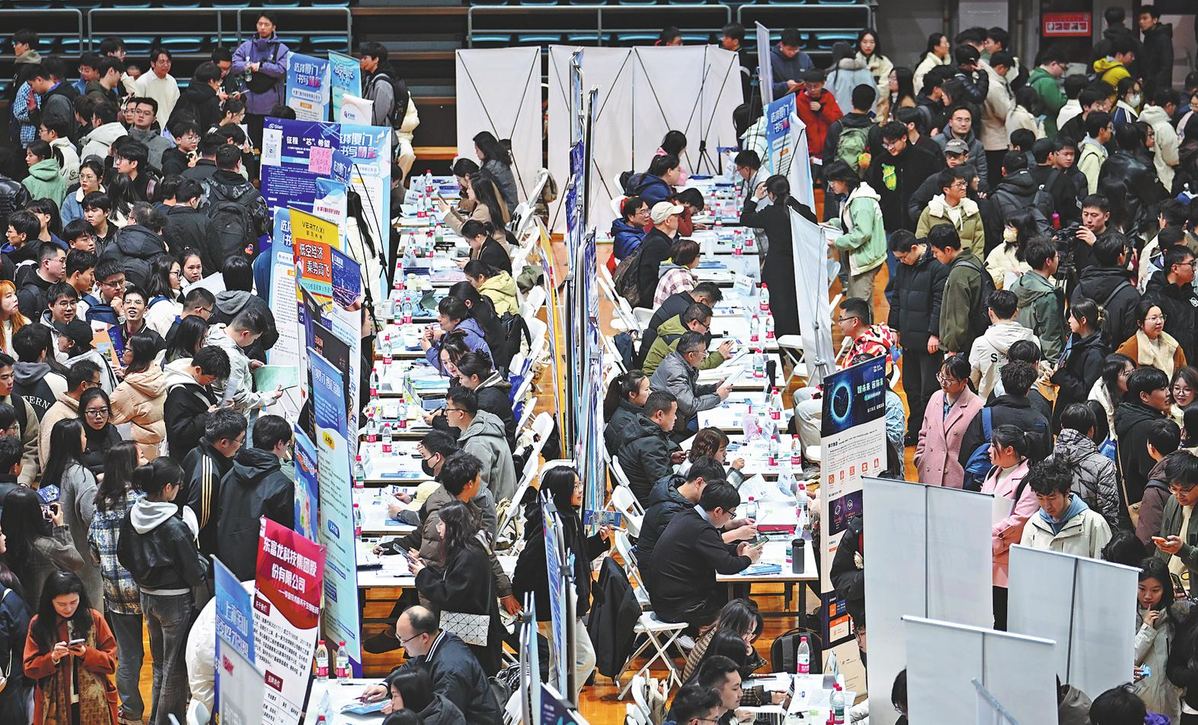
Hua Yilian, a 28-year-old based in Beijing, witnessed the full force of technology's impact on the employment market after securing a job in the AI industry in 2024.
As a business developer at a large model company, she had overseen the launch of an artificial intelligence translation system. But the celebration ended almost instantly. A language expert who had worked beside her day after day to train the system was laid off the moment it went live.
"I understand it will happen that AI will take over many jobs. But it's a shock when you experience it yourself. You see a dedicated and meticulous colleague you've spent every day with suddenly become a victim of the very project they helped to succeed," Hua said.
Her experience reflects the sharp edges of China's shifting AI job market — tremendous opportunity on one side, and the rapid erosion of traditional roles on the other. Many workers are anxious to find their place in the changing job landscape, yet what is emerging holds both promise and uncertainty.
According to a report by consulting firm McKinsey&Company, China will need up to 6 million AI professionals by 2030, but the domestic talent pool is projected to fill only about a third of those roles — leaving a shortfall of roughly 4 million workers.
Data from the Chinese recruitment platform Zhaopin highlights this growing demand. During the first three quarters of 2025, AI job postings on the site rose 3 percent year-on-year, while applicant numbers surged 39 percent.
Globally, the transformation is even more sweeping.
The International Labour Organization warned in May that a quarter of the world's jobs could be affected by generative AI. Meanwhile, the World Economic Forum's Future of Jobs Report 2025 estimates that 22 percent of roles will be reshaped — with 170 million new positions created and 92 million eliminated, resulting in a net gain of 78 million jobs.




