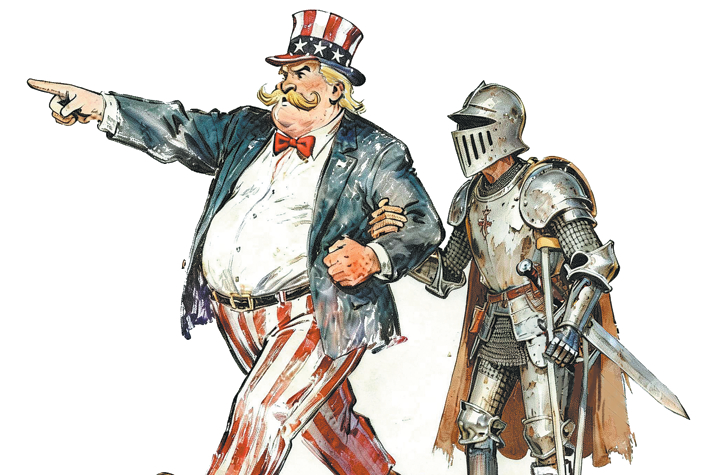
Japan's doublespeak on one-China principle









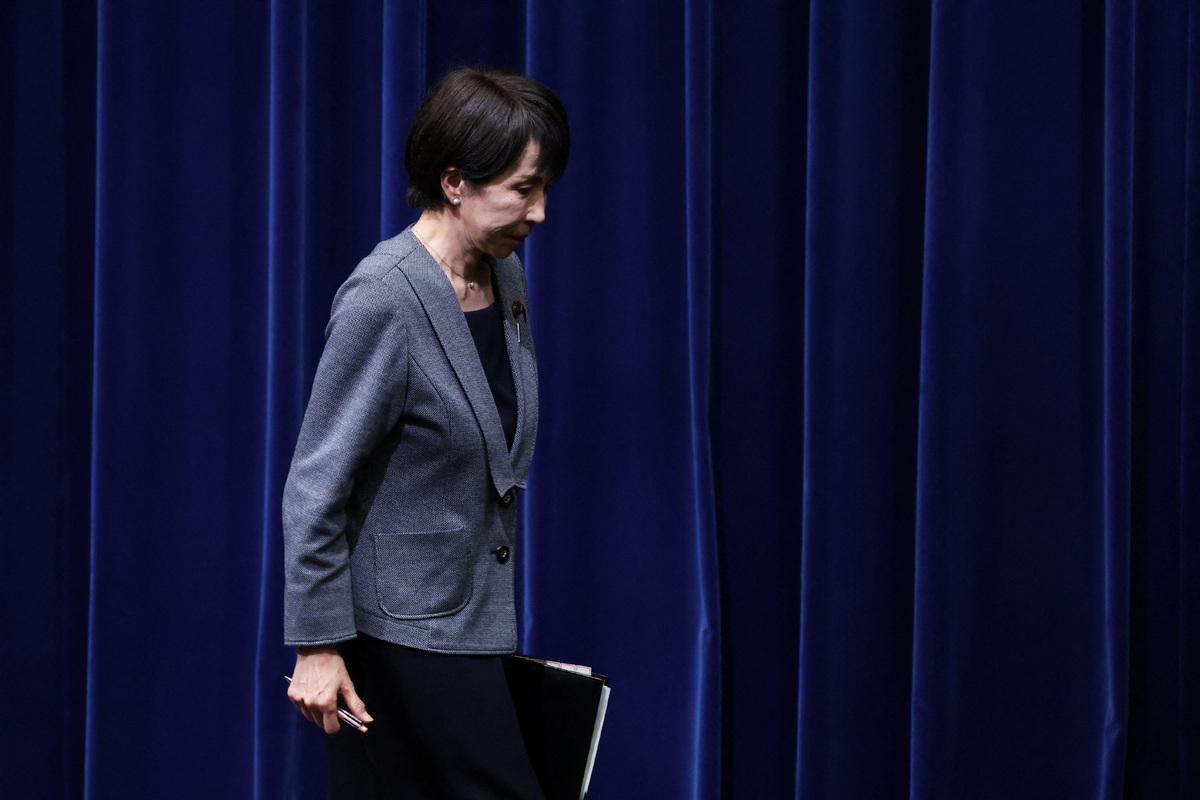
Japanese Prime Minister Sanae Takaichi's recent remarks in the Diet, where she suggested that a so-called "Taiwan contingency" could constitute a "survival-threatening" situation for Japan and justify military intervention, reveals a deeply troubling mindset. By treating the Taiwan island as part of a united front with Japan, her argument not only infringes the one-China principle but also goes against United Nations resolutions on the Taiwan question.
Takaichi later asserted that her statement merely reflected the Japanese government's established position. What is more alarming, however, is that some lawmakers of the ruling Liberal Democratic Party genuinely believe that Takaichi's remarks align with Tokyo's long-held positions and are a continuation of Japan's postwar assertions.
The crux of Takaichi's remarks is her departure from the one-China principle, under which anything occurring across the Taiwan Strait is purely an internal affair of China. If Takaichi acknowledges the one-China principle, she would not make such remarks. China has always advocated for a peaceful reunification, but if Washington and Tokyo were to militarily intervene in the Taiwan question, such actions would constitute aggression and China's response would be legitimate self-defense.
Politicians unwilling to accept this principle often cite the third clause of the 1972 Sino-Japanese Joint Statement, which states: "The Government of the People's Republic of China reiterates that Taiwan is an inalienable part of the territory of the People's Republic of China. The Government of Japan fully understands and respects this stand of the Government of the People's Republic of China, and it firmly maintains its stand under Article 8 of the Potsdam Proclamation."
It is here that ambiguity sets in. In this statement, Japan does not explicitly state that it recognizes Taiwan as part of China's territory, but merely says that it "understands" and "respects" China's position. This wording is ambiguous and leaves room for non-recognition of Taiwan's status as a province of China. Although the Cairo Declaration and the Potsdam Proclamation explicitly stipulate that the territories Japan had stolen from China, including Taiwan, must be returned to China, why did Japan choose such ambiguous wording?
Takakazu Kuriyama, the official in charge of treaties at the Japanese Ministry of Foreign Affairs at the time, retained an explanatory document noting that Japan could not fully recognize China's position on the Taiwan question due to the so-called "Treaty of San Francisco" of 1952. That "treaty" only stipulates Japan's renunciation of all rights on the Taiwan island, without "determining" its status. Therefore, fully accepting China's position on Taiwan in the joint statement would have amounted to a de facto invalidation of the "Treaty of San Francisco".
Beijing regards the San Francisco conference as illegitimate and unjust, a product of Cold War politics that excluded China, the country which suffered the most from imperial fascism. The "treaty" therefore holds no binding force. Tokyo must have been aware of Beijing's stance. Yet, when signing the 1972 Joint Statement, it sought to deliberately elevate the "treaty" to a status of "higher-order international law". It refused to legally recognize Taiwan as part of China, but politically said it had no intention to challenge that position or support "Taiwan independence".
This inconsistency between words and actions intends to cloak its real intentions with wordplay. Japan's real intentions have been clearly stated in the report to the joint meeting of LDP members from both houses of the Diet on Sept 30, 1972, immediately after the signing of the joint statement. Conservative hardliners, including Fujio Masayuki, Michio Watanabe and Ichiro Nakagawa took turns expressing their disappointment with the Sino-Japanese Joint Statement. Even during the Cold War era, this tendency of Japanese politicians was shocking and reflected a lingering colonialist mindset.
Instead of reflecting on the war of aggression, breaking away from colonialism, aiding China's reunification and contributing to world peace, some Japanese politicians have perfected the art of doublespeak. They claim to respect the one-China principle on bilateral or multilateral occasions, but domestically make remarks that reveal their obsession with the Taiwan island. There is no consciousness, given Japan's history as a former aggressor, to exercise caution or to refrain from interfering in other countries' internal affairs.
Some of the conservative politicians, such as Michio Watanabe, remained active until the mid-1990s. Takaichi, who began her parliamentary career in the early 1990s, was among those trying to push for Watanabe to become prime minister. Former finance minister Shoichi Nakagawa, son of Ichiro Nakagawa, was a conservative politician closely associated with former prime minister Shinzo Abe. Despite diplomatic relations between China and Japan, members of the LDP's so-called parliamentarians' association with the Taiwan region continue to visit the island and expand engagement with officials there.
Takaichi's remarks must be viewed against the backdrop of Japan's longstanding postwar political climate, which has sought to keep the Taiwan region within its sphere of influence. Given the consistent tendency of figures such as Takaichi and Abe to glorify pre-World War II Japan and distort history, it is understandable that their statements are regarded by victimized nations as signals of the renewed aggression.
There is a remedy for the brewing crisis. Article 6 of the 1972 Sino-Japanese Joint Statement commits both sides to the Five Principles of Peaceful Coexistence: mutual respect for sovereignty and territorial integrity, mutual nonaggression, noninterference in each other's internal affairs, equality and mutual benefit and peaceful coexistence. These five principles align with the spirit of the United Nations Charter.
Takaichi's words, and the thinking behind them, constitute an open challenge to the postwar international order.
The author is an associate researcher at the School of Humanities, Shanghai Jiao Tong University.
The views don't necessarily represent those of China Daily.
If you have a specific expertise, or would like to share your thought about our stories, then send us your writings at opinion@chinadaily.com.cn, and comment@chinadaily.com.cn.