Family man flies high in aviation sector


However, China boss sees domesticity in work and likes a well-balanced life
Employee loyalty is an important issue for modern enterprises but it is rarely a problem in technology companies.
Even as a senior manager without any technology background, Liping Xie has nonetheless worked for 18 years at United Technologies Corp, the US-based diversified industrial manufacturing enterprise.
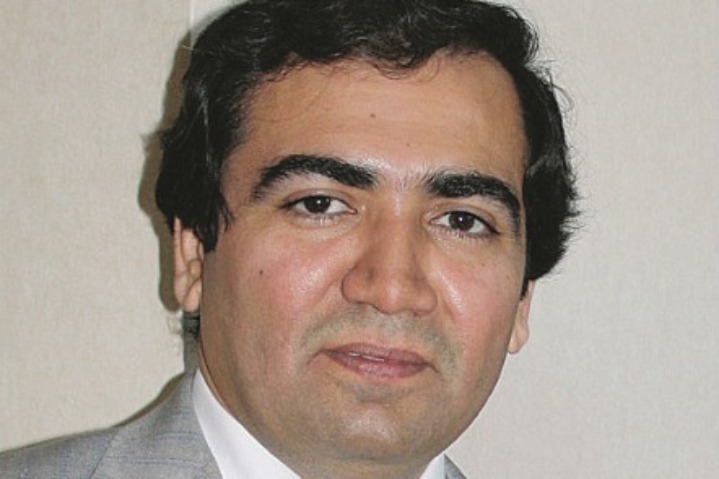
"I never expected that I would work in the company for such a long time," said Xie, who was appointed president of United Technologies Aerospace and Government Relations, China, in 2013.
What is more unexpected is that Xie returned to China 10 years after moving to the United States and has been in his motherland for the past 10 years.
"I kept my house and car in the US initially because my boss at first told me my work in China was short term," said Xie, who has a major in economic management.
He had to work from his apartment when he was sent to Shanghai in 2004 to take over the position of strategy and development director in Asia of Pratt & Whitney, United Technologies' aircraft engine unit.
Now, the aerospace business unit owns 10 joint ventures, while the whole group has 465 locations involving 24 manufacturing facilities and 21,000 employees around China.

"It was an extremely significant decision for me to come back to China," Xie said.
"My personal growth is strongly connected to the country's development and United Technologies' commitment in this growing market."
During the past 10 years, China experienced rapid economic development, with gross domestic product growing from 15.99 trillion yuan ($2.64 trillion) in 2004 to 56.89 trillion yuan in 2013.
United Technologies generated $4 billion sales in China in 2012, accounting for almost 10 percent of the group's global net sales during the year.
The fast development of China's economy gave the Chinese expatriate senior managers more opportunities in international companies.
Xie is not the only Chinese foreigner to take charge of a global top 500 company business in China.
Eric Chen became the first Chinese president of Airbus China in early 2013 and Zhang Jianwei was named as Bombardier China's president as early as 2005.
These Chinese expatriate executives have advantages in their work as regional heads of international companies in China, human resource experts said.
"They understand both Chinese culture and Western thinking at the same time," said Amy Yang, a senior consultant from Antal International, a UK-based human resources consulting firm.
Most of these Chinese expatriate executives received their college education in China and lived for a long time overseas.
Bilingual skills, education background and international experience all give the Chinese foreign senior managers competitive advantages working in China, she said.
Xie, who left China in the early 1990s, said he helps United Technologies - the US company - communicate with its Chinese clients.
"Senior managers such as me are bridges connecting China and the West, because we know both the Chinese clients' minds and Western companies' culture," he said.
However, the long-term overseas residents' lives may also be an obstacle for Chinese foreign executives, who may be unfamiliar with the changes in China in recent years, said Yang.
Xie said he spent some time learning about the state of the nation, including communication methods in China, when he came back in 2004.
"Frankly speaking, I was pessimistic about China before I came back - after all, my knowledge about China was locked in the early 1990s," he said.

After a short learning process, Xie overcame his surprise at China's changes and became familiar with the new way of life, he added.
On the other side, Chinese executives also usually experienced an international company's pioneering days in China, which had a large share of difficulties.
Xie's first big footprint in China was made at the Shanghai Engine Center - a joint venture between United Technologies and China Eastern Airlines Corp Ltd, which opened for business in 2009.
The joint venture provides a maintenance, repair and overhauling service for CFM56 engines for both China and overseas customers in the region.
"We delivered our 300th serviced engine recently," said Xie, who is very proud of the facility's growth.
But the other side of the story is that the project took Xie more than three years to communicate with every side in the joint venture's establishment.
The Yale graduate continues to take charge of the group's aerospace business, including engines, helicopters and systems.
"I can feel the excitement of the aviation industry, although I do not know much about technology," Xie said.
United Technologies provided spacesuits for man's first landing on the moon. Its technologies was also used by the allies during the World War II.
Along with the development of the aviation manufacturing industry, China also became an important part of United Technologies' production chain.
The group's aerospace business has more than 20 suppliers in China and plans to double its purchases to $300 million by 2016, Xie said.
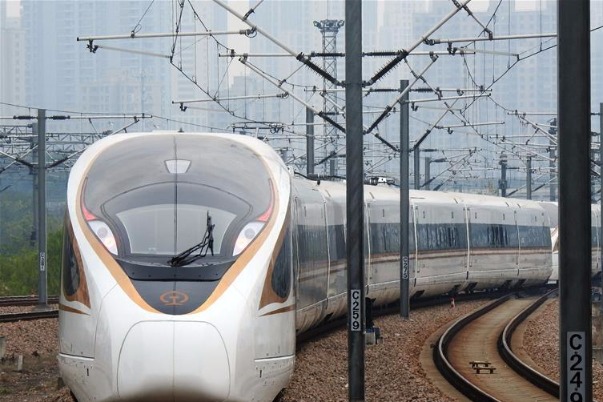
United Technologies is also a supplier for the C919 - China's home-made large passenger aircraft. The company and the developer and maker of the C919, Commercial Aircraft Corp of China Ltd, has already built up a joint venture for the big carrier's power-supply systems.
"I will lead the group in continuing to explore China's aviation industry," Xie said.
But as president of United Technologies government relations in China, a tougher task for Xie's position is to integrate the different brands of the group.
It is not easy to coordinate the powerful business units inside the company, he said.
United Technologies has some well-known product brands, including Pratt & Whitney, Carrier, The Sikorsky Aircraft Corp and The Otis Elevator Co but, outside the industry, few people know the group's name.
Promoting the name of United Technologies is one of the priorities for Xie this year.
"The brand of United Technologies will become better known in China in the future," Xie said.
"I will work with the business leaders on a stronger corporate name and well-deserved recognition in China."
Social responsibility and industrial cooperation projects will be starting points to promote the brand, he added.
United Technologies launched a program in December to donate libraries to primary schools in rural China. It is the first time the program was upgraded to the group level - it used to be conducted solely by the group's aviation business unit.
Xie, who has a weakness for history books, said he learned some management methodologies from Chinese classics, such as Mao Zedong's On Contradiction and books by Zeng Guofan, an eminent Han Chinese official, military general and devout Confucian scholar of the late Qing Dynasty (1644-1912) in China.
After work, Xie, who received his bachelor's degree from Peking University, has some characteristics typical of Chinese college graduates from the 1980s.
He is a versatile person and plays guitar in the company's year-end gatherings, said Xie Bin, communication director of United Technologies Aerospace Systems in China.
"I believe in a work-life balance," Xie said.
He is also a family man and the father of two teenagers. He usually goes straight home after work to help his children learn Chinese.
"I believe family should stay together," said Xie.
A sense of home is also a reason for Xie's staying in the technology company for such a long time.
"It has been natural for me to spend 18 years at United Technologies because I just feel at home here," he said.
wangwen@chinadaily.com.cn
| C919, China's home-made large passenger aircraft, is under development. United Technologies Corp is a supplier for the project and has set up a joint venture with Commercial Aircraft Corp of China Ltd, developer and maker of the carrier. Provided to China Daily |

(China Daily USA 02/20/2014 page15)