The real and modern Tibet


Assistance from Beijing and other regions has helped improve local livelihoods and set the plateau on path to sustainable development
There are different views on Tibet's history and the autonomous region today. Some of the views are misunderstandings and misinterpretations of Tibet. Some are simply bias and lies. The real Tibet is often lost.
I grew up in Tibet. I like to see my hometown from four perspectives: history, state, people and the world.

It is difficult to understand today's Tibet, if we do not know about its past. In the early 1950s, the average life expectancy was 35.5 years, the infant mortality rate was 43 percent, and the mortality rate of pregnant and lying-in women was 5 percent.
The year 1959 was a turning point for the plateau. Democratic reform in 1959 abolished the caesaropapist feudal serf system. The last largest serf society covering an area of 1.2 million square kilometers was ended. The Tibet autonomous region was founded in 1965. A modern Tibet government run by Tibetan people came into function.
One million serfs became citizens in the democratic reform initiated by the Chinese central government. They are no longer "tools that can speak", but citizens with property, families and dignity.
The development of Tibet has always been closely linked with that of the whole state. China's reform and opening-up in 1978 ushered Tibet to rapid development. China's fast economic growth and modernization since then constitute the main context to see Tibet today and its future.
The central government has subsidized the government in Tibet with more than 450 billion yuan ($75 billion) from 1952 to 2012, which accounts for 96 percent of the Tibet government's accumulated expenditure during that period of time. Other provinces and cities have also provided direct assistance to Tibet.
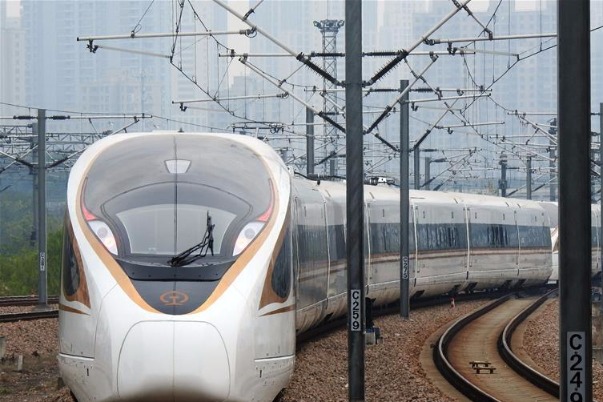
The central government built the Sichuan-Tibet highway and the Qinghai-Tibet highway in the 1950s, when it was in great financial difficulties. The two milestone projects, and the Qinghai-Tibet railway completed in 2006, which is an engineering marvel, greatly improved Tibet's connectivity with the rest of China.
People's needs are central to all government works in Tibet. The improvement of people's livelihoods and their practicing of legal rights provide a sensible and humanitarian perspective to see Tibet.
The human rights conditions in Tibet are popular topics in the world. Tibet's development after 1959 helped the residents on the plateau realize their right to subsistence and the right of development, two key parts of the modern human rights framework.
More than 91 percent of Tibet's current population of 3 million are Tibetan people. They are the largest beneficiary of Tibet's growth.
There are 40 ethnic groups in Tibet. All of them enjoy equal rights to participate in the governance of the region that had previously been ruled by only a few.
The Tibetan people, irrespective of their religious beliefs, now enjoy the best education, housing, medical care and social security net in their history. And the central authority and Tibet government will continue their efforts to improve people's livelihoods.
Internet and cellphone use are common even among the monks and nuns in Tibet. The modern facilities, sound public services and cultural diversity have made Lhasa one of "the happiest cities" in China five years in a row in media surveys.
Last but not least, as a global natural and cultural heritage, Tibet has always been explained by various parties around the world. Tibet created a splendid civilization. Yet, in recent history, the geographically secluded region drifted farther from the modern world.
The outside world's understanding of Tibet has experienced different phases. Some adventurers and missionaries gave some vivid first-person accounts of the feudal serf society in Tibet. In his book Lost Horizon published in 1933, the English novelist James Hilton compared Tibet to a heavenly place, Shangri-la. However, the spiritual utopia that many regard Tibet to be is a far cry from what Tibet really is.
Tibet has been fast catching up with the development trend of a modern world through painful efforts in the past several decades, and has walked on a development path fitting the local conditions.
Tibet's development in the future needs to be sustainable and seek a balance between humans and nature. The people should be able to enjoy better lives and a good environment at the same time.
The good ecology and environment in Tibet, if well protected, can serve as an effective ecological barrier for China, and can also contribute to the world at large.
One important aspect of Tibet's sustainable development is the protection and development of Tibetan culture.
The freedom of normal religious belief and activities is protected by laws. So is the learning and using of Tibetan language.
The harmonious co-existence of Tibetan Buddhism, Islam, Catholicism and other religions in Tibet lays a solid foundation for peaceful co-existence of 40 ethnic groups in their joint pursuit of better material and spiritual lives.
A number of intangible cultural heritages have been included on the list of the United Nations Educational, Scientific and Cultural Organization.
A globalized market, the advancement of information and transportation technologies and China's fast development have all linked Tibet more closely with the rest of the world than ever before.
Tibet will further open up for international cooperation and exchanges while pursuing its sustainable development. The world will find more opportunities for collaboration in a prosperous Tibet.
The author is deputy director of the State Council Information Office. This is an excerpt of her speech at the opening ceremony of 2014 Forum on the Development of Tibet on Tuesday morning in Lhasa.
Editor's Note: The Information Office of the State Council and the government of the Tibet autonomous region co-hosted a forum on the development of Tibet on Tuesday and Wednesday in Lhasa. The hosts were seeking constructive suggestions on Tibet's future development model from around the world. Nearly 100 speakers from 36 countries and regions shared their thoughts on sustainable development, environmental protection and cultural diversity in Tibet. Here are some highlights of their opinions.
Isolation has been ended
Tibet's status as an integral part of China is not disputed by a single country in the world; and no country accords legal recognition to the Dalai Lama's "government-in-exile" based in Dharamsala, India. Yet, there is a Tibet political question lurking in the shadows of international relations, causing friction and unease in China's bilateral relations with some major developed countries, and confusing and dividing public opinion abroad and, to an extent, at home.
Journalism in Western media contributes to this problem in a significant way by feeding off the disinformation campaign unleashed by the Dalai Lama clique's headquarters and the votaries of Tibetan "independence", with only a pretence at independent reporting...
Among the defining factors behind Tibet's overall development, the most notable are the massive financial and resource support provided by the central government, its preferential policies for Tibet, rapid infrastructural development, and the building of a comprehensive modern transportation system, the highlight of which is the Qinghai-Tibet railway. As a result of this development, Tibet's interaction and integration with the rest of China has deepened and its isolation from the rest of the world has decisively been ended.
Narasimhan Ram, chairman of the Hindu newspaper group of India
Sacred places attract tourists
The rise of media, information technology and scientific progress promote local knowledge, while creating significant bridges in the process of unification with social advances experienced by the rest of China. Attracted by Tibet's rich cultural heritage, tourism will rise as an important source of income and prosperity for the region. This is where the religious manifestations, among them the practice of Tibetan Buddhism, show that freedom of belief is a reality.
Today, Tibet has 1,787 sacred places of various religions, about 46,000 monks and nuns, and 358 Living Buddhas. The fervor and activity of the profession of faith makes some Tibetan cities living shrines that attract the interest of many people inside and outside China. This means this region is full of curious visitors from all over the world, who want to experience rituals, traditions and values of Tibetan culture that will continue to exist if it can be safeguarded from a hybridization phenomenon.
Luis Albero Munoz, vice-president of La Republic newspaper in Costa Rica
Green growth offers opportunities
It is no longer feasible for poor regions to rise out of poverty and further achieve prosperity through the traditional development paradigm that industrialized countries took after the Industrial Revolution. All economies need to take a new path of sustainable growth, which represents a development paradigm shift, and could become a new lever to promote development in poor areas.
Poor areas possess unique advantages for green growth. Due to "underdevelopment", most of these areas retain vital ecological and cultural advantages that become important, scarce resources for economic development. Especially with the support of the Internet, information and communication technology, online shopping and fast transport and logistics systems, this advantage becomes outstanding, and most of the traditional development constraints facing poor areas in the past are being overcome, and more and more opportunities are emerging. Poor areas also have their advantages to grow their economies in the green growth paradigm. If this exploration turns out to be successful in some areas, it would be a great contribution with global significance for other places in the world, including underdeveloped African countries.
To some extent, the significance of this will be even greater than that of the Industrial Revolution, since the paradigm the developed countries established since the Revolution can enable only a small portion of people on the planet to enjoy prosperity, while the new path of green growth aims to bring about shared prosperity for the whole world.
Zhang Yongsheng, researcher of economics with the Development Research Center of the State Council
(China Daily USA 08/14/2014 page12)