


Researcher finds home for the soul in Xizang










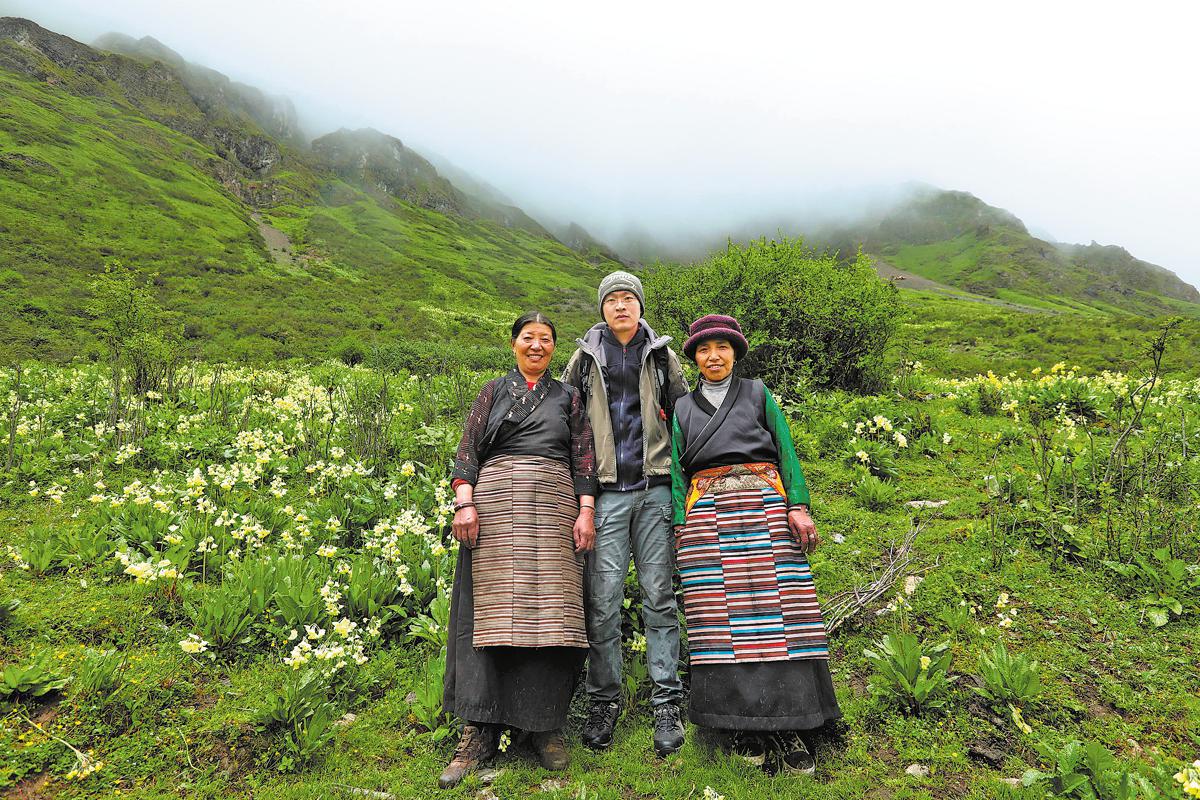
Niu Xue, a college teacher in Wuhan, Hubei province, has visited the Xizang autonomous region at least once a year for the past 21 years, recording the region's changes with his camera and bringing the mysterious land closer to his students.
Having spent about 600 days in the region, Niu, 48, a professor from the School of Innovation and Design at Wuhan Textile University, has captured moments such as farmers hauling goods on wooden carts, travelers leaving handwritten travel tips on hostel walls, the cycling craze on Highway 318, and newlyweds posing in front of the Potala Palace in Lhasa.
Each trip he spent more than 20 days there despite often getting altitude sickness. He believes it is his duty to document Tibetan culture.
For Niu, Xizang is more than a research project, instead, it's his spiritual home where he has resonated with and grown attached to local people.
One of his most impressive subjects is Drolkar, whose family has devoted 32 years to herding and guarding the remote border area in Yumai township, Lhokha city.
In July 2018, he visited Drolkar's house for the first time and captured footage of her making butter and cheese with her second daughter in a small wooden house at the summer pasture.
The second time he visited the family in 2023, taking a photo of Drolkar when she picked up a stone, placed it in the net of her slingshot, and hurled it forcefully across the river.
"It turned out that her yak had strayed to the opposite bank, and she needed to drive it back. I was lucky enough to capture that moment," Niu said.
Niu noticed that compared with 2018, she had aged significantly. Her eldest daughter helped her make butter, while her eldest son-in-law held their 1-year-old son and lulled him to sleep. Strings of cheese curd hung from the roof beams. These daily life scenes were all captured by Niu's camera.
This July, Niu met her for the third time with his students at a summer pasture. They documented the scenes of her daily labor together.
"Certain frames, colors and pieces of information in images combine to form specific emotions, converging into a unique visual language that ultimately communicates particular ideas," he said.




