



Robust regulation key to promoting TCM globally









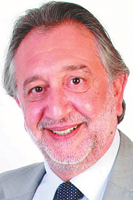
Traditional Chinese medicine has significantly expanded its global presence over the past five years, alongside growing international recognition of the need to develop scientific evaluation models suited to TCM and to establish robust regulatory systems to support its development, according to a healthcare expert.
Looking ahead to the 15th Five-Year Plan period (2026-30), Ramon Maria Calduch, president of the European Foundation of Traditional, Complementary and Integrative Medicine, called for more focused international cooperation on regulation, evidence methodology and capacity building to promote the high-quality integration of TCM into diverse healthcare systems worldwide.
In an interview with China Daily, Calduch said TCM's inclusion in national strategies such as the Healthy China initiative, the growing number of overseas TCM centers, and sustained investment in service quality, professional training, and clinical and basic research have collectively strengthened its international footprint.
He noted that China has also enhanced community-level TCM services, promoting care that combines TCM with Western medicine, while establishing advanced research platforms that integrate modern scientific methods with TCM knowledge.
"These domestic advances carry significant global relevance by demonstrating the potential of integrative healthcare models in which TCM and Western medicine complement each other," Calduch said. "At the same time, foreign countries are gaining access to better information to evaluate the prospects of introducing TCM into their own systems.
"The modernization of TCM in China is not only an internal process," he added. "It is also a reference laboratory from which other countries can draw to advance their own regulation and integration of TCM."
According to Calduch, one of the most important strategic developments in TCM's global advancement is the growing awareness that it requires an internationally accepted model for evaluating scientific evidence. Equally important is the recognition that its international expansion must be underpinned by solid regulatory frameworks in each adopting country.
"There is increasing acknowledgment of the need for evidence-evaluation models that respect TCM's holistic diagnostics and personalized treatments, rather than forcing it into paradigms designed for isolated chemical drugs," he said.
He pointed to growing cooperation between Chinese and international research teams to adapt research designs to TCM's characteristics, including pragmatic trials, real-world effectiveness studies and mixed-method approaches.
"This is the right direction — not abandoning rigor, but adjusting method to subject," Calduch said.
Parallel to this progress, he said, is a shared understanding that sound national regulatory systems covering training, licensing, quality control and patient safety are prerequisites for responsible integration.
Calduch cited tangible advances in global TCM standardization, including technical benchmarks and clinical guidelines for acupuncture and moxibustion developed by the World Federation of Acupuncture-Moxibustion Societies, as well as standards issued by the World Federation of Chinese Medicine Societies and the World Health Organization.
As countries face ongoing pandemic risks and a rising burden of chronic disease, Calduch said TCM offers distinct advantages.
"TCM places strong emphasis on prevention and early management, which aligns closely with the concept of resilient health systems centered on health promotion," he said.
"Integrated interventions such as herbal medicine, acupuncture and Tui Na can complement conventional medical protocols in the prevention and rehabilitation of infectious diseases, as well as in the management of complex chronic conditions," he added.
According to the Recommendations of the Communist Party of China Central Committee for Formulating the 15th Five-Year Plan for National Economic and Social Development that was released in late October, China has proposed promoting the preservation and innovative development of TCM, as well as the integrated application of TCM and Western medicine.
Looking ahead to the next five years, Calduch said China can further strengthen these advantages by deepening TCM integration in primary care and chronic disease management, developing research platforms for public health emergencies, and leveraging digital health technologies.
At the same time, he identified improving the quality of international applications as the main challenge in expanding TCM's global role.
"This means China should not limit itself to promoting TCM services abroad, but should also engage in sharing and jointly building standards for scientific evidence and regulation," he said. "Without clear regulatory frameworks, no national health system can responsibly integrate acupuncture and TCM into its benefits package."
Calduch said the top priority is helping countries regulate TCM before integration, including defining professional accreditation, facility standards, safety protocols and oversight mechanisms.
"China should promote, together with the WHO and academic institutions across continents, an internationally accepted model for evaluating evidence in TCM," he said.
"If consensus can be reached on how to conduct research and interpret evidence in TCM, it will be much easier for national regulators to decide which interventions to incorporate into their public health systems," he added.
He also said major overseas TCM cooperation projects should engage in sustained dialogue with local health authorities to align TCM with national legal and coverage structures.
"If China combines its clinical and scientific strengths with a clear strategy to support regulatory development in other countries, TCM can be incorporated into national health systems gradually, safely and sustainably," Calduch said. "This would benefit population health and strengthen global health cooperation."
Over the long term, he said, TCM's global advancement will be more sustainable and gain wider acceptance by being firmly grounded in shared scientific research, internationally recognized standards and the principle of mutual benefit.
"China has already taken important steps during the 14th Five-Year Plan period (2021-25)," Calduch said. "The challenge now is to deepen this path in a more open, cooperative way, oriented toward measurable outcomes for population health."
wangxiaoyu@chinadaily.com.cn


- Draft law unveiled to combat cyberbullying
- China activates Level IV flood emergency response for Shaanxi, Gansu
- Mainland criticizes DPP 'all-out defense' campaign in Taiwan
- Liu Guohong appointed to top Party post at Ministry of Natural Resources
- Cooking competition in Chongqing identifies top tastebud ticklers
- Zhuang Zhuang the beagle shines at Wuhan airport as luggage screener





