



Tokyo's rearmament grim reminder of deadly past









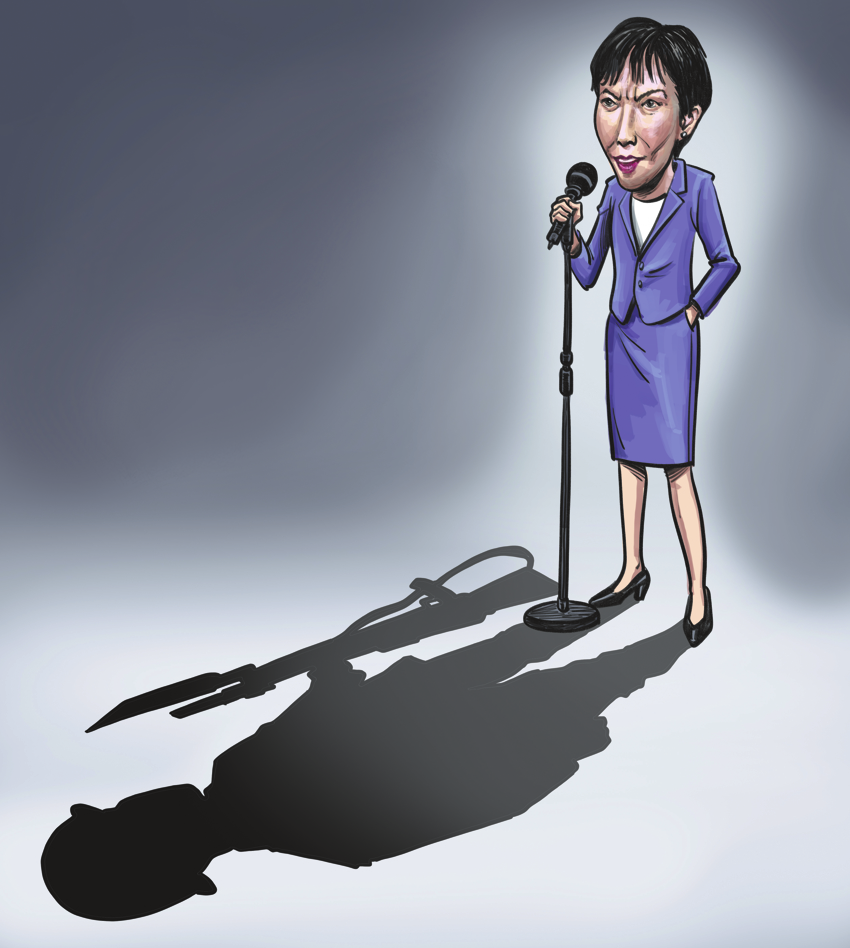
The Sanae Takaichi cabinet has not only refused to correct its mistakes on history, Taiwan and national security but doubled down. Tokyo is pushing to relax controls on weapons exports, moving toward the deployment of offensive capabilities, and tailing Chinese formations engaged in routine military exercises.
At the same time, it is hyping up the Diaoyu Islands dispute and "radar lock-on" incidents to create a media frenzy, muddy public opinion and divert attention. The aim is to drown out the criticism of Takaichi's wrongful remarks on Taiwan while obscuring the rapid "rearmament of a defeated state".
The motives and tricks of the Takaichi regime should alarm everybody who values peace. Behind today's headlines lies a darker ambition: to revive forces that once plunged the world into war.
After World War I, Germany did not completely purge its extremists. After Adolf Hitler came to power in 1933, he launched the rearmament of a defeated state. Between 1933 and 1937, Germany's military spending increased drastically. War became the medicine to "fix" the economy and win mass support. Berlin then hollowed out the postwar order, tore up the Locarno Treaties, remilitarized the Rhineland, restarted conscription and rapidly rebuilt its armed forces. The result was annexations, invasions and ultimately World War II.
A century later, Japan is on a path that looks chillingly familiar. Since Junichiro Koizumi took office in 2001, Tokyo has distorted history, glorified war criminals and chipped away at constitutional limits on militarization. It has shifted from "exclusive self-defense" to exercising "collective self-defense", opening the door to rearmament.
Later, prime minister Shinzo Abe pushed constitutional revision and lifted the ban on collective self-defense, selling this process as "normalization". Takaichi has torn off the last mask, openly issuing war threats, denying the postwar settlement and trying to sweep away remaining obstacles.
Japan's defense budget has consistently risen for the past 13 years and is now close to 2 percent of the country's GDP. The United States wants bigger jumps in military spending. This pattern of letting a defeated country "borrow to build up arms" is pushing the world toward the brink of war. It is reminiscent of Germany in the 1930s.
The glaringly similar process of "rearming a defeated state" shows that the Takaichi cabinet is pushing Japan toward a critical threshold where it is just one step away from crossing the line into war. At such a moment, history's lessons become more precious than ever.
The rearmament of a defeated state is not the same as the normal self-defense of an ordinary country. History shows that when a country burdened with war crimes and nursing a sense of vengeance rearms, it endangers not just its neighbors but the entire world. The postwar security system was designed to give Japan security guarantees through collective arrangements and thus prevent its rearmament.
Germany was able to rearm so quickly largely because the major powers failed to act together, firmly and in time, to stop it. British prime minister Neville Chamberlain's appeasement is now a byword for shame, while Winston Churchill is remembered for his resolve. Today's Asia risks replaying the opening act of that tragedy if we choose to look away.
History also tells us that when a defeated state tries to solve economic and social problems by military means, and when its leaders use "normal country status" as a slogan to gain support, extreme nationalism quickly spirals into a vicious cycle. The state marches down a self-destructive road that is hard to reverse, dragging neighboring countries and the wider world into danger.
Takaichi's refusal to admit wrongdoing, the Japanese government's attempts at cover-up, and its use of hot-button issues and blame-shifting to mislead the public all point in one direction: Japan is edging toward the red line drawn by the blood of hundreds of millions of anti-fascist fighters. It is trying, for the third time, to pry open the gates of hell.
To those who still sympathize with Takaichi today: have you forgotten the cities bombed across Europe? The prisoners of war who died in Japanese camps? The flames over Pearl Harbor? Think of Munich, of the appeasement and the blitzkrieg. The similarities are not only in the tactics, but in the deeper forces that drive them. And history has repeatedly shown the dangers of ignoring them.
Today's Japan, rearming under the banner of a so-called "China threat", is replaying the script of yesterday's Germany, which hyped a "Soviet threat" to build up its armed forces. And the US, which is indulging Japan's rush down this dark path, is playing the role once played by Britain and France: missing the last chance to pull a country back, and then being dragged toward catastrophe alongside it.
The smoke of that war has not fully cleared. Veterans are still alive. The international community cannot afford to forget the lesson of Germany's rearmament or allow Japan to speed toward another dead end.
The author is a research fellow at the China Institute for International Strategic Studies.
The views don't necessarily represent those of China Daily.
If you have a specific expertise, or would like to share your thought about our stories, then send us your writings at opinion@chinadaily.com.cn, and comment@chinadaily.com.cn.





