


World's longest expressway tunnel opens to traffic, crossing Tianshan Mountains










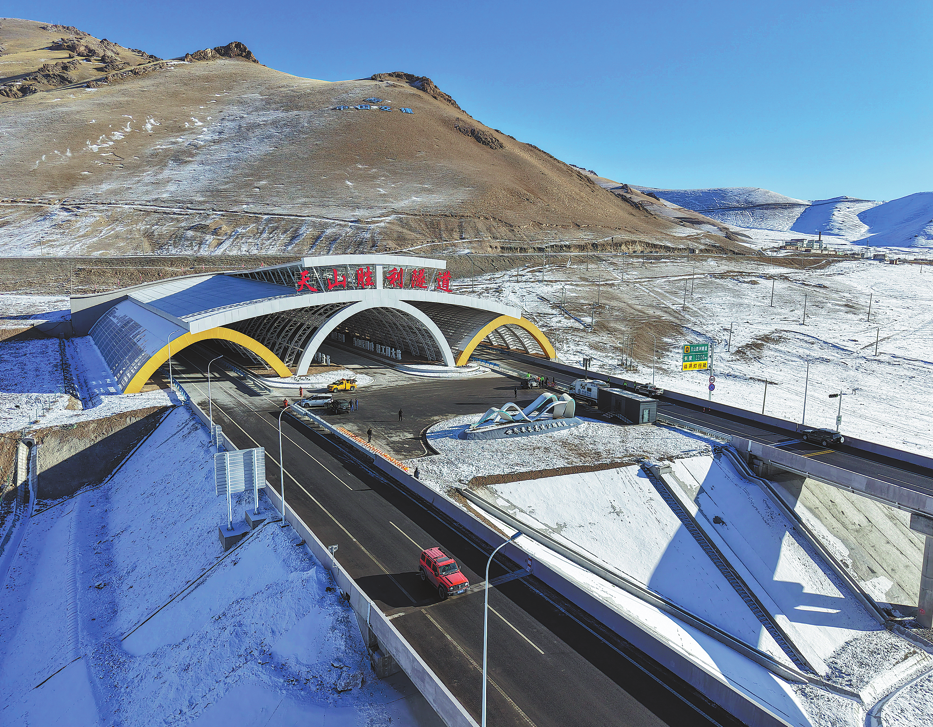
A new section of expressway in the Xinjiang Uygur autonomous region opened to traffic on Friday, enhancing connectivity between northern and southern Xinjiang.
The 324.7-kilometer route features the world's longest expressway tunnel — the 22.13-km Tianshan Shengli Tunnel — crossing the Tianshan Mountains.
Stretching 2,500 km, the range spans central Xinjiang, dividing the region into northern and southern parts.
Previously, crossing the Tianshan Mountains involved navigating winding roads, reaching altitudes above 4,000 meters and facing winter closures or long detours. Now, with the tunnel, the crossing takes just 20 minutes.
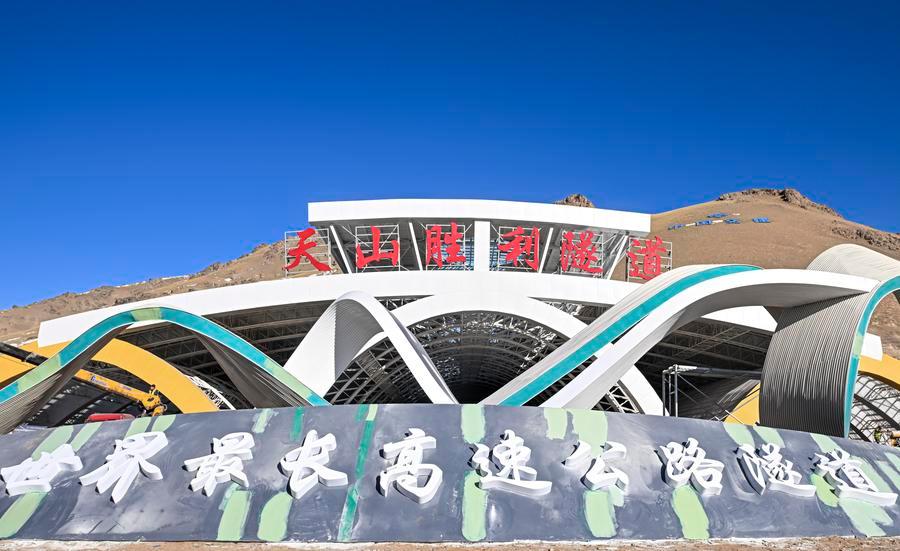
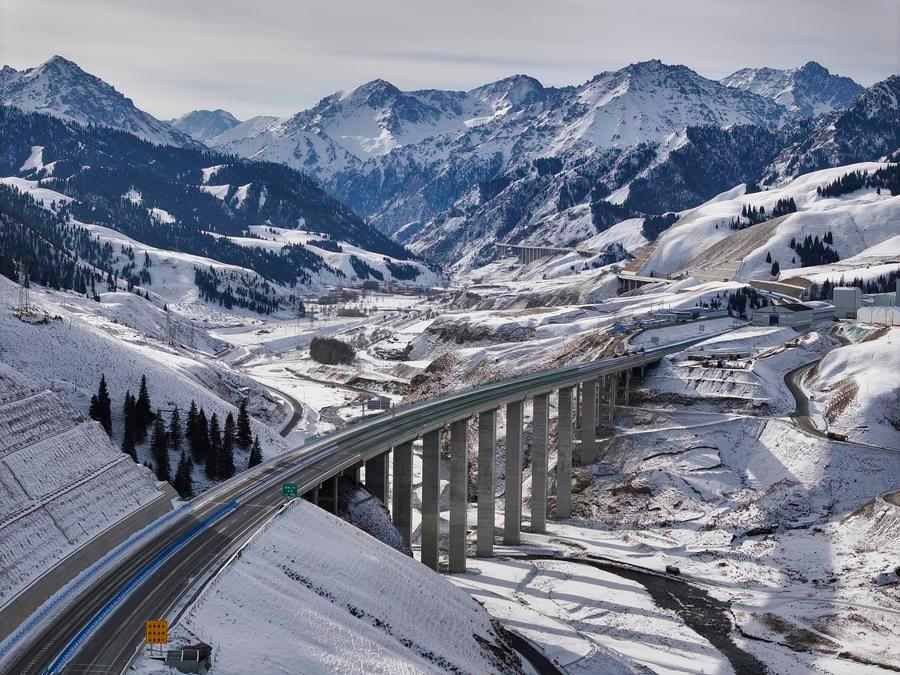
The expressway links Urumqi, the regional capital, to Yuli county in the Bayingolin Mongolian autonomous prefecture, cutting the travel time from Urumqi to Korla from seven hours to three and a half.
Currently, public vehicles — except medium and heavy-duty trucks — are allowed to use the route. The expressway will formally begin trial operations on Jan 1.
Construction began in April 2020, with a total investment of 46.7 billion yuan ($6.66 billion).
Miao Baodong, an engineer with China Communications Construction Co — which built the expressway — noted that the tunnel served as a decisive part of the project. It was built at an altitude of nearly 3,000 meters, where temperatures can drop to as low as minus 42 C, with the area characterized by high seismic activity and complex fault zones.
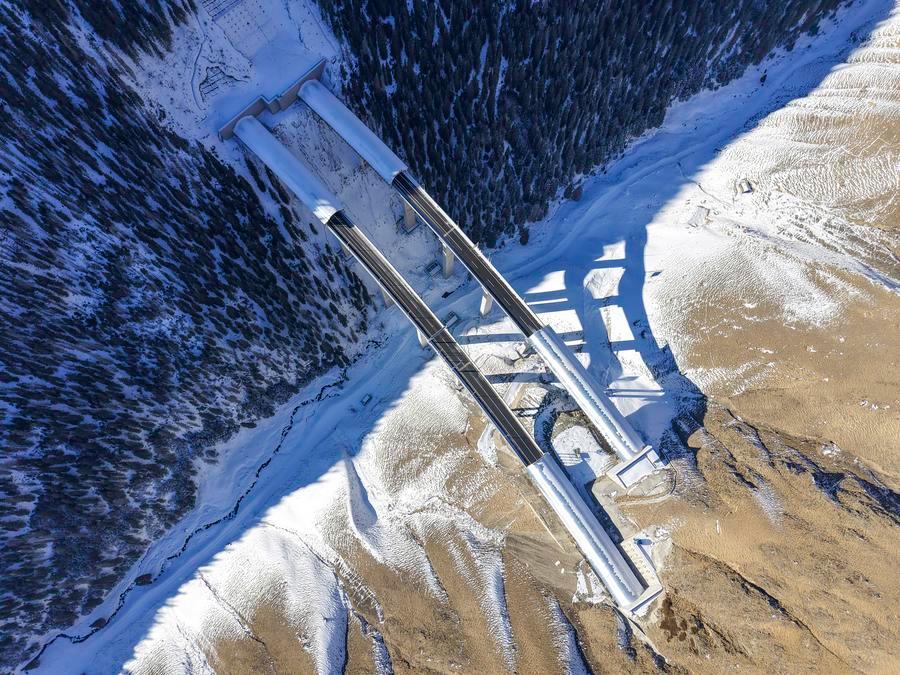
Its deepest point plunges 1,112 meters beneath the mountain ridge, while the longest shaft descends more than 700 meters, piercing into the heart of the range. The latter sets a world record.
Miao said construction work integrated various cutting-edge technologies and innovative achievements in ultra-long tunnel surveying and design, construction techniques, intelligent solutions and safety, providing a reference for similar projects worldwide.
Li Yafei, deputy director of the construction management office of Xinjiang's transport department, said the expressway adjoins domestic routes such as the G7 Beijing-Urumqi Expressway and G30 Expressway connecting Lianyungang, Jiangsu province, with Xinjiang's Horgos, while further linking major arteries such as the New Eurasian Land Bridge and the China-Central Asia-West Asia Economic Corridor.
The expressway, a key component of Xinjiang's highway network, links the Urumqi, Kashgar and Horgos areas of the China (Xinjiang) Pilot Free Trade Zone, reducing logistics costs and boosting resource exchanges between northern and southern Xinjiang. It will accelerate the flow of energy, manufactures and agricultural products across the region, Li said.
Nurmanat Abdukader, 57, a retired doctor from Pishan county, Hotan prefecture, came to Urumqi for medical treatment, and after recovering, waited a few days until the expressway opened to be among the first to travel on it. He said the expressway has shortened his journey home to a single day, saving him from an overnight stop.
Zhu Genshen, an engineer with China Communications Construction Co, said a 116-km section of the expressway passes through an area rich in biodiversity, with a notable concentration of protected wildlife.
Along this stretch, 17 tunnels — including the Tianshan Shengli Tunnel — and 36 extra-large and large bridges have been constructed, taking up nearly 60 percent of this section and facilitating wildlife passages. The expressway provides underpasses for local herders and their livestock.
Part of the expressway also crosses water-source protection zones and several national forest parks, for which dedicated environmentally friendly measures have been implemented.
Contact the writers at fangaiqing@chinadaily.com.cn





