


Connecting cities, changing lives
Faster, affordable and convenient rail travel is reshaping China's social and economic landscape










On a winter evening in Beijing, Hou Qingjuan packed her bag with gifts and children's clothes, preparing for a familiar journey home. Her destination was Liaocheng, a city in eastern China's Shandong province, where her young son was waiting.
Hou came to Beijing for work years ago. In 2018, when she first began making the trip back and forth, the journey was long and exhausting. A slow "green train" took more than six hours one way. With additional time needed to reach the stations at both ends, a single visit home could take up an entire day.
"At that time, my children, especially my son, were still very young, and I missed them all the time," she said. "Six hours on the train didn't sound too long, but once you added everything up, it felt overwhelming. I often thought I would work in Beijing for just another two years, then go back home for good."
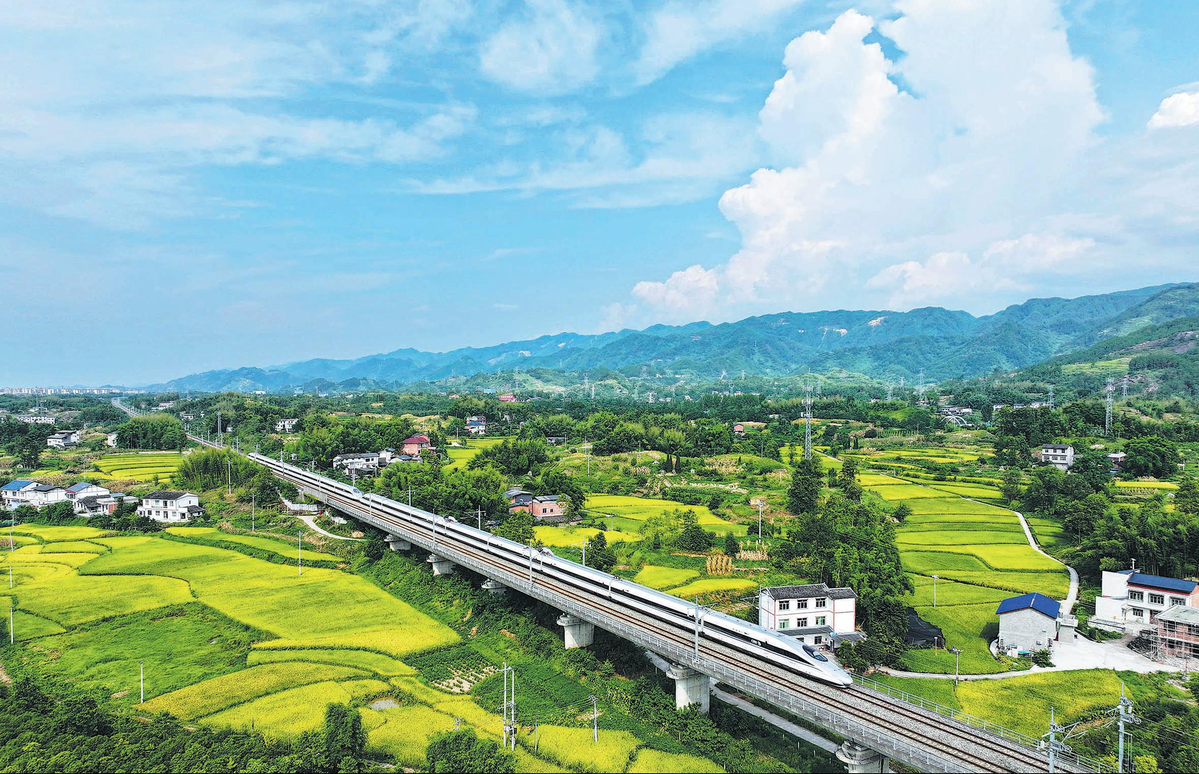
That plan, however, quietly changed — not because of a new job or higher pay, but because the journey itself became shorter. By the end of 2019, faster trains began running between Beijing and Liaocheng. The travel time was cut to about three and a half hours, and a ticket cost just over 60 yuan (about $8). By 2024, with further upgrades to the rail service, the fastest trips took around two and a half hours.
"The difference was huge," Hou said. "Going home suddenly became something I could do whenever I had time, not something I had to carefully plan for."
The shorter journeys reshaped her choices. Instead of giving up her job in Beijing, Hou decided to stay. She now returns home whenever she has a break, visiting her children more often and with far less strain.
"If it hadn't been for such convenient transportation, I probably would have moved back already," she said. "Now I can work in Beijing and still be present in my child's life."
Hou is among millions of Chinese people whose daily decisions — where to work, how often to see family, how far to travel — have been quietly reshaped by a faster and denser rail network.




