Sudden COVID surge in India prompts talk of month-long third wave due to Omicron variant
By ARUNAVA DAS in Kolkata, India and XU WEIWEI in Hong Kong | chinadaily.com.cn | Updated: 2022-01-07 22:12


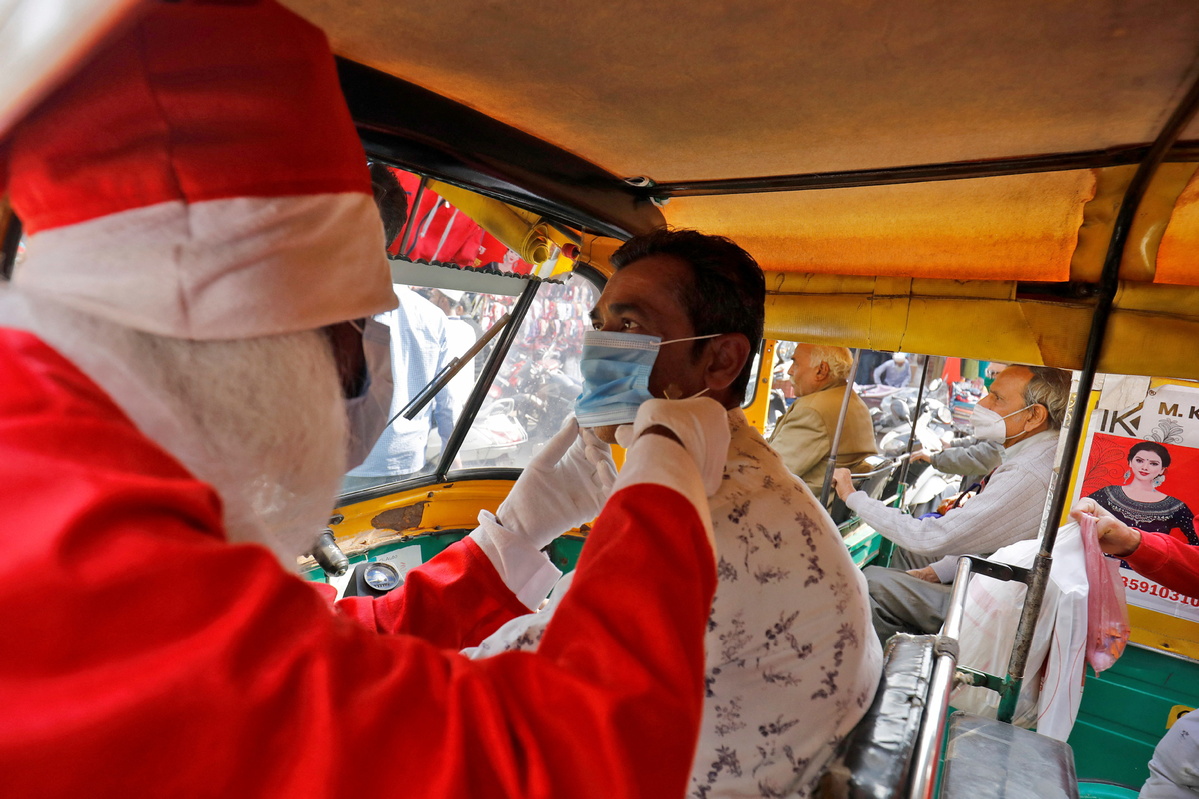
But Mahapatra doubts if such curfews will make a difference. He called for other response strategies, including fostering community sensitization and awareness.
At the height of the second wave last year, more than 4,000 COVID patients died each day for want of hospital beds, oxygen and medicines. Even burial grounds and crematoriums were in short supply, forcing authorities in some places to organize mass cremations and burials.
The fast spread of Omicron has revived the dark memories of 2021, and experts are urging people to not to repeat the past mistakes of reckless mass gatherings.
"In today's context, all kinds of gatherings — political, religious or social — are unnecessary, uncalled for and eminently dispensable," Mahapatra said, perhaps alluding to the no-holds-barred New Year parties in many cities and political rallies in some states that are heading for elections.
"The next two-three months will be critical. It all depends upon how the government acts and people behave," he said.
India reported 90,928 new COVID-19 cases on Jan 6, a 56 percent increase over the previous day's 58,097 case number. The federal health ministry has identified at least eight "emerging states of concern" —Maharashtra, West Bengal, Delhi, Jharkhand, Karnataka, Kerala, Tamil Nadu and Gujarat.
Mumbai, India's financial capital, has seen the number of fresh daily cases cross 20,000 — the threshold limit for stricter restrictions. More worrying is the fact that more than 260 doctors in Maharashtra have tested positive.
India has so far reported more than 35.2 million cases and 483,000 deaths from COVID-19, but experts say the true toll could be much higher.
About 63 percent of India's adults have been fully vaccinated and more than 90 percent have received at least one jab since an inoculation drive began in January 2021.
From Jan 10, third or booster doses of COVID-19 vaccines will be administered for healthcare staff, frontline workers and vulnerable senior citizens. The clearance for the boosters for the selected groups came amid the Omicron threat.
On Jan 6, India's Omicron tally reached 2,630, of which Maharashtra and Delhi reported 797 and 465 cases respectively.
A day earlier, the country reported its first death linked to Omicron, involving a 74-year-old man who was suffering from diabetes.
On Jan 7, authorities said the nation's COVID-19 case tally has reached 35,226,386, with 117,100 new cases registered during the prior 24-hour period.
Besides, 302 more deaths were recorded, taking the death toll to 483,178.
Though the rise in infections was not accompanied by a surge in hospitalizations, a possible spread to rural areas in the near future is prompting concerns.
Indian Prime Minister Narendra Modi in late December announced that vaccinations would start for 15 to 18-year olds from Jan 3.
Media reports said over 1.2 million children in the eligible age group have registered at the government's web portal for COVID-19 vaccination so far.
India's federal health minister Mansukh Mandaviya shared photographs of children getting vaccinated to mark the beginning of the inoculation campaign, and urged children to get vaccinated at the earliest date.
In Punjab, as COVID-19 cases rose rapidly, the state on Jan 4 announced the closure of schools and colleges, besides imposition of night curfew.
The curbs were imposed in the middle of a high-pitch local elections campaign marked by crowded rallies and political meetings. However, no restrictions were announced regarding political meetings or rallies.
Punjab, along with some other states, including Uttar Pradesh, Goa and Uttarakhand, are holding their legislative elections in February and March.
XINHUA and agencies contributed to this story.
The writer is a freelance journalist for China Daily.






Editor's Pick