Activists, experts continue to be skeptical of Fukushima discharge plans
By KARL WILSON in Sydney | chinadaily.com.cn | Updated: 2023-08-22 23:22


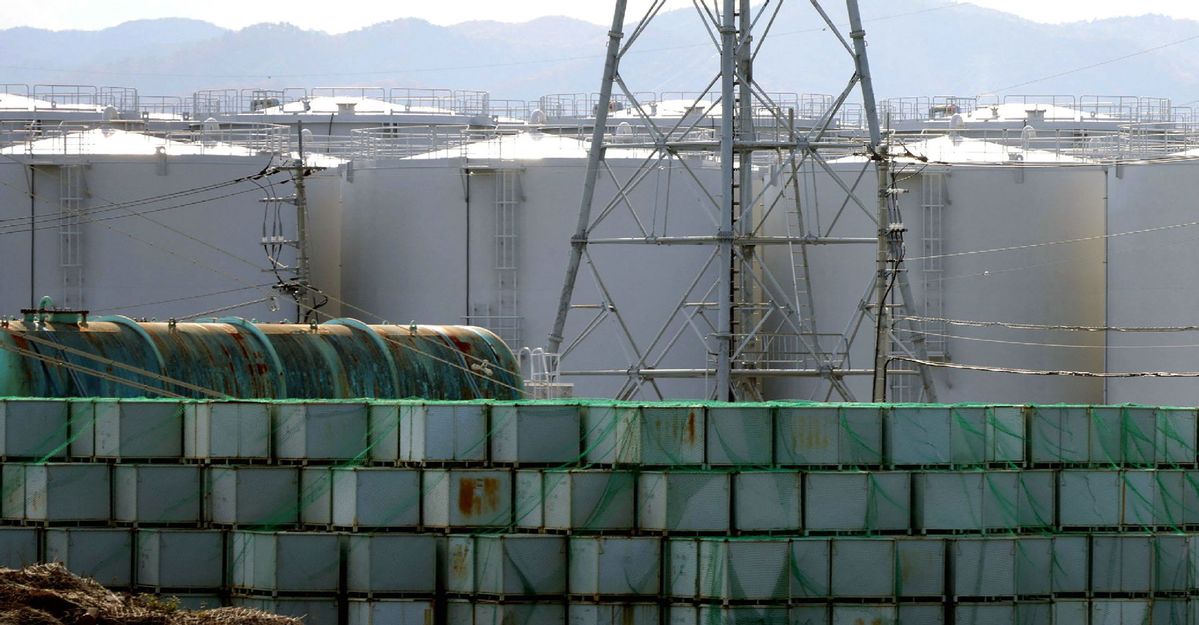
As Japan prepares to dump over a million tons of radioactive wastewater from the disabled Fukushima nuclear power plant into the Pacific Ocean, scientists and conservation groups are appealing to Japan to rethink its plan.
On Thursday the Rev. James Bhagwan, a Fijian anti-nuclear activist and general secretary of the Pacific Conference of Churches, a regional ecumenical organization, brought up a report from the International Atomic Energy Agency which said Japan's plans are consistent with international safety standards. Bhagwan said the report has been "disputed by a panel of independent global experts" appointed by the Pacific Islands Forum, or PIF.
One of those experts is Robert Richmond, director of the Kewalo Marine Laboratory at the University of Hawaii at Manoa. He said on July 17: "The peoples of the Pacific did not contribute to the present problems … but have much at risk for generations to come."
On July 5, Richmond told the BBC's Newsday program: "We've seen an inadequate radiological, ecological impact assessment that makes us very concerned that Japan would not only be unable to detect what's getting into the water, sediment and organisms; but if it does, there is no recourse to remove it... There's no way to get the genie back in the bottle."
Analysts disagree with Fiji's Prime Minister Sitiveni Rabuka, who backed the plan after meeting with Japanese visitors, saying he was satisfied Tokyo has met all obligations as set out by the IAEA.
The Tokyo announcement follows months of bitter debate on what the discharge will mean and concerns over the impact on the ocean. Bhagwan said the Pacific has a long legacy of being a dumping ground when it comes to nuclear waste. He was referring to French and United States nuclear tests in the last century, the impacts of which are still being felt by locals.
On March 11, 2011, a magnitude 9.0 earthquake struck off the coast of northeastern Japan, triggering a tsunami with waves as high as 38 meters. The tsunami flooded the reactors at the Fukushima plant, sparking a radiation leak and forcing the evacuation of tens of thousands of people.
Since then, water from the reactors has been stored in tanks around the site while scientists and government officials tried to figure how the water could be safely discharged into the ocean.
The Fiji-based Alliance for Future Generations, a youth advocacy group, is not convinced dumping the wastewater into the Pacific is the best option.
"The decision to release the Fukushima nuclear wastewater into the Pacific Ocean is one that has far-reaching consequences for the entire Pacific region and beyond," the group said in a statement posted on its website. "The disposal of nuclear waste poses serious risks to marine life and human health, and any decision in this regard must be based on rigorous scientific evidence and must prioritize the well-being of both current and future generations."
David Krofcheck, senior lecturer in physics at the University of Auckland, told China Daily no matter how well the water is treated, there is going to be a public perception problem.
"We need to be aware of the difference between tritium and carbon-14 on one hand, and the radioactive fission products which tend to remain in the human body in the other hand," Krofcheck said. "Tritium could still get into the food chain via buildup in underwater plants. This organically bound tritium decays with a half-life of 12.3 years and it stays in the human body for about 10 days, the biological half-life, before excretion."
Tony Hooker, director of the Centre for Radiation Research at the University of Adelaide, said there is no evidence at this stage that shows tritium is harmful to the environment or human health. "So long as the water is treated/cleaned appropriately and monitored to ensure that any other remaining radionuclides are removed, it will be safe," he said.
That said, he noted alternative solutions have been raised and could be investigated further.
"One suggestion by our panel was to make concrete from the treated water. This would bind the tritium into a solid substrate and could be used for building the sea walls, or even railway sleepers … anywhere where you have minimal human contact," Hooker said.








Editor's Pick