No signs of conflict ending
Differences between Moscow, Kyiv remain, making prospects for deal unlikely
By LIU JIANQIAO | China Daily Global | Updated: 2026-01-14 10:40


Fiscal crisis
"Ukraine, by contrast, faced further depletion of its military strength, marked by chronic infantry shortages along the front lines, a sharp rise in desertions, and drastic pay cuts for rear-area personnel amid a fiscal crisis," he said.
In his annual end-of-year news conference on Dec 19, Putin reiterated a tough Russian stance in resolving the Ukraine crisis.
Russia agrees to end the Ukraine crisis through negotiations, alongside eliminating the root causes, he said, noting that now "the ball is entirely in the court of Ukraine and its European sponsors".
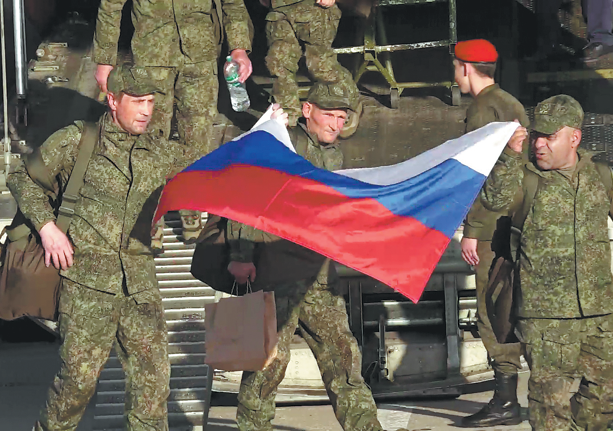
Underscoring Russia's battlefield advantages, he said that 700,000 Russian troops are currently deployed on the front lines, advancing along the entire line of contact while Ukrainian forces are in retreat.
The balance of power on the battlefield has shifted decisively in Russia's favor following the expulsion of Ukrainian troops from the Kursk region, he added.
"The core positions of Russia and Ukraine have not undergone substantive change," Wan from Shanghai said.
He said Russia has repeatedly stated in various forums its determination to achieve the primary objectives of its special military operation, namely, demilitarization, denazification, and neutrality.
"Ukraine, meanwhile, has maintained firm 'red lines' in negotiations, a stance consistently emphasized by President Volodymyr Zelensky. These include preserving territorial integrity, now framed with greater nuance compared with earlier demands to fully restore the 1991 borders, seeking NATO membership as a core security guarantee, and retaining unrestricted freedom to develop its military capabilities," Wan added.
Unlike the stalemate on the battlefield, the momentum toward a political resolution of the crisis gained strength in 2025, with both Russia and Ukraine clearly pursuing a strategy of "fighting while negotiating".
In 2025, the Ukraine crisis has reached a critical juncture, with peace hanging in the balance. Since the Trump administration took office, it has pushed for a Russia-Ukraine peace process, leading to multiple rounds of interactions among all parties, said Chen Yu, deputy director of the Institute of Eurasian Studies at the China Institutes of Contemporary International Relations.
After returning to the White House in early 2025, Trump reversed his predecessor's policy of supporting Ukraine against Russia. He not only halted unconditional aid to Ukraine but also pressured the country to engage in peace talks with Russia, while accusing Europe of obstructing US efforts to end the crisis.