The legend that never burned
Epang Palace was neither completed nor destroyed by fire, but instead, meticulously built on a drained lake bed, report Wang Ru and Qin Feng in Xi'an.
By Wang Ru and Qin Feng | China Daily | Updated: 2026-01-20 08:12


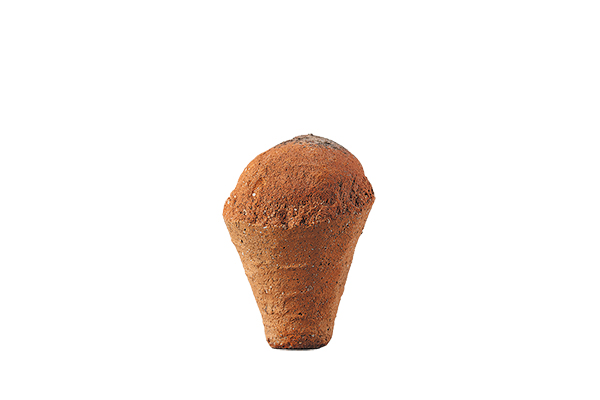
In 2004, a groundbreaking discovery shocked the public: archaeologists excavating the foundations of the Epang Palace site, in Xi'an, Shaanxi province, announced they had discovered that the legendary complex had never been completed. Furthermore, they concluded that the story that the palace had been torched by the late Qin Dynasty (221-206 BC) warlord Xiang Yu was, in fact, false.
Tang Dynasty (618-907) poet Du Mu described the splendor of Epang Palace, which was commissioned by China's first emperor, Qinshihuang, who established the Qin Dynasty.
Du said that to build the grand and luxurious complex, the emperor drove his laborers to extremes, leading to widespread unrest that ultimately contributed to the downfall of the dynasty. Eventually, Xiang burned the complex in a symbolic act of rebellion. The complex thus became a lesson for later rulers not to pursue monumental constructions at the cost of people's welfare.
Du's article was influential and widely quoted. When archaeological discoveries suggested that the dreamlike palace had never been completed, many found it hard to accept. But with concrete archaeological evidence, the findings became widely accepted facts in academia.
Studies on the Qin complex have never ceased. Recently, archaeologists announced their latest discoveries at the site. They revealed that it was initially built on the silt at the bottom of a drained lake, which also shed light on the construction management of large-scale projects during the Qin era.
Liu Rui, head of the archaeological team at the Epang Palace site and a researcher at the Chinese Academy of Social Sciences' Institute of Archaeology, says the work last year was carried out from September to December, with the aim of verifying whether the complex was built at the bottom of a drained lake, which they first suspected about a decade ago.
Related Stories