


A sweeping portrait of China's vast northwest
A newly released book guides readers through the dramatic landscapes and natural resources of Xinjiang, underpinning its splendor and modern development, Fang Aiqing and Mao Weihua report in Urumqi.










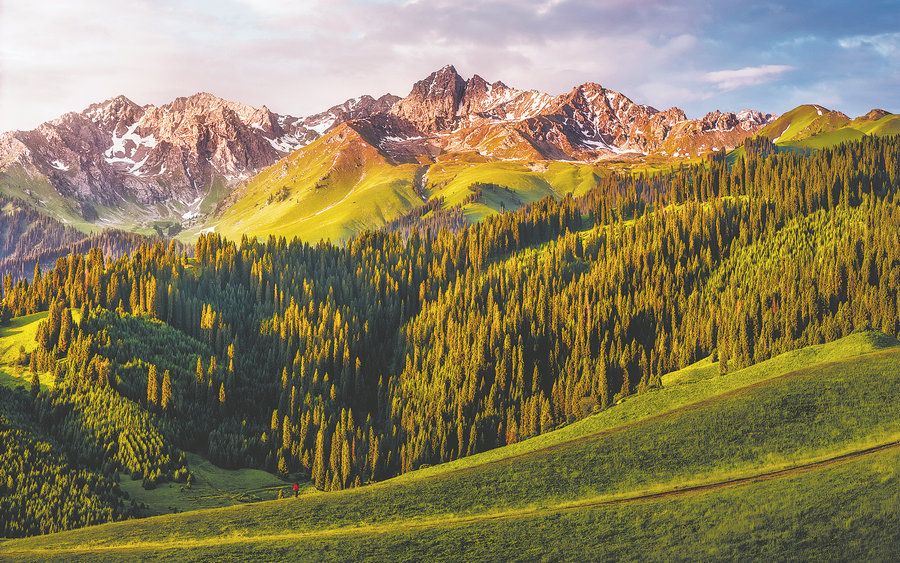
A land that spans one-sixth of China's territory, the Xinjiang Uygur autonomous region embraces a spectacular array of landscapes in the country's far northwest: magnificent mountain ranges, basins, glaciers, deserts, grasslands, forests, rivers and lakes.
It has a complex network of air routes, highways and railways, alongside impressive megaprojects and abundant resources.
The region produces more than 90 percent of China's cotton and 80 percent of the tomatoes used in products nationwide.
Xinjiang's breathtaking natural and cultural scenery — diverse yet enigmatic — exudes inexhaustible allure for travelers. But where should one begin to explore? An ambitious new book, Hi, I'm Xinjiang, takes on the challenge to provide compelling insights into the region and help readers make informed choices.
The book delves into the region's physical geography, glacial hydrology, evolution of life, historical civilizations and modern development, weaving together a sweeping 300-million-year narrative of the region, its profound history and remarkable transformation. It includes more than 300 photographs, 33 infographics and five pullout images to offer a better visual experience.




