


Rare Sapria himalayana once again enters blooming period in Yunnan
By Li Yingqing and Yan Yujie in Kunming | chinadaily.com.cn | Updated: 2025-11-24 18:35


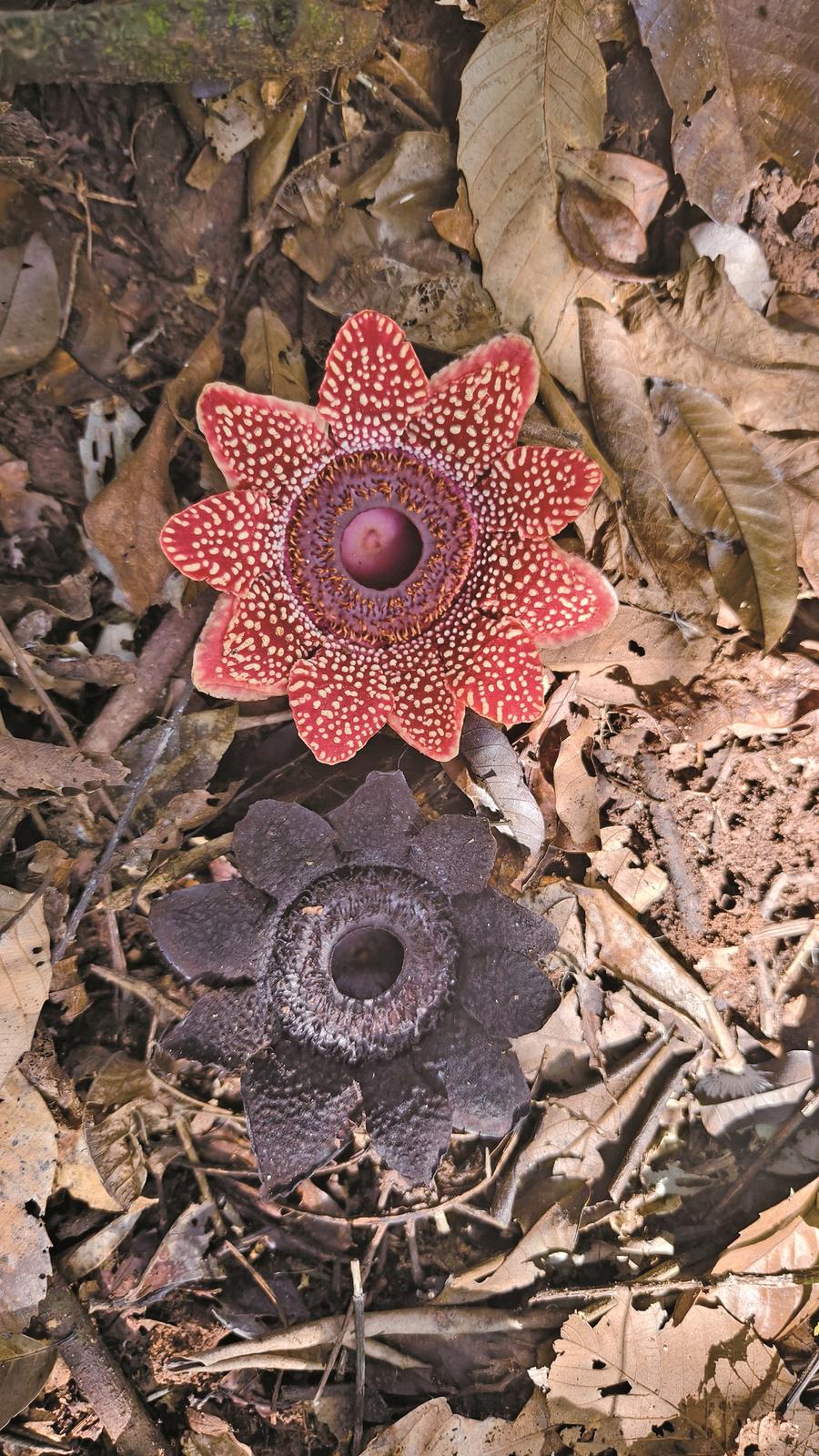
A rare holoparasitic flowering plant that had not been observed in the wild for about 30 years recently began blooming in the Mengla Nature Reserve Rainforest in Xishuangbanna Dai autonomous prefecture, Yunnan province, according to Xishuangbanna News.
The second-class nationally protected plant sporadically emerges from the humus layer of a primary rainforest and grows directly from the roots of its host plant, Tetrastigma. This is the third consecutive year it has been observed flowering in the area, according to the forest rangers at the reserve.
As the only species of the Rafflesiaceae family found in China, Sapria himalayana has no stems, roots, or leaves, and cannot perform photosynthesis. It completely relies on nutrients from the roots of host plants and only blooms during its reproductive period from September to December each year.
According to Mengla county's nature reserve management bureau, the plant's consistent appearance reflects the integrity of the local ecosystem.
In China, Sapria himalayana is exceedingly rare, only appearing in Yunnan and Motuo county, Xizang autonomous region. There is no established technology that can help conserve or cultivate parasitic plants, making in situ conservation the key approach to maintaining their population.
Related Stories
- Marathon event held for enduring partnership
- Promotion week for intangible cultural heritage brands opens in Dali, China's Yunnan
- Taiwan travelers keen to explore mainland in greater depth, regrets restrictions by DPP authorities
- Yunnan's culture and tourism charm shine in Thailand
- Even better than the legends: Spanish journalist's adventure in Yunnan's Weishan








Editor's Pick










