


Children’s smartwatches raise concerns about peer pressure, exclusion
Teachers, experts call for greater supervision as youngsters exposed to digital addiction
By ZOU SHUO | CHINA DAILY | Updated: 2025-12-08 07:45


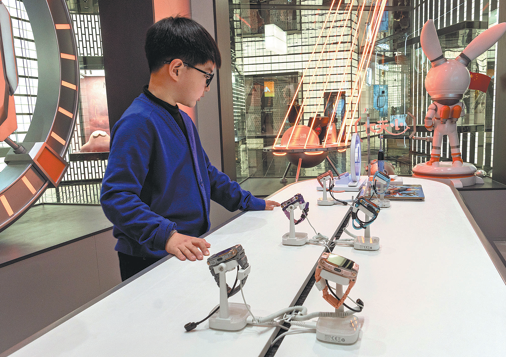
The primary motivation is assuring her son's safety.
Although Hangzhou has good public security, having the watch with GPS and call functions gives the family extra peace of mind, especially when the boy travels without his grandparents or parents, Zhu said.
Yet this reassurance is accompanied by persistent concerns. Zhu admits to occasionally checking her son's chat history, worried he might encounter age-inappropriate content.
"So far, I haven't found anything problematic, but the concern remains — they might come across bad language or unsuitable online expressions," she said.
She has also noticed her son's growing desire for digital validation. "He enjoys posting status updates and hopes for likes, though he doesn't receive many since his friends aren't very active."
The smartwatch represents just one facet of Zhu's parenting strategy for a son born in the digital era.
"For tablet usage, I strictly limit his time," she said. Her son primarily uses the tablet for learning chess and experiencing AI tools like Doubao. "I allow him to use AI for learning approaches but not direct answers. Initially, I supervise to ensure he uses it properly."
This careful mediation stems from overexposure to digital devices — her son's eyesight has deteriorated, which she attributes partly to increased screen time.
Checks and balances
Schools across China are developing varied approaches to managing smartwatches.
Wang Luxi, vice-principal of Hangzhou Chunhui Primary School, said her school does not recommend students bring smartwatches to school, though it has made accommodations for individual cases where parents have specific safety concerns.
The school's cautious stance stems from the devices' impact on the learning environment. "Today's smartwatches have extremely powerful functions — comparable to adult smartphones," Wang said.
Students can easily get distracted, and the incompatibility between different brands has unfortunately fostered comparison among children, she said. The devices have become social tools where children add friends and interact digitally.
From an educational perspective, Wang questions the necessity of advanced social features for young students.
"Functions like social feeds and online chatting seem unnecessary when children have ample opportunity for face-to-face interaction during school activities," she said.









Editor's Pick










