


Cluster of ancient stone city sites found in Yulin
Dated 2800 to 1000 BC, the find confirms 'era of 10,000 states' is not fictional
By Qin Feng in Xi'an and Chen Meiling | China Daily | Updated: 2025-12-17 08:49


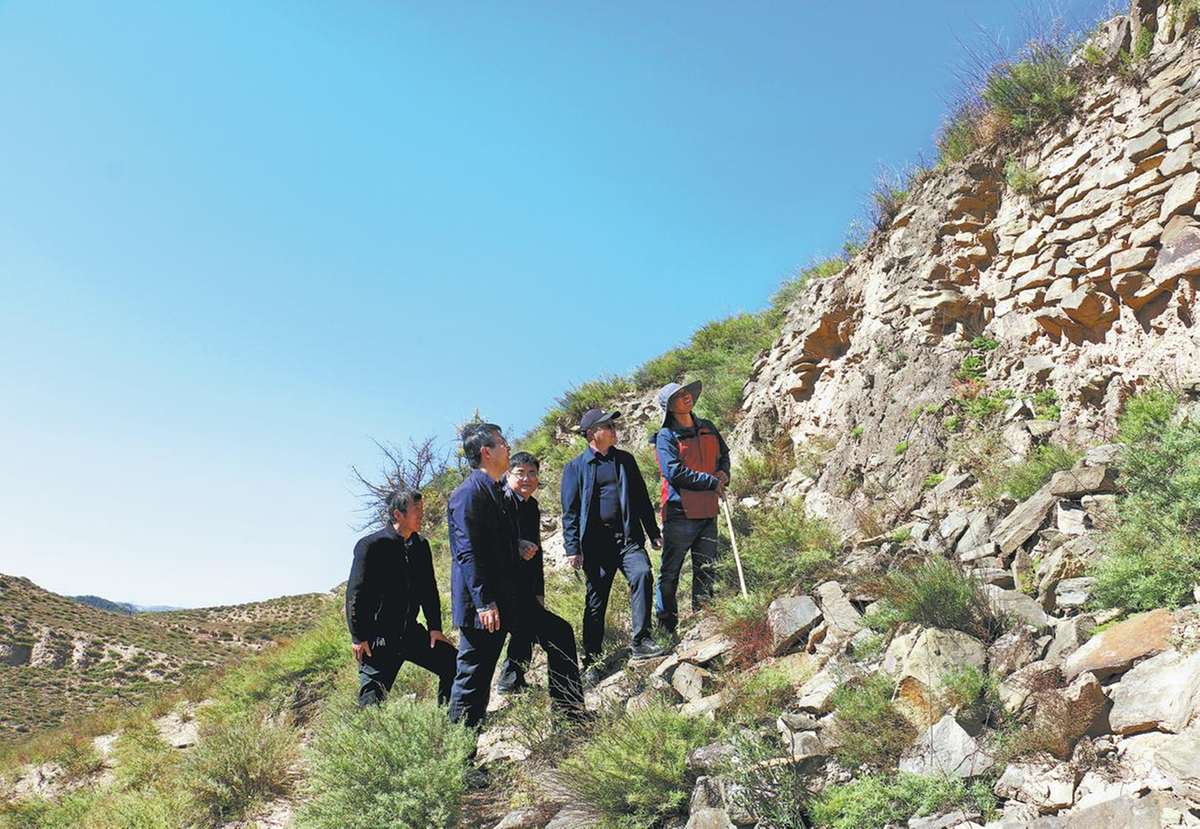
After six years of investigation, archaeologists have discovered a large-scale ancient city cluster consisting of 573 stone city sites in Yulin, Northwest China's Shaanxi province. This indicates that the region served as a core hub of early Chinese civilization for an extended period, dating back approximately 4,700 to 3,800 years.
City sites are core elements in the formation of ancient civilizations and early states.
"Prior to this survey, fewer than 200 prehistoric city sites had been discovered nationwide, among which only several dozen were stone cities, most of which were located in Yulin and its surrounding areas," said Ma Mingzhi, associate researcher of Yulin's cultural relics and archaeological survey team.
The latest discovery not only multiplies the number but also reveals that among the prehistoric stone city communities in the north, Yulin stands out as the largest in scale, highest in specification, most complete in hierarchy, longest in continuous use, and earliest in construction date. It will serve as a crucial source for exploring the roots of Yellow River culture and ancient Chinese civilization, Ma said.
The discovery breaks the traditional cognition of the "Central Plains-centric theory" and proves that northern Shaanxi with Yulin as its core was once one of the cultural centers of early China, and even the sole center of religion, ritual and royal power during the early Xia Dynasty (c.21st century-16th century BC), according to Ma.
It confirms that the "era of ten thousand states" mentioned in literary legends is not fictional. At present, more than 600 stone cities have been discovered in Shaanxi, Inner Mongolia autonomous region, northwestern Shanxi and northwestern Hebei provinces. It is expected that the total number in this region will exceed 1,000 in the future, which reflects the prosperity of social development and the scale of population aggregation at that time, he said, adding that evidence of rammed earth city sites from the same period has also been discovered, and a new phase of field investigations is currently underway.
Discovered in an area of 80,000 square kilometers, the stone city sites were dated from 2800 BC to 1000 BC. They were first constructed during the late Yangshao period to the middle Xia Dynasty and some remained in use until the late Shang Dynasty (c.16th century-11th century BC).
They were once used for military defense, residential settlement and religious ritual.
The imperial terrace at the Shimao site, for example, has large stone blocks carved with deities such as divine faces, dragons and snakes. Additionally, noble burial grounds and structures suspected to be ancestral temples are distributed across the site, indicating its use for religious and burial purposes.
The planning of the stone cities followed the principle of "hierarchy corresponding to regions".The core areas were inhabited by people of higher social status, while the outer areas were home to those of relatively lower status. The higher the rank of a city site, the more complex its city wall structure, reflecting a clear hierarchical residential planning concept, according to Ma.
These sites are often distributed along the river banks, with several sites in a cluster surrounded by a number of residential areas without defensive structures and cemeteries.
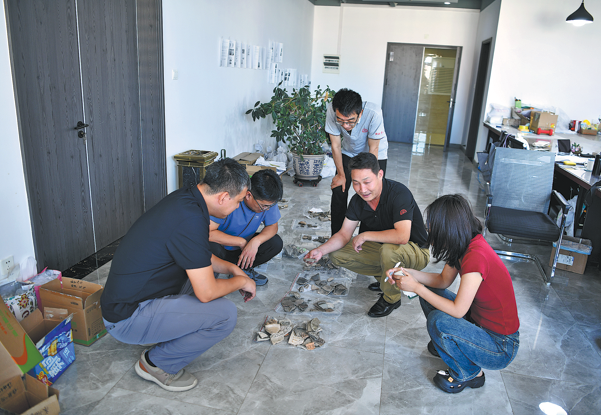
From early to later periods, these stone cities experienced an evolutionary process: settlements expanded in scale, spatial layouts evolved from simple to complex, construction techniques advanced from primitive to mature, and the characteristics of hierarchical differentiation gradually intensified.
"It has provided new information for a comprehensive understanding of the origin, development, spread and evolution of prehistoric city sites in northern China," Ma said.
In the next step, the team plans to explore the supporting conditions of the natural environment for subsistence activities and handicrafts, analyzing the regional economic development level at that time, and clarifying the material foundation on which the stone city cluster relied for survival.
In-depth research will be conducted on the formation, development, rise and fall cycle of the unique culture the stone city cluster represents, exploring its interaction and integration process with the cultures of different ethnic groups.
By analyzing the layout, scale and core remains of the stone cities, the degree of social complexity, the origin model of civilization and the formation process of early states at that time will be explored, with a focus on the corresponding relationship between settlements and ritual systems.
The team will also cooperate with universities to carry out archaeological excavations and scientific and technological archaeological testing such as population gene research.
Han Jianye, a professor at the School of History of Renmin University of China in Beijing, said that most of the stone city sites were first built around 4,700 years ago, corresponding to the legendary era of the Yellow Emperor.
The northern Shaanxi region where these sites are located should have been the core of Chinese civilization at that time. Serving as the "prototype" of the Great Wall, these stone cities formed the northern defense line and hold an irreplaceable, significant value for uncovering the structure and characteristics of early Chinese civilization, according to Han.
"The site will provide a 'settlement group' context for the application of the Shimao site as a World Cultural Heritage Site. It will also propel the project to trace the origins of Chinese civilization into deeper and broader dimensions, he added.
Contact the writers at chenmeiling@chinadaily.com.cn









Editor's Pick










