Micro-dramas directed to tackle sports
Short soap opera phenomenon utilized to implement social policy objectives
China Daily | Updated: 2025-12-23 08:47


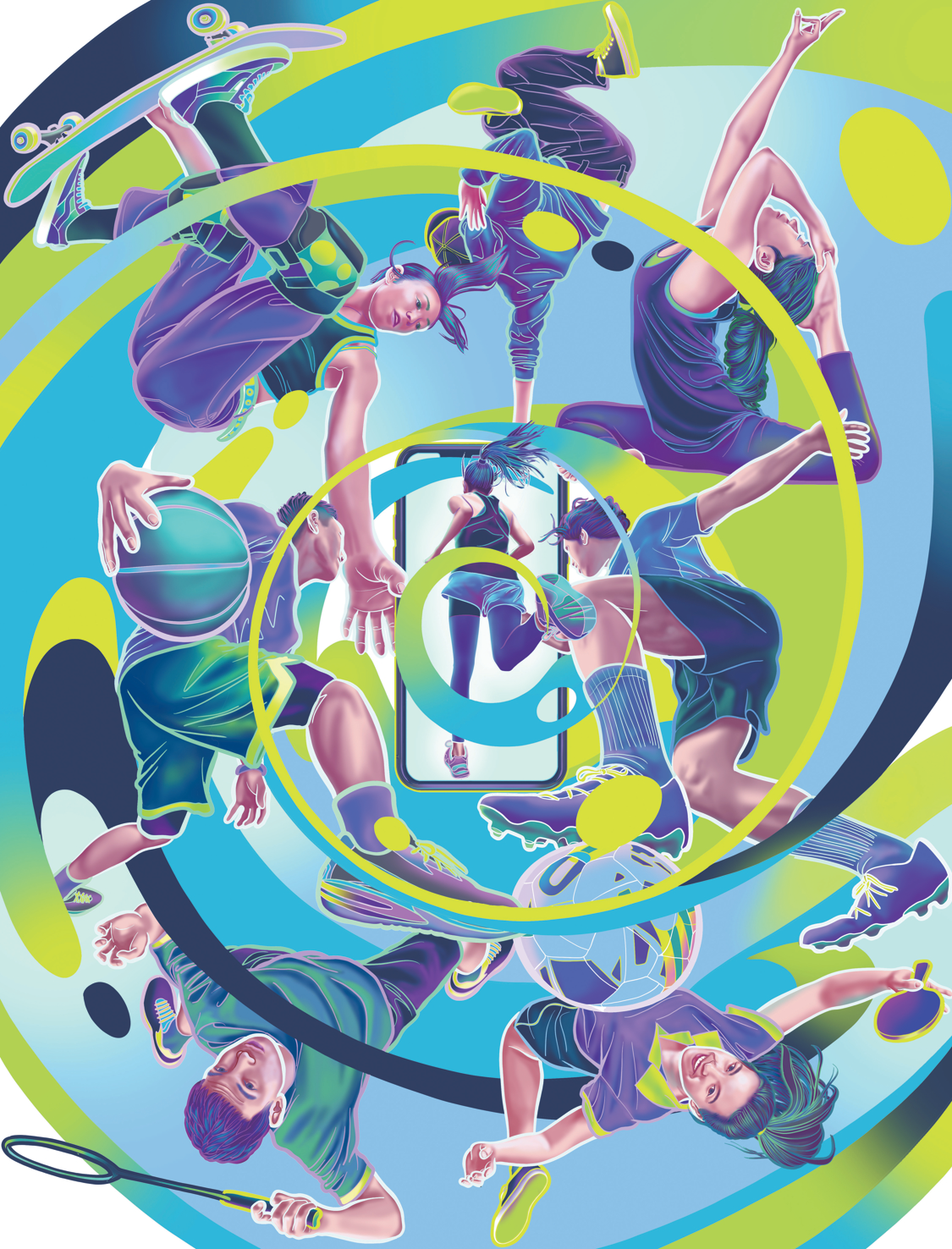
Amid the high-speed evolution of traditional soap operas for the smartphone era, micro-dramas have become not just fragmented entertainment, but a medium through which social policy can be implemented.
In October, China's National Radio and Television Administration and the General Administration of Sport launched the "Exercise Through Micro-dramas" initiative, encouraging production companies to create sports-themed micro-dramas to bring sports into everyday life in a more accessible and engaging way.
It followed the August release by the General Office of the State Council of a document listing micro-dramas as a tool to promote public participation in sports.
These policies signal that micro-dramas — short, often vertically shot serials designed for mobile viewing — are being formally integrated into China's national fitness strategy.
"Micro-dramas are becoming an important component of the sports industry," said Liu Fan, an associate professor at the Communication University of China, who has long studied sports communication.
From Liu's point of view, micro-dramas are well-suited to sports content. They emphasize emotional expression, capturing the passion and perseverance at the heart of sports and inspiring audiences, he said. Their suspense-driven plots reflect the uncertainty of competitions, keeping viewers engaged until the very end. Moreover, the fast-paced, high-density storytelling of micro-dramas amplifies the tension and drama of sports events, effectively delivering impactful sports content within a short time.
According to the "Micro-short Drama Industry White Paper (2025)" released by the China Netcasting Services Association, the total number of micro-drama viewers in China has reached 696 million, with average daily usage time per viewer rising to 120.5 minutes.
Luo Jiaojiao, a lecturer at the School of Journalism and Communication at Beijing Sport University, and author of Research on the Production and Dissemination of Sports Short Video Content, said that micro-dramas have become one of the dominant audiovisual formats, offering advantages that traditional film and TV dramas cannot achieve.
She said micro-dramas' quick production process enables near real-time content for sporting events. Their low cost also makes it easy for a wide range of creators — from professional production companies to individuals — to get involved.
"More importantly, for the audience, micro-dramas are embedded into their fragmented daily life without requiring extra time or money," Luo said, adding that this level of accessibility makes the idea of "exercise through micro-dramas" feasible.
The characteristics of micro-dramas also allow them to carry more public value. In January, the National Radio and Television Administration launched the "micro-drama plus" action plan, encouraging deeper integration between micro-dramas and fields such as tourism, intangible cultural heritage and the rule of law.
"This year marks the beginning of the 'premiumization' of micro-dramas," said Chen Yuehan, a micro-drama producer.
She said that the industry has moved beyond its low-quality, sensational image, with high-budget titles breaking viewership records and standing out from regular productions.
Chen works at Migu Digital Media Co, where sports has long been a core focus. She said that following recent policies, the company has aligned its content with the six creative directions outlined in the documents. It has also produced China's first micro-dramas related to scientific fitness and short-track speed skating, which are set to premiere soon.
Even before the policies were formally released, some micro-drama companies had already started exploring sports-themed productions.
Tang Huiyu, director of public affairs at Chongqing Maiya Media Co, said that "sports offer a path for differentiation and content upgrading". Last year, Maiya launched its first sports-themed micro-drama. It has completed a total of 26 sports-centered micro-dramas since.
Among them, the billiards-themed The Little Pool God has amassed over 200 million views on short-video platforms. It also topped DataEye's Micro-drama Popularity Ranking for the first half of this year, underscoring the broad appeal and reach of sports micro-dramas.
In sports-themed productions, Tang said that teams tend to prioritize sports with wide public participation and relatively low professional barriers. Narratively, creators often focus on the growth and comeback of ordinary characters, aiming to strike an emotional chord with audiences.
Airxiden Arkin, director of The Little Pool God, said creators need to deepen their knowledge of their target sports itself to enhance entertainment value without undermining the professionalism.
"Only by being familiar with the sport can you film it with confidence," he said, adding that he tries to include as many authentic sports scenes as possible to enhance audience immersion and participation.
However, from an academic perspective, some sports micro-dramas still fall into narrative pitfalls. Liu, the professor, stressed that many productions focus too heavily on winning and losing while neglecting core sports values such as teamwork and self-discipline.
"They often borrow sports themes superficially while following familiar patterns, such as time travel, rebirth, or romantic fantasy," he said. "Micro-dramas need to strike a balance between entertainment and meaningful content."
Luo, the lecturer, suggested that future sports micro-dramas could better integrate with local industries and cultures, exploring approaches such as "sports + tourism" and "sports + intangible cultural heritage".
Tang in Chongqing agreed with the idea and said that production company Maiya's next step would be to integrate sports micro-dramas with regional culture, including local soccer events and traditions such as the dragon dance.
With ever-broadening content, audience expectations for micro-dramas will continue to rise, experts said, adding that industry practitioners must continuously adapt their creative strategies to meet evolving market demands.
"To make the 'Exercise Through Microdramas' initiative truly effective, creators may need to return to ordinary people's daily experiences and explore how sports can resonate with broader social emotions," Luo said.
Bai Shuhao contributed to this story.








Editor's Pick