China's new plan: Stability and opportunity for the Global South
By Sugath Rathnayake | chinadaily.com.cn | Updated: 2025-12-26 10:57


In the face of the current global economic slowdown, rising protectionism and widening development gaps, the decisions taken at China's annual Central Economic Work Conference send a clear and reassuring signal to the world.
In launching its 15th Five-Year Plan (2026–30), China has focused not only on the Chinese economy but also on the stability of the other economies of the Global South.
Over the past five years, China has contributed about 30 percent of global economic growth. It has been a driving force in the volatile world economy. This performance has demonstrated China's long-term commitment to high-quality development. Such behavior reflects openness and balanced coordination between domestic priorities and international responsibilities.
Domestic demand as a source of global stability
One of the most important policies adopted at this month's economic conference was the continued emphasis on domestic demand as the main driver of growth. This strategy will strengthen not only China's domestic economy but also the world economy.
A strong Chinese domestic market stabilizes global supply chains. It is important for import demand in developing countries. This suggests that there is a stable demand for agricultural products, apparel and tourism-related services in the economies of the Global South, including Sri Lanka. Growing consumption in China supports export earnings, employment and foreign exchange stability across the South.
Sri Lanka will benefit greatly from exporting tea to China and from Chinese tourists visiting the country. The expanding Chinese consumer market, therefore, driven by increased domestic demand, is a net strength for developing countries.
From short-term risk response to long-term transformation
China's economic plan is a clear plan to move from short-term risk management to long-term structural transformation. The plan aims to drive innovation-driven growth, develop new quality products and create an integrated national market.
This transformation is of direct relevance to developing countries. China is upgrading its industrial sector by increasingly sharing technology, production capacity and development experience with the Global South. Chinese investments in manufacturing, renewable energy, logistics and digital infrastructure are contributing to the industrial upgrading of the economies of the Global South, as well as to skills development.
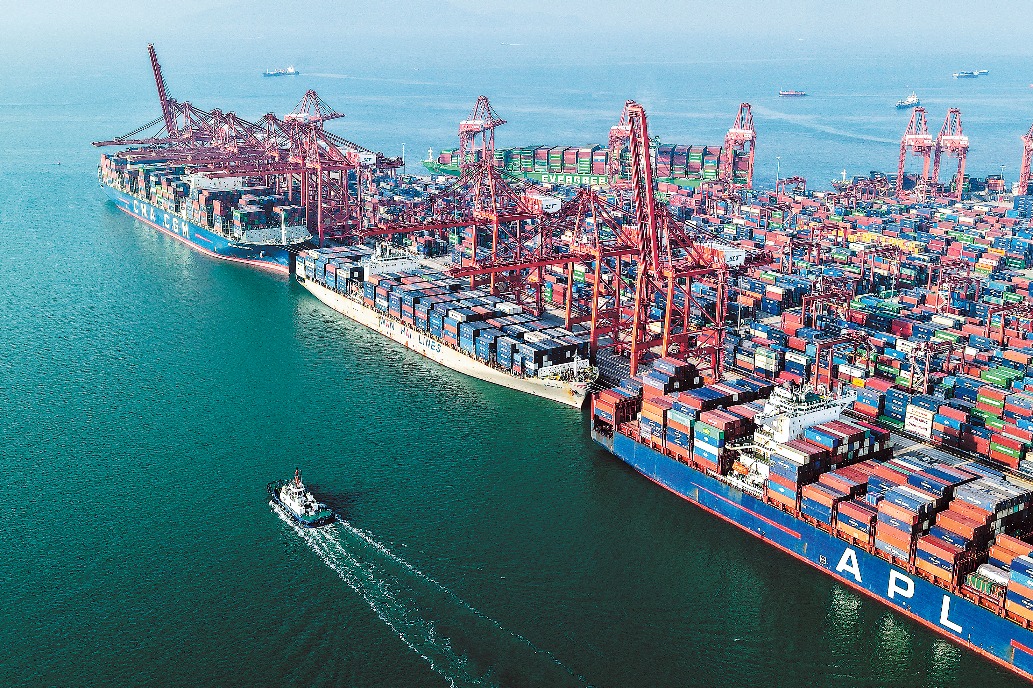
For example, Colombo, the capital and chief port city of Sri Lanka in which China has invested heavily, has acted as a pioneer for the country's role as a regional connectivity hub in the Indian Ocean. Colombo is central to Sri Lanka for capital inflow, productivity improvements, improved trade efficiency and long-term economic resilience.
Coordinating global development and security
Another important element of China's plan is to better coordinate domestic economic activities with the challenges of the international economic and trade arena. This has strengthened China's preparedness to meet external pressures such as rising protectionism and geopolitical tensions.
China provides assurance to the Global South in terms of openness and opposition to unilateralism. Openness, foreign investment and free trade zones have created new opportunities for the international business community to access the emerging Chinese market.
China is strengthening global cooperation under programs such as the open economy and the Belt and Road Initiative, facilitating investment, trade and people-to-people exchanges.
Green transformation and climate cooperation
China reaffirms its commitment to carbon reduction in its 15th Five-Year Plan. This is of great importance to developing countries facing financial and technological constraints, as they are highly vulnerable to climate change.
Renewable energy technologies are reducing global costs. Many renewable energy and infrastructure projects supported by China are being implemented in the Global South, including in Sri Lanka. These projects are making significant contributions to energy security, reducing carbon intensity and reducing dependence on imported fossil fuels.
Every country should link green development with its economic growth. China has focused on green development in its development plans. Accordingly, China's approach is a good example of a common, sustainable and inclusive development path.
Infrastructure connectivity and shared growth
China's economic plan emphasizes policy coordination and proactive macroeconomic measures. These measures provide a sustainable foundation for continuous, high-quality Belt and Road cooperation. Public infrastructure is a critical factor in developing economies.
China's participation in port, highway, transportation, railway and digital infrastructure projects has improved regional connectivity. It has led to lower trade costs in Asia and Africa. In Sri Lanka, such projects have made a significant contribution to ports, logistics and urban development. BRI cooperation closely aligns with the development priorities of partner countries.
China's new five-year plan will further strengthen trust among international partners. Policy predictability is an essential element for long-term cooperation and investment planning.
I believe that China's plan has taken into account domestic stability and global responsibility. In simple terms, the plan prioritizes domestic demand, innovation, green transformation and openness.
Through this, China will continue to add new vitality to the global economy over the next five years.
The author, a native of Sri Lanka, is a lecturer at Yunnan University School of Foreign Languages, a senior journalist and published author.
The views don't necessarily represent those of China Daily.
If you have a specific expertise, or would like to share your thought about our stories, then send us your writings at opinion@chinadaily.com.cn, and comment@chinadaily.com.cn.






Editor's Pick