


Export measures help with sustainable development
By Wang Keju | China Daily | Updated: 2026-01-06 10:08


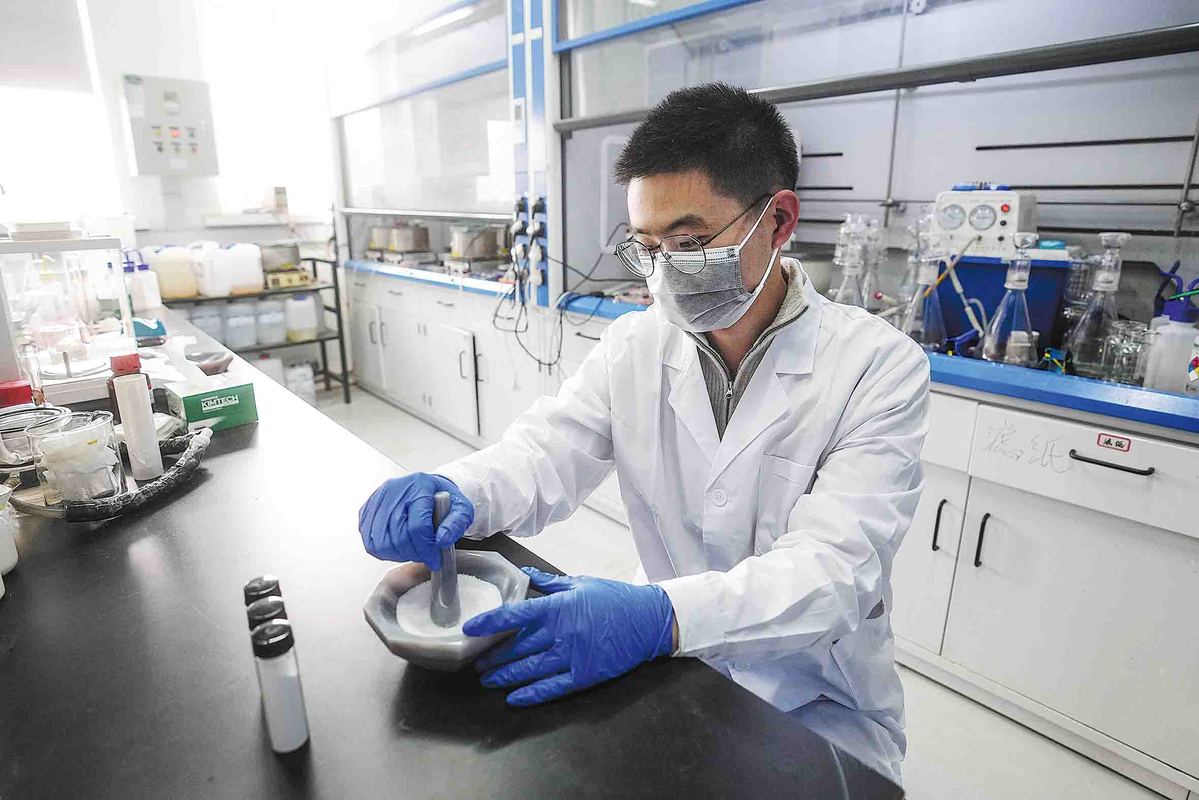
China's decision to improve export management of rare earth metals is not an impulsive move targeting any specific economies, but rather a long-anticipated step to ensure the sector's sustainable development and proper utilization, experts said.
Meanwhile, Beijing has been accelerating the review of rare earth-related export license applications to maintain the stability and security of global industrial and supply chains, they added.
"To my knowledge, a number of applications for general licenses submitted by Chinese exporters have now been received and approved," said He Yadong, a spokesman for the Ministry of Commerce, at a news conference in late December.
Since the implementation of export controls on items related to rare earths, Chinese authorities have conducted policy briefings for domestic exporters. With the accumulation of relevant export and compliance experience, some Chinese exporters have initially met the basic requirements for applying for general licenses, said He.
General licenses for rare earth exports are a new permit category that aims to speed up shipments of the vital elements.
Earlier in December, He also said that "the Chinese government has consistently approved compliant export applications for civilian use in a timely manner."
In November, China announced a one-year suspension of export controls on rare earths, super-hard materials and other strategic resources.
"Rare earth metals are vital to a wide range of high-tech industries and emerging technologies that are shaping the future of both the civilian and defense realms," said Zhou Mi, a senior researcher at the Chinese Academy of International Trade and Economic Cooperation.
"It is incumbent upon major producers like China to implement appropriate control measures to prevent the misuse or diversion of these strategic materials," Zhou said.
Zhou also noted that China's rare earth export control policy falls squarely within the parameters of international norms and the regulatory frameworks adopted by major Western economies.
The United States' Export Control Reform Act and the European Union's Dual-Use Regulation, for instance, mandate that the export of sensitive technologies or materials, including those with potential military applications, must be subject to proper licensing and authorization procedures.
China's move to raise the threshold for rare earth exports is not an attempt to blockade other economies, but rather a bid to ensure these critical materials are utilized responsibly within the confines of a transparent, rules-based management framework, said Dong Yu, executive vice-dean of the China Institute for Development Planning at Tsinghua University.
China has made it clear through concrete actions that its rare earth export control measures will not impact normal business operations and trade of enterprises, nor disrupt the stability and security of the international rare earth industry supply chain, as long as they do not engage in activities that undermine China's national sovereignty, Dong said.
"The international community needs to take an objective view of the purpose and significance of China's approach, actively strengthen communication and cooperation with China, and jointly promote the sound development of the global rare earth industrial chain," Dong added.







Editor's Pick










