


High-temperature geothermal resource discovered in Shandong
By Zhao Ruixue | chinadaily.com.cn | Updated: 2026-01-10 15:45


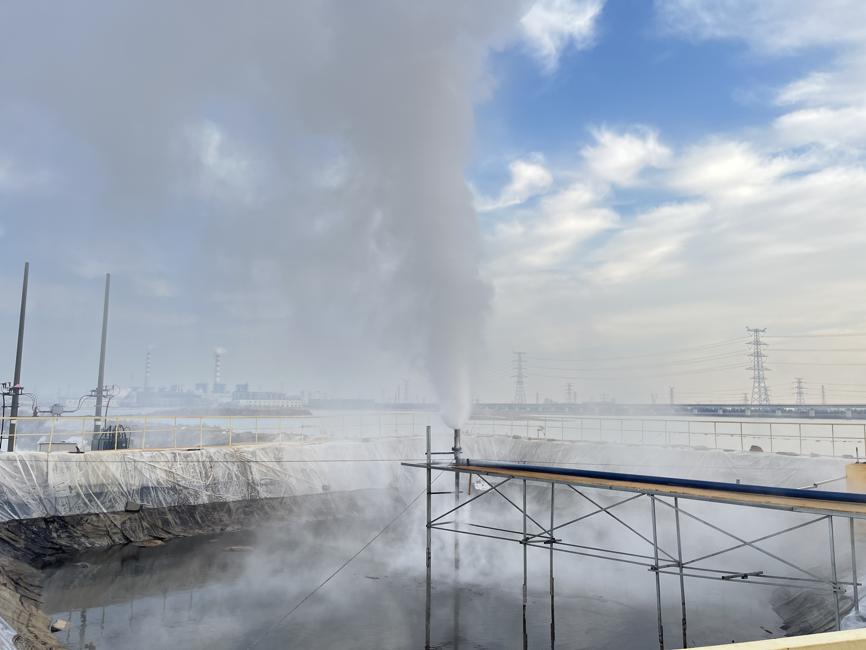
A landmark high-temperature geothermal resource, hailed as a natural underground boiling hot water storage, has been confirmed at a depth of 4,000 meters in Dongying, Shandong province, paving a new path for clean energy development in the region.
The geothermal well is located in the Yellow River Delta region. With a depth of 4,002.17 meters, it records a bottom-hole temperature of 162 degrees Celsius and produces water at 138 degrees Celsius at the wellhead.
The single-well output reaches 101.3 cubic meters per hour, making it the hottest hydrothermal geothermal well discovered to date in East China.
Preliminary estimates indicate the well's stable thermal power at 21.57 megawatts. If used for power generation, it could produce around 25,200 kilowatt-hours of electricity daily, which would be sufficient to meet the daily needs of nearly 10,000 residents, said Zhang Chengwei, Party secretary and director of the Shandong Provincial Bureau of Geology and Mineral Resources, which drilled the well.
For industrial use, it could supply about 94,000 tons of steam each year, replacing 18,800 tons of standard coal and reducing carbon dioxide emissions by roughly 48,900 tons annually.
The project has also identified a high-temperature geothermal field covering an area of 40 square kilometers, with total stored heat equivalent to about 478 million tons of standard coal. Large-scale development is expected to reduce carbon dioxide emissions by 184,300 tons annually, delivering significant energy-saving and emission-reduction benefits.
In addition to providing clean heating, the residual heat can support facility agriculture, enabling year-round production of high-value fruits and vegetables, as well as constant-temperature aquaculture. It is also expected to drive growth in hot-spring wellness and eco-tourism, said Zhang Yunfeng, director of the Shandong Provincial Geo-mineral Engineering Exploration Institute.
After being used for power generation or industrial processes, the remaining geothermal water offers an ideal heat source for centralized urban heating. Preliminary calculations suggest that the tail heat from the well and geothermal fields could supply clean heating for nearly two million square meters of residential space. Subsequent lower-temperature residual heat could also be used for large smart greenhouses and specialized aquaculture projects.
Dongying will establish a utilization system covering industrial steam, direct green power supply, residential heating, and facility agriculture to transform the resource advantage into tangible benefits in carbon reduction, industrial development, and public welfare, said Liang Runsheng, vice-mayor of Dongying.






Editor's Pick










