


Don't forget consumers when doing emissions accounting
By HOU LIQIANG | CHINA DAILY | Updated: 2026-01-12 07:09


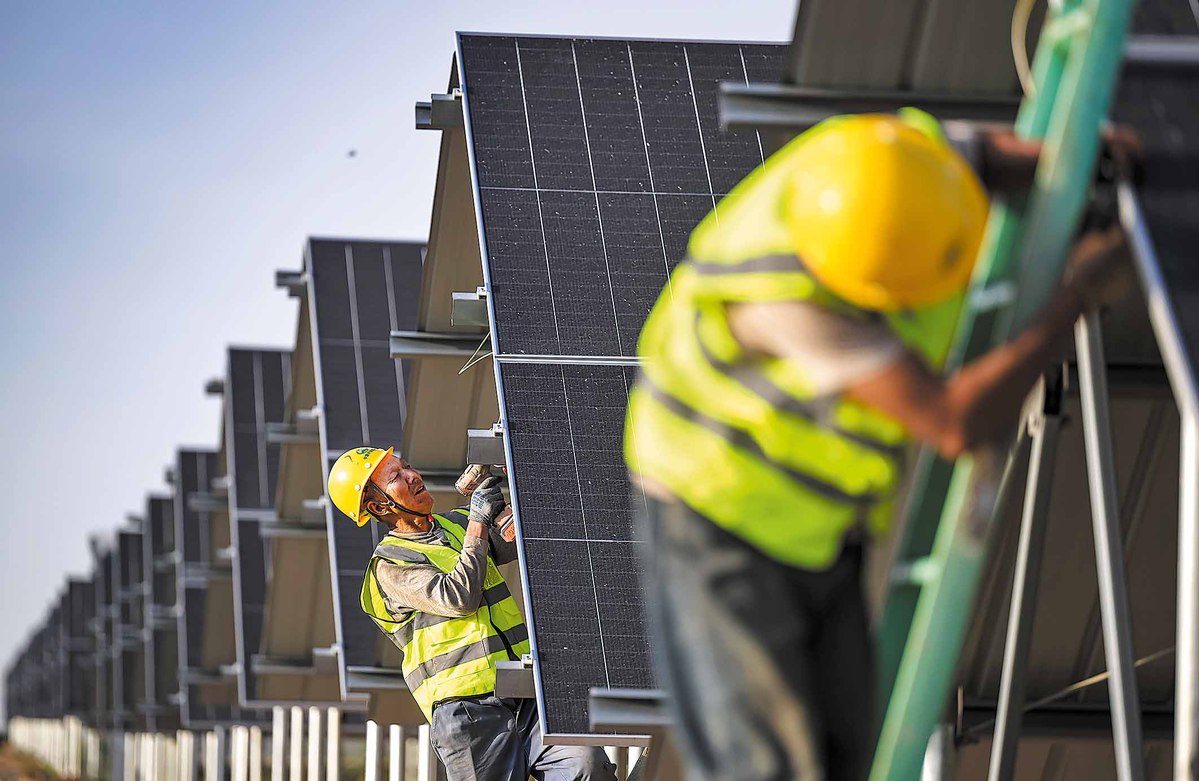
It is easy — but intellectually lazy — to label China the world's primary climate problem because it is now the world's largest emitter of carbon dioxide annually. Yes, this is correct, and China does not deny it. But this shallow narrative cynically overlooks an uncomfortable truth: a significant share of China's emissions is embedded in products destined for consumers in the very countries pointing fingers at China.
According to the International Energy Agency, China's carbon dioxide emissions reached 12.6 billion metric tons in 2024, while the United States' hit 4.9 billion tons. To cite this total alone as definitive proof of Chinese profligacy is, however, profoundly misleading. The IEA's same dataset also reveals that the average US citizen was responsible for 13.4 tons of CO2 emissions in 2024, compared to just 8.9 tons for the average person in China.
This disparity is not accidental. For generations, the West built its prosperity on the unfettered use of fossil fuels, and the lifestyles of many wealthy nations remain deeply carbon-dependent. As China and other developing economies strive to grow, their emissions will understandably rise.
Comparison without context is meaningless. According to Visual Capitalist, China's total per capita electricity use reached 7,097 kilowatt-hours in 2024, still significantly below the US level of 12,741 kWh.
More revealing, however, is how that power is used. Wang Zhixuan, an expert from North China Electric Power University, notes that per capita residential electricity consumption in China is only about 1,000 kWh — roughly one-third of the level in Western nations after industrialization.
The reason for this, he points out, is that in China, 65 percent of electricity is consumed by the secondary (industrial) sector. In contrast, developed nations exhibit a far more balanced distribution, with electricity consumption spread roughly equally across all three economic sectors.
"China's electricity consumption not only fuels its domestic rise in living standards," Wang said, "but also powers the industries that supply global markets."
As Li Lecheng, minister of industry and information technology, noted last year, China has maintained its position as the world's largest manufacturer for 15 consecutive years. During the 14th Five-Year Plan (2021-25) period, the country's manufacturing value-added output grew by over 8 trillion yuan ($1.14 trillion), contributing more than 30 percent of global manufacturing growth.
In essence, a substantial portion of China's energy use — and the emissions associated with it — is fundamentally tied to production, not just domestic consumption.
This structural reality forces us to ask a more fundamental question: Are we measuring the carbon footprint of a single nation, or the footprint of the global consumer economy it powers? When people assess China's emissions, they should first answer a more personal question: if the product label reads "Made in China", shouldn't part of the emissions ledger be marked "Consumed by Us"?
A carbon footprint measured at the factory gate tells only part of the story. The full account must also be tallied at the checkout counter.








Editor's Pick










