


Objects that breathe with life and memory
A new book reshapes nonfiction writing by allowing Jiangnan's artifacts to narrate history themselves, Yang Yang reports.
By Yang Yang | China Daily | Updated: 2026-01-20 08:49


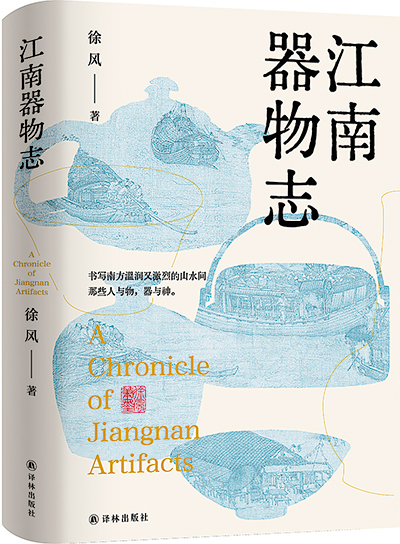
A Chronicle of Jiangnan Artifacts is like a written version of the masterpiece by Northern Song Dynasty (960-1127) painter Zhang Zeduan, Along the River During the Qingming Festival, in that it depicts the daily activities and culture of the time.
The book — which is on more than 20 lists of the top books of 2025 — examines the origins, inheritance, and evolution of folk artifacts, the cultural traits and essence behind these objects, and how Chinese culture has taken root and evolved in Jiangnan by exploring various aspects of social life. These include the imperial examination system, agriculture, festivals, customs, marriage, dining, courtyards, furniture, clothing, boats, vehicles, and gifts.
From waterwheels to plows and hoes, and from bowls and plates to tripods and vessels, the author not only revisits the ancient tools used in traditional Jiangnan life but also uncovers the history, culture, stories, and emotions embedded within them.
It is through the price of a bowl, the wandering journey of a table, and the echo of a folk song that the book weaves together a living history of Jiangnan civilization — crafted from the daily lives of ordinary people.
Xu Feng has previously published works on the Chinese Yixing clay teapot — Buyi Huzong (A Teapot Master of Pure Heart: A Biography of Gu Jingzhou) and Baojiang (Patina). In A Chronicle of Jiangnan Artifacts, however, he shifts his focus to the vast array of artifacts that form the cultural landscape of Jiangnan.
"In the past, many artifacts were kept behind glass cases in museums. Although they were exquisite, they often felt as if their aura was confined," the author says.
If these artifacts were brought back into the bustling world of everyday life, would they become vivid once more? Who created them, and whose hands and lives have they touched? This thought eventually gave rise to the fictional Qiyin town, says Xu Feng, talking about his inspiration.
Related Stories








Editor's Pick










