


Nation's underwater archeology uncovered
The passionate people behind China's search for submerged treasure trove of rich maritime relics
By XUE JINGQI in Hong Kong | China Daily | Updated: 2026-01-22 08:41


Currents of change
Becoming a qualified underwater archaeologist means navigating a demanding sea of training and assessment.
The journey from novice to a certified expert is long and challenging, with 196 individuals on the Chinese mainland capable of undertaking front-line underwater archaeological work, according to the National Cultural Heritage Administration.
"Undergraduate education in archaeology takes at least four years, while diver training typically spans just a few months," said Cui, emphasizing the importance of a solid archaeological foundation combined with a passion for diving."Our ideal candidates are those with an archaeological background and a love for diving too."
Tseung Pak-long was an ideal candidate. A graduate of Wuhan University's archaeology program and one of the first Hong Kong students to seek further education on the mainland, his connection with the ocean and the mainland seemed predestined.
Born and raised in Hong Kong with a profound interest in Chinese history and culture, Tseung read classic novels, particularly Romance of the Three Kingdoms, leading him to pursue archaeology. With no local programs available, he had to wait for a year to be admitted to Wuhan University's archaeology department.
Tseung's fascination with the nation's historical narrative drove him to pursue archaeology — a path that led him to various archaeological sites across the country. Yet, his hometown's call, with its vibrant maritime and diving landscape, remained strong. A chance meeting with Chan in 2015 bridged his dual passions for archaeology and diving, marking the beginning of a new chapter in his life's work.
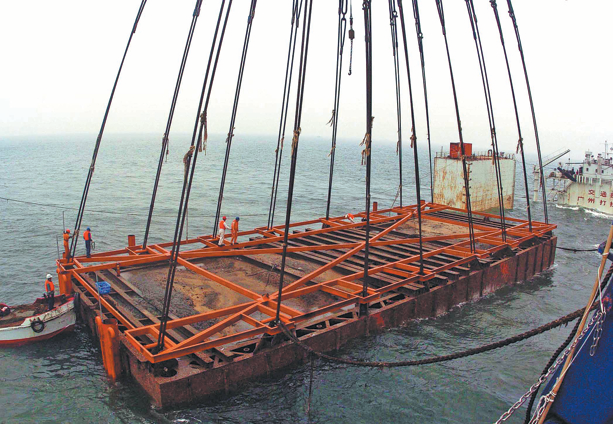
Today, Tseung is chairman of the Institute of Hong Kong Underwater Archaeology Research. He's heard the story of the Nanhai One countless times, and often reflects on his mentor's pivotal decision that helped shape the course of Chinese underwater archaeology.
"The journey of archaeology in China has been fraught with challenges. Now that we have established our own direction and uniqueness, it is crucial to pass these on to the next generation," Tseung said.
With this mission in mind, he started visiting schools across Hong Kong, narrating China's underwater archaeology history and stories. By recreating real archaeological excavation sites, he hopes to ignite interest in the younger generation to explore and join this niche industry.
The opening of the Greater Bay Area Underwater Archaeology International Cooperation Center in Guangzhou in December 2023 signaled a new chapter for the discipline. Hong Kong, once a pivotal node along the Maritime Silk Road and now a global shipping hub, continues to play a vital role in East-West trade. In the new phase of China's underwater archaeology going global, the influence of the Hong Kong Special Administrative Region is set to grow even stronger.





Editor's Pick










