


U23 team rekindles hopes that Chinese soccer can revitalize
By Lei Lei | China Daily | Updated: 2026-01-26 20:13


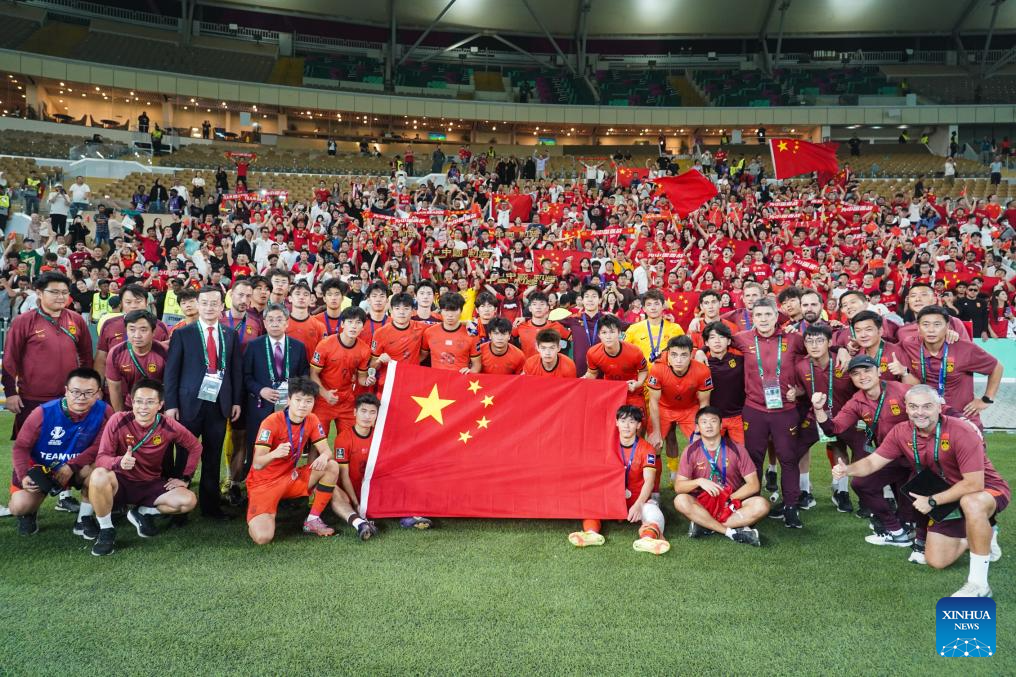
A 0-4 defeat is rarely a cause for celebration. But although China's U23 soccer team lost to defending champion Japan 0-4 in the final of the 2026 AFC U23 Asian Cup in Jeddah, Saudi Arabia, on Saturday, its performance in the competition has lifted the spirits of Chinese soccer fans.
Thanks to its solid defense and the heroics of goalkeeper Li Hao, the Chinese team overcame formidable opponents in the knockout rounds. In the penalty shoot-out against Uzbekistan in the quarterfinals, 21-year-old Li maintained his composure and confidence, unfazed by the missed penalties by his teammates. Such poise and self-assurance have been rare for Chinese national soccer teams in recent years. As noted in a congratulatory message from the General Administration of Sport of China, the team has borne the mission on its shoulders — rejuvenating the hopes for Chinese soccer.
At the same time, the 0-4 scoreline in the final laid bare the gap between Chinese soccer and the top level in Asia. It was a sobering reminder that reviving Chinese soccer cannot be done overnight. Yet recognizing that should not diminish what this team has achieved.
Japan's soccer success is deeply rooted in its comprehensive and well-structured youth training programs, which emphasize technical skills, tactical understanding and mental fortitude from a young age. These programs are supported by a robust league system.
In contrast, China's youth training system has historically faced challenges such as inconsistent coaching quality, insufficient competitive platforms and a lack of long-term developmental strategies. Addressing these issues is crucial for China to narrow the gap with Japan and other soccer giants.
In 2015, the State Council issued a plan for the reform and development of Chinese soccer, which explicitly proposed building a dual-track system of "popularization plus improvement" with schools as the foundation. Many of the players currently active on the field have benefited from the youth training system.
With a larger base of soccer participants and smoother selection channels, Chinese soccer is naturally poised to make progress.
In the past year, although the national soccer team's attempt to qualify for the World Cup failed, the Chinese Super League attracted more than 6.18 million spectators, setting a new record. Soccer is playing an increasingly important role in the national economy and people's lives with popular city soccer events, such as those in Jiangsu and Hunan provinces, driving growth in culture, tourism and consumption.
The hope for Chinese soccer lies not only in the potential of young players but in the strengthening of youth training, improving the competition system and providing more high-quality match opportunities for young players.
The U23 team's runner-up finish is not an end point but a starting point. These players have been tested in the cauldron of international competition and tasted the bitterness of defeat, but they have also gained invaluable experience. Chinese soccer may still face ups and downs, but this young team gives us reason to believe that as long as we stay on the right path, acknowledge our gaps and work diligently, Chinese soccer can eventually emerge from the shadows and, in time, compete with the best on the global stage.
Photo




Editor's Pick










