


Kenya to host intl investment conference on indigenous knowledge
By Edith Mutethya in Nairobi, Kenya | chinadaily.com.cn | Updated: 2026-01-29 17:19


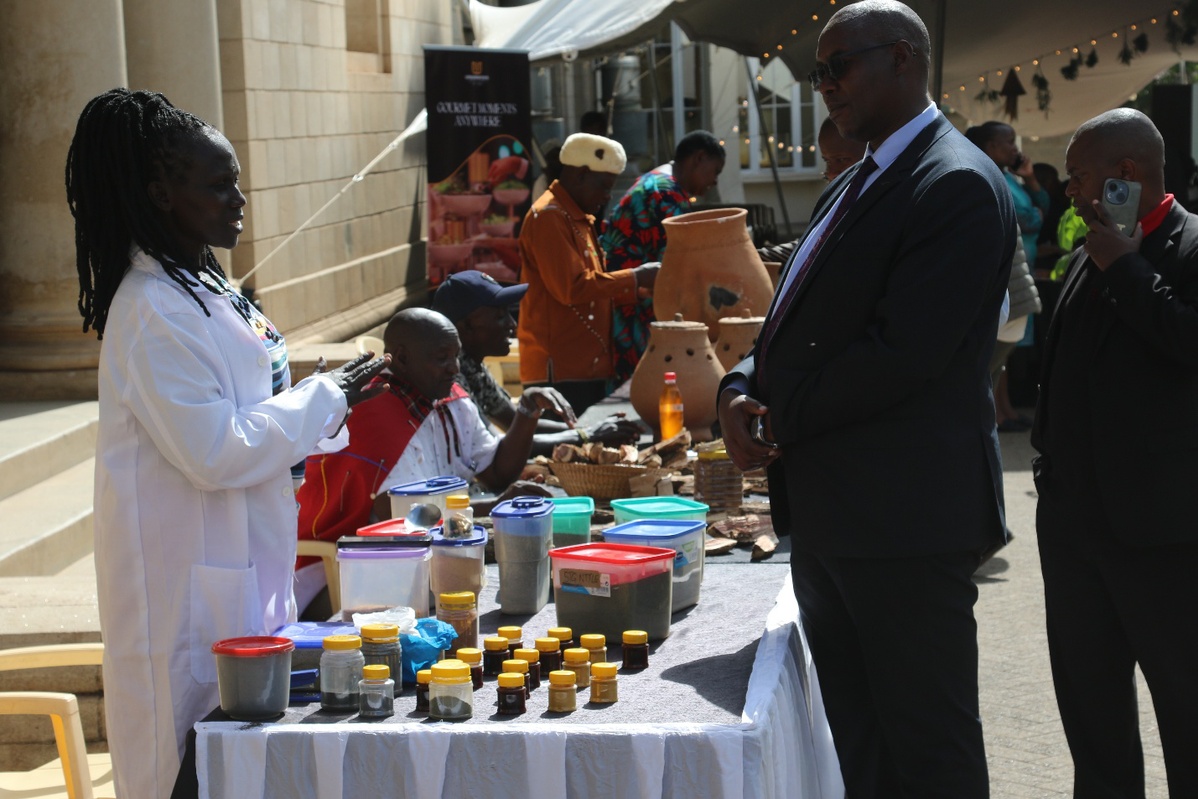
Kenya will host its first international investment conference and trade fair on indigenous knowledge intellectual assets in April.
The event to be held in Murang'a County, seeks to transform documented indigenous knowledge into market-ready innovations by linking local communities with investors to support sustainable economic development.
The conference will showcase Kenya's indigenous knowledge intellectual assets and their potential to drive inclusive socio-economic transformation. Participants from 13 pilot counties, micro, small and medium enterprises, and community-based asset owners will present their innovations to potential investors for product development and commercialization.
Exhibits will include traditional technologies, medicinal products, cultural foods and creative arts.
Speaking at the media launch on Wednesday, Stephen Munania, the deputy governor of the county, said the conference would help develop industries in tourism, publishing, storytelling, medicine, and arts crafts.
"The shrines where people used to worship mean nothing if those stories are not told. We need to tell the stories of the origin of our communities and how different tribes used to interact," he said.
Munania said the current challenge is converting indigenous knowledge into investments, jobs and value chains, noting that agriculture and food systems could be early beneficiaries.
Mary Gikungu, director-general of the National Museums of Kenya, said the indigenous knowledge documentation and digitization project aims to cover all the 47 counties in phases, in line with the Protection of Traditional Knowledge and Cultural Expressions Act 2016.
She said the museum has adopted research and intellectual property policies to protect market-ready innovations derived from documented indigenous knowledge.
"Efforts are underway to reach out to potential investors whose role is key to ensuring that the heritage-based enterprise agenda becomes a reality," Gikungu said.
Edwin Abonyo, the board chair of the National Museums of Kenya, said the project seeks to tap into the country's underutilized heritage and traditional knowledge.
"We have rolled it out in 13 counties so far and our intention is to get it to all the 47 counties," he said.






Editor's Pick










