


ASEAN ministers gather amid rising geopolitical challenges
Meeting can act as 'shock absorber' as Mideast crisis intensifies: Experts
By PRIME SARMIENTO in Hong Kong | China Daily | Updated: 2026-07-21 10:04


The Association of Southeast Asian Nations can serve as a "strategic shock absorber" in an era of intensifying global tensions, with the foreign ministers gathering in Manila this week expected to navigate widening geopolitical rivalry, according to analysts.
The 59th ASEAN Foreign Ministers' Meeting, from Monday to Friday, is being conducted against the backdrop of the escalating Middle East crisis, major power rivalry, and the South China Sea issue.
At the same time, ASEAN is dealing with intra-regional challenges such as how to advance the five-point consensus to resolve the situation in Myanmar and the Thailand-Cambodia border crisis.
Secretary of Foreign Affairs of the Philippines Maria Theresa Lazaro is this year's rotating chair of the foreign ministers' meeting. The series of meetings will also include diplomats from ASEAN's dialogue partners, including China's Foreign Minister Wang Yi, Russia's Foreign Minister Sergey Lavrov, and US Secretary of State Marco Rubio.
"My expectation is not that ASEAN will suddenly solve its most difficult disputes, but that it will produce concrete diplomatic movement rather than another carefully polished communique," said Anna Malindog-Uy, vice-president of the Asian Century Philippines Strategic Studies Institute, a Manila-based think tank.
Malindog-Uy said the key test for ASEAN is whether it can maintain a unified regional voice amid major power rivalry and wider global conflicts.
"ASEAN is a strategic shock absorber, not a passive buffer amid increasing geopolitical tensions," Malindog-Uy told China Daily.
Awang Azman Awang Pawi, a professor at the Academy of Malay Studies at the University of Malaya in Kuala Lumpur, said the foreign ministers' meeting is not about producing dramatic breakthroughs, but more about preventing regional disputes from deteriorating further.
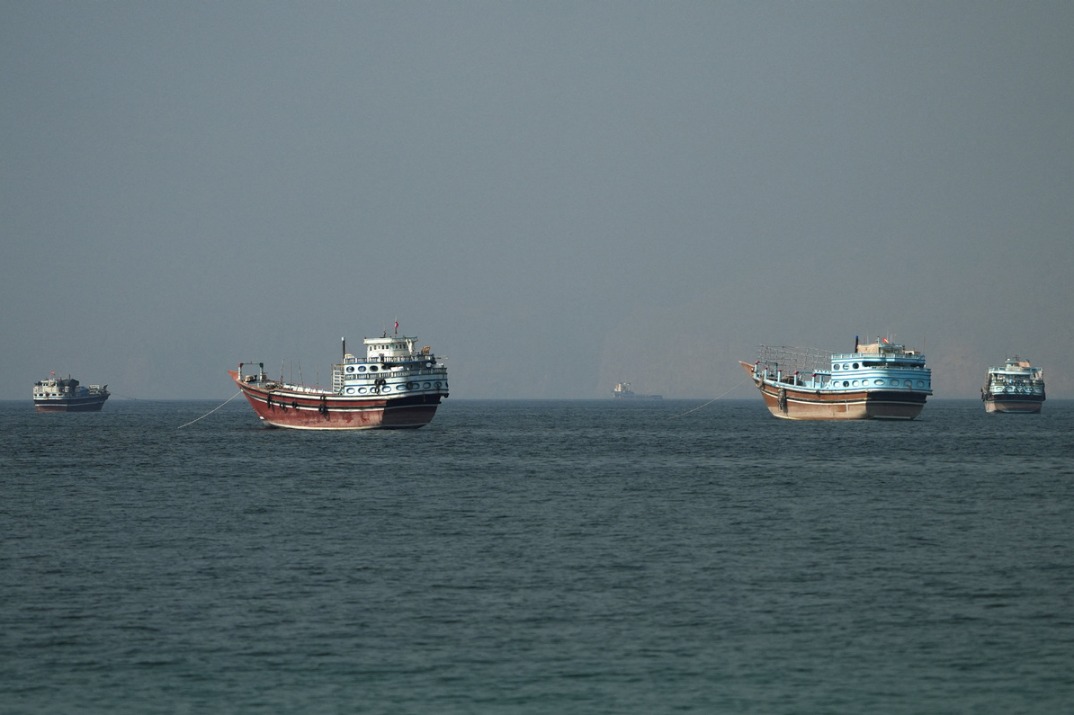
Lim Tai Wei, an East Asia expert and professor of business at Japan's Soka University, said he expects the foreign ministers to address the disruption in the Strait of Hormuz and its impact on oil supply.
"There is an interest to see if ASEAN can have some form of cooperation in energy and resources, particularly since there are a large number of ASEAN countries that are rich in energy resources, and a small number that require imports of energy resources," Lim said.
ASEAN spokesman Dominic Xavier Imperial said in a news briefing that the ministers are expected to adopt two important outcome documents — the 59th ASEAN Foreign Ministers' Meeting Joint Communique and the Guidelines on the Modalities for Engagement of ASEAN with High Contracting Parties to the Treaty of Amity and Cooperation in Southeast Asia.
The meeting will also include a review of the progress in implementing the Southeast Asia Nuclear Weapon-Free Zone Treaty, a discussion on ASEAN's progress across its three community pillars, and post-ministerial conferences with external partners, including Australia, China, the European Union, India, and the US.
'Key platform'
Awang Azman of the University of Malaya said the participation of major powers, including China and the US, will make the meeting "an important platform" for managing wider geopolitical rivalry.
"ASEAN should be viewed as a strategic shock absorber and diplomatic bridge, rather than a conventional buffer bloc," he said.
Awang Azman said that while ASEAN cannot balance major powers militarily, the regional bloc's strength lies in convening rivals, maintaining communication, promoting international law, and preventing Southeast Asia from becoming an arena of exclusive spheres of influence.
"Neutrality must not become passivity," he said, noting that ASEAN must defend principles such as sovereignty, peaceful dispute settlement, and freedom of navigation consistently, regardless of which major power is involved.
Malindog-Uy, of Asian Century Philippines, said the success of the meeting should not be measured by the number of statements issued but by clear commitments, timelines, follow-up mechanisms, and reduced conflict risks.
"Myanmar's opposing sides have recently signaled some openness to dialogue, while ASEAN and China are again discussing progress on the Code of Conduct. These are opportunities, but they remain fragile," she said.
Yang Han in Hong Kong contributed to this story.
prime@chinadailyapac.com





Editor's Pick










