


China Anneng group mobilizes for emergency rescue operations
By CAO YIN in Beijing and PALDEN NYIMA in Shigatse, Xizang | chinadaily.com.cn | Updated: 2026-08-27 15:16


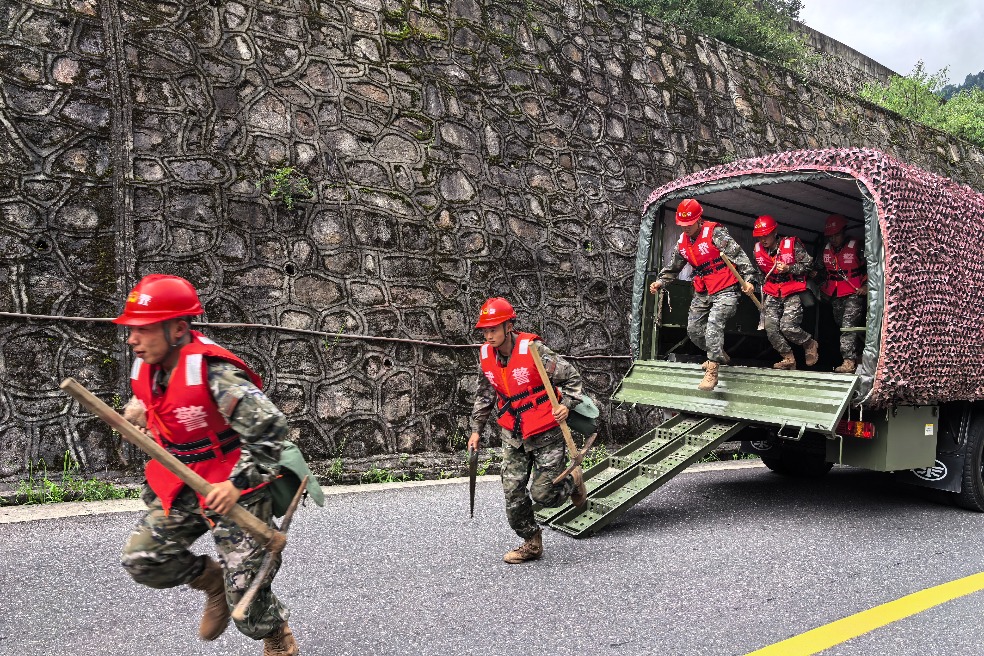
Rescue forces from China Anneng Construction Group have been deployed to Gyirong county in Shigatse, Xizang autonomous region, to conduct emergency rescue operations at a local port. A severe mudslide has disrupted roads, communications, and power supplies.
The mudslide, which occurred around 10:30 am Wednesday in Nepal, caused significant casualties after striking the Gyirong border port, a major land connection between China and Nepal in Shigatse. As of 8 am Thursday, the disaster has resulted in three deaths and 558 people reported missing.
Following the disaster, China Anneng group, a State-owned engineering and rescue enterprise, activated its emergency response mechanism as directed by the Ministry of Emergency Management. A total of 310 technical experts and rescue personnel, including specialists in geology and engineering, were quickly mobilized from cities such as Beijing, Chengdu, Chongqing, and Lhasa, the group said.
The rescue team brought with them 120 sets of advanced, purpose-built equipment, including multifunctional survey drones, 3D laser scanners, life-detection devices, large excavators, and loaders, as they rushed to the affected area for relief operations. The 310 rescuers and 120 sets of equipment are expected to arrive at the disaster site on Thursday afternoon, it said.
An eight-member advance team from the group's engineering rescue base in Lhasa, equipped with communication and detection gear, arrived in the county early Thursday morning. Under the direction of the frontline rescue command center, the team has been tasked with advancing to the upstream barrier lake and conducting aerial surveys and 3D modeling using portable satellite stations, reconnaissance drones, and 3D laser scanners.
The operation aims to gather key data, including the properties of surrounding rock, and the dam's dimensions and flow velocity, to provide scientific data support for subsequent barrier lake disposal efforts. The top priority, according to a frontline rescuer, is to neutralize the threat posed by the upstream barrier lake. Only once that danger is mitigated can safe conditions be established for clearing sediment accumulation approximately three kilometers upstream of the border crossing, it said.








Editor's Pick










