


China's next-gen factories set to redefine manufacturing landscape
AI, robotics deep integration pillar of country's future plant transformation
China Daily | Updated: 2025-12-12 09:39


Closing the loop
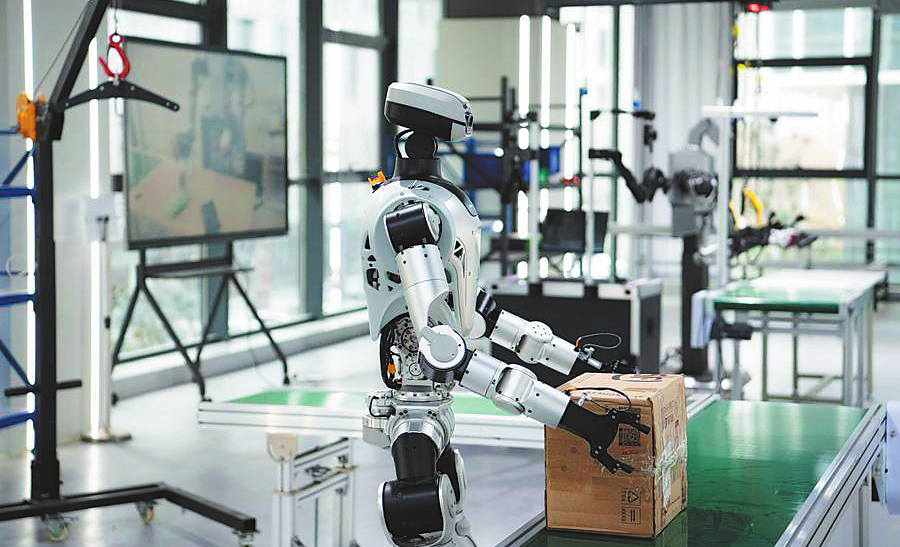
In recent weeks, a video of UBTECH humanoid robots marching in unison out of a Chinese warehouse has gone viral online. The scene not only provides a glimpse of the future, but also signals the robot manufacturer's push to integrate machines into real factory floors.
UBTECH's smart plant in Liuzhou, Guangxi Zhuang autonomous region, sits not far from automaker Dongfeng's assembly plants — one of the first places its robots clock in. Clustering suppliers and customers is stitching the country's new tech chain into a tight loop.
Shanghai has established a brain-computer interface technology incubator within walking distance of Huashan Hospital, one of China's top neurological clinics, turning scientists, entrepreneurs and neurologists into next-door neighbors.
Performing approximately 20,000 neurosurgical procedures annually, the hospital provides critical clinical support to accelerate the translation of BCI devices from the lab to real world medical applications.
"Shanghai's BCI ecosystem brings the full supply chain together. It's the ideal ground to scale fast," said Peng Lei, founder of Gestalt Life Technology, explaining why his ultrasound-based BCI startup chose to set up shop in the industrial park.
At an aerospace park in Wenchang, Hainan province, another satellite superfactory is being built on a "satellite out, launch ready" model.
The facility, which is designed to produce 1,000 satellites annually, is part of a comprehensive ecosystem that includes rocket development, satellite manufacturing and launch control — all within the same industrial cluster.
Wenchang is home to China's first commercial aerospace launch site and has drawn over 20 enterprises across the industry chain — ranging from rocket development and satellite manufacturing to launch monitoring and control — to establish operations in its industrial park.
These factories taking shape are more than production facilities, but also ecosystems that allow for rapid prototyping and scaling, bridging the gap between lab breakthroughs and commercial products faster than competitors.
China has already launched over 60 provincial-level future industry pilot zones and plans to add more frontier-tech clusters in the next five years — building not just factories, but whole new industrial chains.
Xinhua







Editor's Pick










