Balanced growth, structural reforms in focus for 2026
Policymakers considering how to strengthen country's long-term potential and deliver qualitative improvements to economy
By Jiang Xueqing | China Daily | Updated: 2025-12-16 09:44


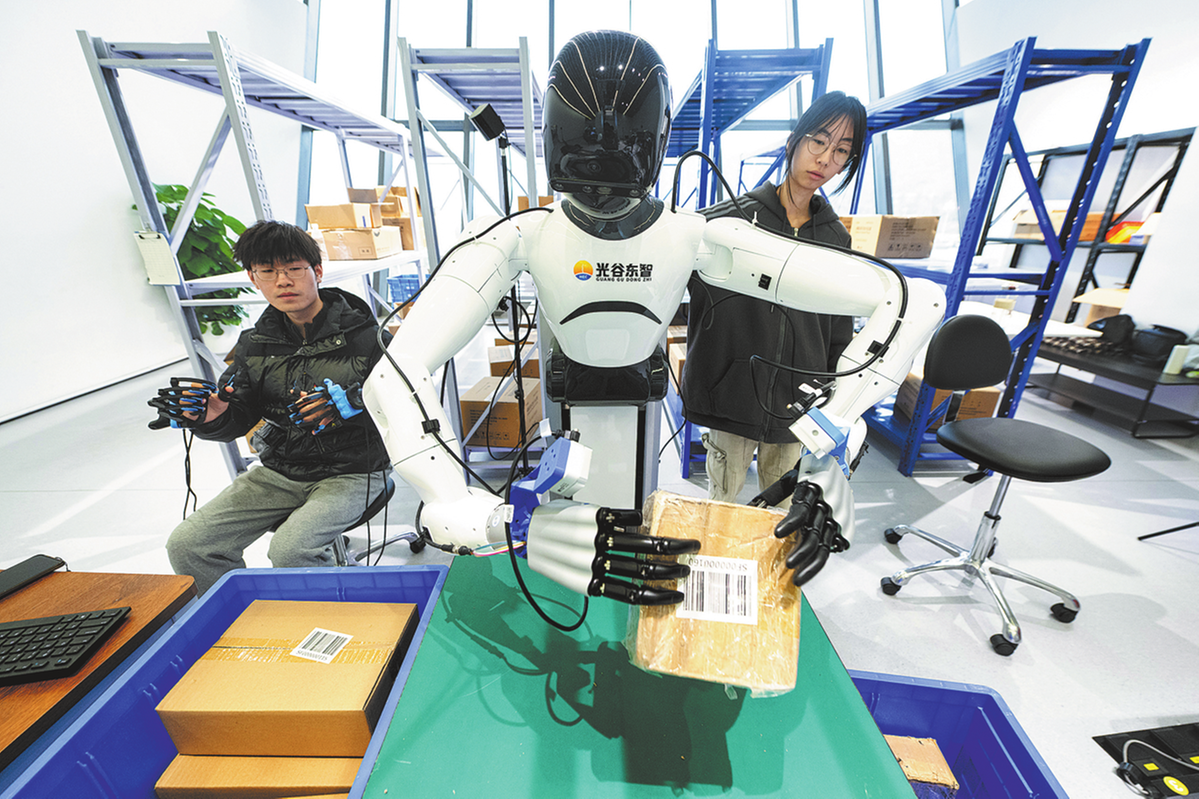
Economists expect China's 2026 policy agenda to place greater weight on domestic demand and innovation-led growth, sharpening the focus on long-term expansion and rebalancing the country's growth model.
"China has shifted its economic policymaking from a short-term, risk-response mode to a longer-term strategy centered on structural transformation, with a renewed focus on boosting productivity and fostering new growth drivers through technology investment and industrial upgrading," said Ding Shuang, chief economist for Greater China and North Asia at Standard Chartered Bank.
The Central Economic Work Conference, held in Beijing last week, called for leveraging the combined effects of existing and new policies, strengthening countercyclical and cross-cyclical adjustments and enhancing the effectiveness of macroeconomic governance.
Ding said cross-cyclical adjustment is generally understood as taking a long-term view. With China's external environment now more stable than a year ago, he added, policymakers are refocusing on how to strengthen the country's long-term growth potential and deliver qualitative improvements in the economy.
Zhang Ning, senior China economist at UBS Investment Bank, said: "Overall, we think the Central Economic Work Conference set a policy tone that is more balanced and provides continued support in order to stabilize economic growth while facilitating more structural reforms."
China's top policymakers have identified tasks for next year's economic work, including adhering to a domestic demand-led approach to build a robust domestic market, and enhancing innovation-driven development to accelerate the cultivation of new growth drivers.
The country's supply-side strength — in both quality and capacity — is very strong, but demand is relatively weak and has not fully absorbed supply. "Going forward, China needs to address the supply-demand imbalance and boost domestic demand so that it better matches the country's productive capacity," said Ding.
He noted that although China's consumption has improved in 2025, the recovery is mainly driven by stimulus measures. It is still necessary to further enhance households' consumption capacity and willingness to spend. This calls for additional structural policy measures.
"Relying on consumer goods trade-in programs can only deliver short-term effects. In the long run, China needs to strengthen households' expectations of stable income growth, improve social security for low-income groups and ensure equal access to basic public services," he said.
It was noted at the meeting that China will continue to implement a more proactive fiscal policy and maintain necessary fiscal deficits, overall debt levels and expenditure scales, while standardizing tax incentives and fiscal subsidy policies.






Editor's Pick