


The return of Yongle Dadian
A landmark facsimile revives China's greatest vanished encyclopedia through material fidelity and scholarly persistence, Yang Feiyue reports.
By Yang Feiyue | China Daily | Updated: 2026-01-23 08:46


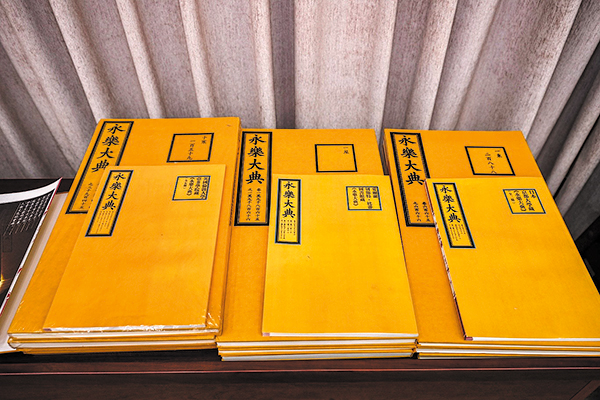
This forensic approach extends to every detail. The project's earlier publications of surviving Jiajing volumes have revealed treasures invisible in reduced-print modern editions, including the exact shade of yellow silk covers, the texture of a repaired page and a yellowed 1914 clipping from The Times of London about the encyclopedia's discovery, pasted inside a cover by a long-ago curator, as well as the stamps of collectors and libraries across decades.
"Each volume is an archaeological site," Zhang says.
"The stamps, the repairs and the notes tell the story of the book's journey through war, fire, exile, and finally, homecoming."
The facsimile project itself is a saga of diplomatic and scholarly persistence.
Launched in 2002, it seeks to reunite the encyclopedia's physical likeness, if not its physical self.
Research teams have negotiated with more than 15 institutions across five countries to access and reproduce surviving volumes.
The result so far has been 357 volumes published in facsimile, representing about 81 percent of all known surviving Yongle Dadian volumes worldwide. The remaining 20 percent, some 80 volumes, pose the greatest challenge, as many are scattered in private collections or institutions abroad.
The newly released Qing copies form part of this 81 percent.
Though only 18 volumes in total, the publication marks a shift from chasing the primary Jiajing copies to also preserving these crucial secondary witnesses.
For Xu, the value of the project for the public may not lie in reading the dense classical texts on ancient phonology or Guangzhou's administrative borders.
"The meaning is more intangible," she reflects.
"It's like how a nation preserves its memory. To see this book in its true form is to understand both the scale of what was created and the magnitude of what was lost. It's about cultural resilience."
Related Stories





Editor's Pick










