


UK's move good news for global stability
By Wilson Lee Flores | China Daily Global | Updated: 2026-02-04 09:09


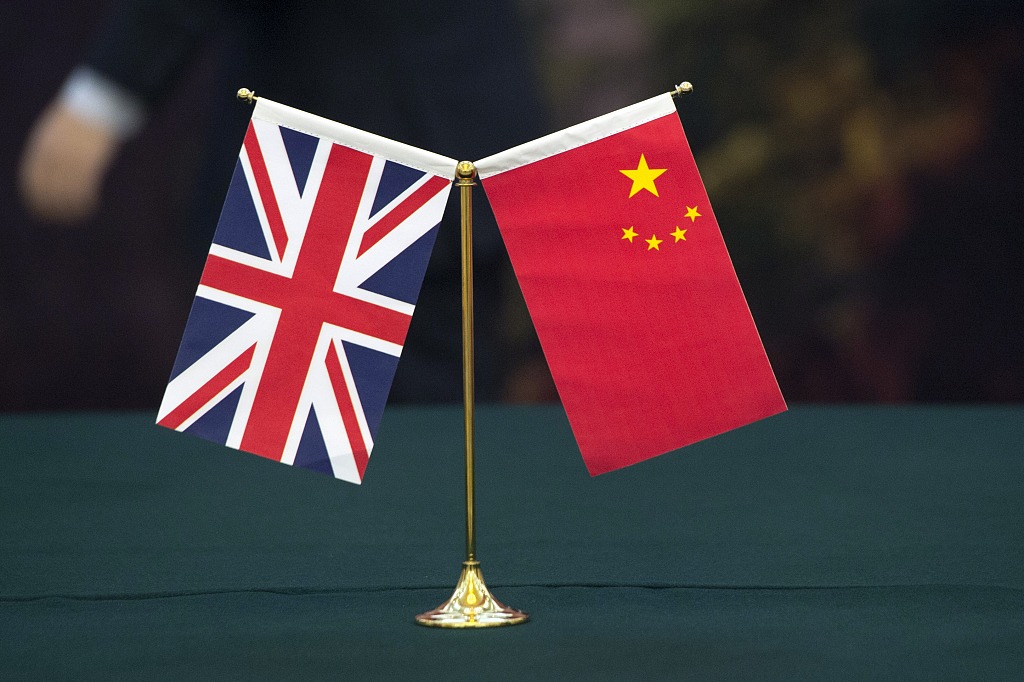
In an age when megaphone diplomacy too often substitutes for statecraft, United Kingdom Prime Minister Keir Starmer's decision to deepen ties with China marks a welcome return to enlightened high-level politics and diplomacy.
Starmer's call for a "more sophisticated relationship" is not a euphemism for naivete. It's an acknowledgment that complexity — not slogans — governs an interdependent world now buffeted by tariff threats, alliance instability and the dangerous pull of unilateralism.
At a moment of cascading global uncertainty, London's calibrated engagement with Beijing stands as an argument for multilateral sanity. As protectionist impulses resurface and longstanding partnerships are strained by erratic leadership elsewhere, London's reset signals that prudence, not provocation, remains a viable strategy in global affairs.
No relationship between sovereign states is perfect. Even in the happiest of marriages there are quarrels; even the closest of friends may disagree. The measure of maturity lies not in the absence of friction, but in the capacity to manage it — by building on shared interests, erecting guardrails for disputes, and expanding the space for win-win outcomes.
Britain's approach reflects this realism. It seeks cooperation over confrontation.
History provides a foundation deeper than contemporary disputes. Twice in the last century, during the crucibles of global war, Britain and China found themselves aligned as allies against common threats.
In World War I, a struggling China supported the Allied effort through the Chinese Labour Corps, an often overlooked contribution to a global struggle. In World War II, China bore enormous human and material costs resisting fascism, playing a significant role in the Allied victory. These episodes remind us that strategic cooperation between the two countries has repeatedly emerged when the international order itself was under grave threat.
After 1945, both nations became architects of the multilateral system, which sometimes frustrates and is often imperfect. As permanent members of the United Nations Security Council, Britain and China have a shared responsibility for global peace and security. That institutional legacy matters even more today.
On climate change, global health, financial stability and nuclear nonproliferation, neither country can succeed alone. The Paris Agreement on climate change, the World Health Organization and a rules-based trading system all depend on sustained engagement by major powers.
When Prime Minister Starmer and President Xi Jinping speak of cooperation on climate and global stability, they are not indulging in platitudes. They are identifying the narrow bridge over which the world must pass in an era of overlapping crises — from pandemics to climate shocks to terrorism, and from transnational crimes to economic fragmentation.
The modern record of pragmatic diplomatic engagement is equally instructive. During the 1980s, even profound disagreements — most notably over Hong Kong — could coexist with disciplined negotiation and long-term planning.
Economic and cultural ties further reinforce this logic. HSBC — its name derived from Hongkong and Shanghai Banking Corp — embodies more than a century of British-Chinese financial intermediation. British companies in pharmaceuticals, finance, education and advanced manufacturing have cultivated significant markets in China, while Chinese capital has contributed to British infrastructure and innovation.
Aviation and logistics tell a similar story: Cathay Pacific, born in Hong Kong and now a global carrier, exemplifies the hybrid competence that cooperation can produce.
Engagement does not erase disagreement. Starmer's insistence on "meaningful dialogue" where Britain and China differ reflects wise leadership and mutual respect.
Real diplomacy speaks candidly in private and acts predictably in public. It resists headline-chasing theatrics that may inflame domestic audiences but corrode international trust. The alternative is not moral clarity; it is strategic myopia.
As protectionist tariffs loom and alliances wobble under impulsive leadership elsewhere, Britain's diplomatic recalibration serves as a hedge against chaos. It signals to markets, partners and citizens alike that the UK will not outsource its foreign policy to tantrums. Multilateralism is not nostalgia; it is risk management.
The author is an economics and political analyst, a columnist of The Philippine Star and Abante, an educator, and moderator of the Pandesal Forum.
The views do not necessarily reflect those of China Daily.






Editor's Pick










