


Exploring China's ancient architectural soul
By MICHAEL RHYS CARD | China Daily | Updated: 2026-07-28 09:43


Throughout the history of the world, buildings have reflected the beliefs, ambitions and challenges of the societies that created them. Religion, government, geography, climate, technological development and social traditions have all shaped the way nations approach architecture, leaving behind a physical record of their history.
By studying historical architecture, it is possible to trace the origins of a society and understand the forces that helped to shape it into what it is today. In China, where thousands of years of continuous civilization have produced an extraordinary architectural legacy, ancient structures provide a window into the country's cultural evolution.
Among the most important places to explore this heritage is Shanxi province in northern China, widely regarded as one of the cradles of Chinese civilization. The province is home to 28,027 ancient architectural structures, accounting for roughly one-tenth of China's total, and three UNESCO World Heritage Sites.
Shanxi's remarkable preservation is closely linked to its geography and environment. Located on the eastern edge of the Loess Plateau, the province's relatively dry climate has helped protect wooden structures that would have been more vulnerable in wetter regions. Its mountainous terrain also provided natural protection, allowing many historical buildings to survive periods of conflict and rapid modernization, making Shanxi a leading destination for research and learning about China's ancient construction methods and cultural development.
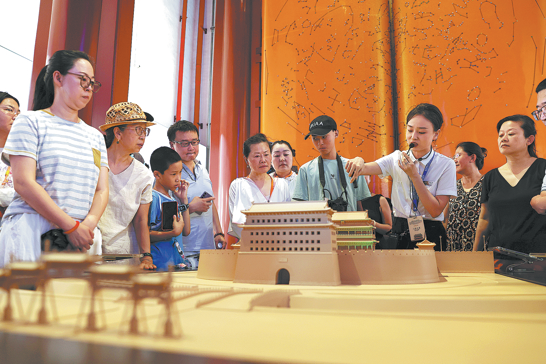
That heritage was recently highlighted during the event Discovering Shanxi's Ancient Chinese Architecture – A Visual Journey Through Cultural Heritage held from July 14 to 20. The program brought together journalists and influencers from around the world, offering an immersive opportunity to explore the province's architectural treasures and discover the stories behind them.

At Jinci Temple in Taiyuan, visitors witnessed centuries of architectural evolution. The complex combines religious traditions, imperial influence and artistic craftsmanship, with intricate wooden structures, decorative details and carefully designed landscapes reflecting changing periods of Chinese architecture.
In Xinzhou ancient town, history became a living experience. Walking through preserved streets, visitors could experience traditional crafts such as paper-cutting and learn traditional cooking techniques.
Other sites demonstrated China's long tradition of innovation. The Yingxian Wooden Pagoda — the world's oldest and tallest wooden pagoda — and Xuankong Temple, reveal the engineering creativity and adaptability of ancient Chinese builders.
Meanwhile, the Yungang Grottoes highlight China's historical connections with the wider world. The Buddhist carvings display artistic influences from Central and South Asia, reflecting the cultural exchanges that took place along ancient trade routes.
Images and written records can introduce people to historical sites, but experiencing them in person offers a deeper understanding. These spaces reveal how architecture shaped communities, and continues to influence modern China. In Shanxi, the past is not simply remembered, it remains a living, breathing experience.
michaelrhyscard@chinadaily.com.cn






Editor's Pick










