


Shanghai leads nation, Asia in 'first-store economy' race
International and domestic brands rush to debut products, flagship shops in city
By WANG YING in Shanghai | China Daily | Updated: 2026-07-30 07:21


Experiments by Muji
Japanese lifestyle brand Muji has long been an active player in Shanghai's first-store economy, using a variety of debut store formats to explore new retail concepts.
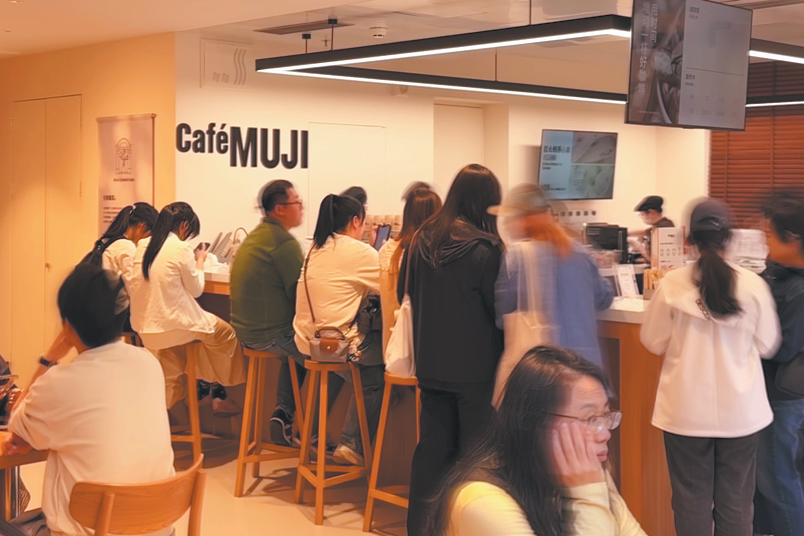
Its latest venture is an immersive scenario-based experience store that opened in late April at Zhang Yuan (also known as Zhangyuan Garden), the city's historic Shikumen (stone-framed gate) complex in Jing'an district.
"Unlike Muji's conventional stores, the Zhang Yuan experience store is designed to go beyond simply displaying and selling products. Instead, it places merchandise in settings that resemble everyday living spaces, allowing consumers to better understand the products through immersive environments, ingredient displays, interactive experiences and seasonal merchandising," said Wu Shu, board member and chief marketing officer of Muji China.
According to Wu, the store was created to explore a retail format that extends beyond the traditional store model and connects more naturally with urban neighborhoods and consumers' daily lives. "As expectations for brick-and-mortar retail continue to evolve, shoppers are increasingly looking for engaging experiences rather than simply a place to make purchases," Wu said.
By combining featured products, seasonal themes and interactive elements, Muji is looking to create a lifestyle destination that encourages repeat visits and offers something new with every season.
"Shanghai has also become one of Muji's key testing grounds for new retail formats, product launches and debut events, as we believe the city's consumers are highly receptive to new concepts, while its commercial spaces provide an ideal environment for retail innovation," Wu said.
In addition to the Zhang Yuan store, Muji has opened the world's first Muji diner, China's first Muji farm concept store and the country's first sustainability-themed concept store in Shanghai.
"Looking back at the last decade, it's fascinating to see how the 'entry point' for Asia has changed. It used to be that every brand went through Hong Kong to get to China. Today, international brands often go straight to Shanghai because the city's vibrancy and cosmopolitan appeal make it the ultimate proving ground," said Joey Chio, head of retail in the Asia-Pacific and China region for Savills, a United Kingdom-based property service provider.
As of the end of May 2026, Muji operated 1,463 stores worldwide. On the Chinese mainland, the brand added eight stores during the first three quarters of the current fiscal year, bringing its total to 430. The Chinese mainland business also posted growth in both revenue and profit.
Sales increased across all major product categories, led by household goods and food, contributing to the company's overall revenue and earnings growth. At the same time, Muji has continued to enhance the in-store shopping experience.
Shanghai has long been one of Muji's most important markets in China. The company established a wholly-owned subsidiary in the city in 2005 and opened its first store on the Chinese mainland on West Nanjing Road the same year.
Related Stories
- US urged to end research cooperation curbs
- Mainland airlines resume more cross-Strait routes as summer travel gathers pace: spokesperson
- Shanghai district develops dual-engine legal service model for intl business
- Taiwan DPP authorities criticized over obstruction of Shanghai-Taipei red panda exchange
- China's C919 high-altitude jet completes test flight

Editor's Pick










