


China, Egypt poised 'for new future focus'
Ex-PM Sharaf says balanced partnership can respond to economic, developmental and technological challenges
By SARA EL ASHRAFY in Cairo For China Daily | China Daily | Updated: 2026-09-02 07:51


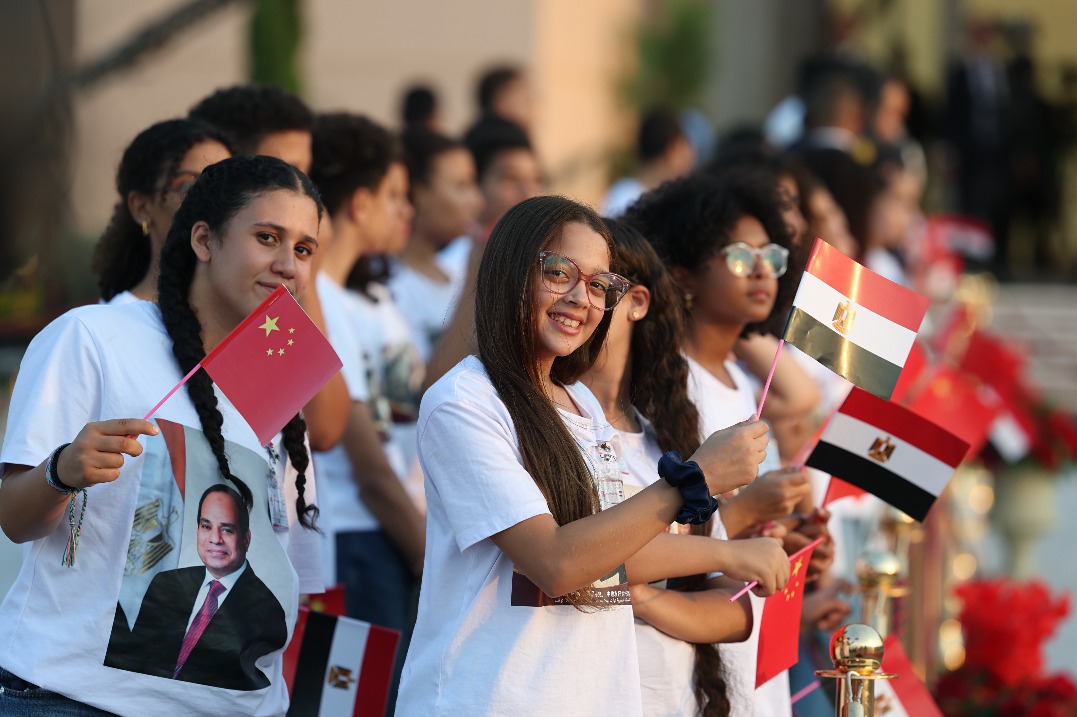
President Xi Jinping's visit to Egypt is a landmark moment in the development of the long-standing relationship between the two countries and an opportunity for the partnership to enter a new phase focused on shaping the future, said Essam Sharaf, former Egyptian prime minister.
"President Xi Jinping's visit to Egypt is far more than a visit between the two countries with well-established strategic ties," he said in an interview with China Daily.
"It reflects the accumulated civilizational, political and human depth of the relationship between Egypt and China, as well as a shared vision for the future."
Sharaf, a member of the Advisory Council of the Belt and Road Forum for International Cooperation, said bilateral relations have evolved significantly in recent decades. They have developed from traditional diplomatic ties into a comprehensive strategic partnership based on mutual trust, respect for national characteristics and a shared understanding that cooperation and development are essential to stability and peace.
President Xi's visit coincides with the 70th anniversary of the establishment of diplomatic relations between China and Egypt. Egypt was the first country in Africa to establish diplomatic ties with China.
"What gives this relationship its particular strength is that it brings together two of the world's oldest civilizations, both of which have managed to preserve their identities while actively engaging in shaping the future," Sharaf said.
The timing of Xi's visit is particularly significant as the international system undergoes profound transformations, creating a growing need for balanced partnerships capable of responding to economic, developmental and technological challenges.
"The true future of Egypt-China relations should not be measured solely by the volume of trade or the number of joint projects, important as these are," Sharaf said. "It should be measured by our demonstrated ability to build a partnership that generates knowledge, localizes technology, supports innovation, develops human capabilities and creates new opportunities for future generations."
This approach requires both countries to broaden the concept of bilateral cooperation. "In the coming phase, we need to move from the concept of economic cooperation to that of partnership in shaping the future," he said.
"Egypt possesses a strategic location, a large market, human resources and developed infrastructure, while China possesses tremendous industrial and technological expertise. Bringing these strengths together can create a new model of joint cooperation," Sharaf said.
He identified several areas with strong potential for deeper cooperation, including the digital economy, artificial intelligence, new and renewable energy, transportation and logistics, advanced manufacturing, scientific research, education, and human capacity building.
He also highlighted Egypt's potential role as a regional platform within the Belt and Road Initiative, given its geographical position at the intersection of Asia, Africa, Europe and the Arab world.
Sharaf said the significance of the partnership extends beyond bilateral economic interests, and closer bilateral cooperation could contribute to a broader approach to international relations.
"Egypt and China can present a new model for international relations based on mutual respect, mutual benefit and comprehensive development, away from the logic of domination and conflict," he said. "This is particularly important at a time when the world needs new visions that place people, development and peace at the forefront."
The strategic significance of China-Egypt relations extends to the wider Arab and African regions and to the Global South, he added.
Looking ahead, Sharaf said Xi's visit should be understood not only in terms of its immediate political and economic outcomes, but also as an opportunity to consolidate the foundations of a longer-term partnership.
"Egypt-China relations possess a substantial legacy of trust, history and achievement. More important, however, is what we can build in the years ahead," he said.
"We have an opportunity to establish a new phase of the partnership — one based not merely on the exchange of interests, but on shaping a shared future; a future in which knowledge, technology, sustainable development and human connectivity serve as the fundamental drivers of a relationship befitting the stature of Egypt and China, their civilizational standing and their role in shaping a more balanced, peaceful and prosperous world," Sharaf said.
The author is a freelancer in Egypt for China Daily.




Editor's Pick










