


Carving a future in a traditional art
By XING WEN in Huangnan Tibetan autonomous prefecture, Qinghai | China Daily | Updated: 2026-10-08 08:42


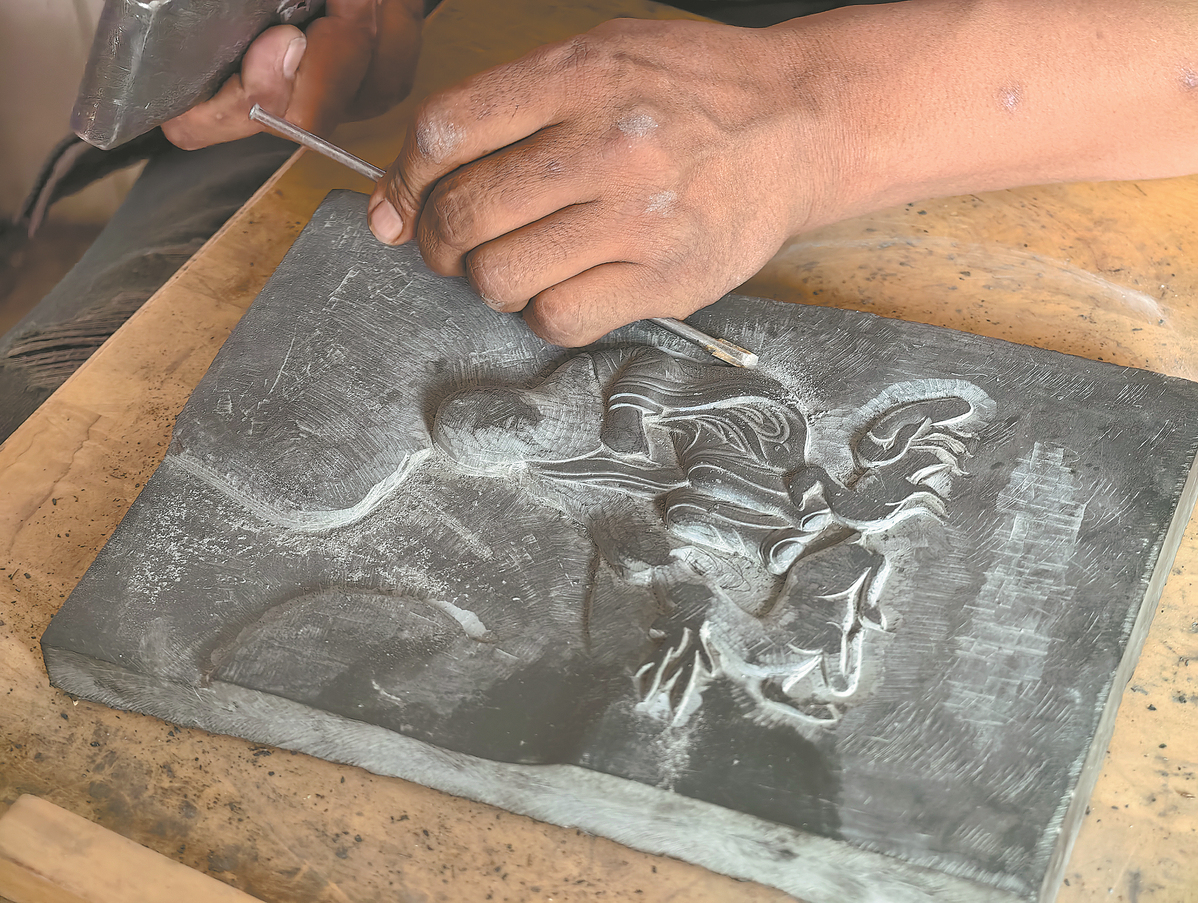
The style the villagers specialize in is known as Zekog Heri Monastery stone carving, which dates back to the Qing Dynasty (1644-1911), when the Zekog Heri Monastery and the stone scripture wall on the hillside behind it were built.
The wall is made of more than 100,000 slabs carved with scriptures and images of Buddha, stretching over 200 meters.
It offers invaluable material for Tibetan studies and Tibetan art, as it contains a wealth of content on poetry, art, astronomy, calendrical calculation, medicine, and law. The slabs are also engraved with Buddha figures of various sizes, decorative patterns and illustrations of Buddhist stories.
The craft has been passed down locally ever since, and in 2008 it was added to the national intangible cultural heritage list.
The craft covers two main categories: scripture carving and Buddha carving. It also includes techniques such as line engraving, relief and round carving.
It is known for its exquisite workmanship, delicate patterns, vivid figures, and clear lettering. The finished works are fine and smooth to the touch. The carved scriptures are elegant, neat and powerfully executed. The Buddha figures are full and flowing in form.
Tseten Gyal, who has been carving stone for more than 30 years, is now a representative inheritor of the craft.
"As a stone carver, you first have to love this work and do your best to do it well. Only then can you carry the craft forward and win more people's affection and recognition," he says.
In 2019, he set up a training base in the village, where he runs classes to train apprentices.
His son, Dorje Tseten, once found the idea of spending all day tapping away at stone tedious, but in recent years, he has begun learning the craft in his spare time.
"At first, I was impatient while carving. I kept thinking that once I finished a stone, I could do something else. But my father always found fault with what I produced," says Dorje Tseten.
"When I calmed down and carved with focus, the finished pieces looked much finer. Over time, I grew used to that state of undivided attention — and came to love it."
Related Stories








Editor's Pick










