'Qinggong' : From sacrificial rituals to Chinese aesthetics
chinadaily.com.cn | Updated: 2026-01-28 11:16


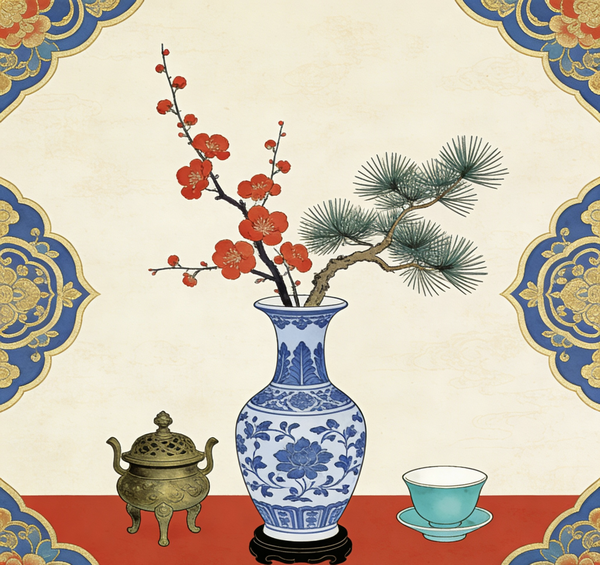
Qinggong, which translates to "clear offering," is a vital aspect of traditional Chinese culture, and has a prominent role to play at times like Spring Festival.
Beyond mere decoration, it is a ritual rich in reverence, symbolism and aesthetic pursuit, embodying the Chinese people's deep-seated belief in harmony with nature, respect for ancestors and aspirations for a better life.
Its evolution over millennia mirrors the transformation of Chinese society, from primitive worship to refined scholarly aesthetics and widespread folk customs.
The origins of qinggong can be traced back to primitive societies and the pre-Qin period (before 221 BC), where it began as a form of ritual sacrifice. Early tribes offered fresh prey, fruits and clean water to heaven, earth, mountain gods and deceased tribal leaders, seeking favorable weather, bountiful hunts and ancestral protection. During the pre-Qin era, these practices were formalized into the "li" (ritual) system, as documented in classics like The Rites of Zhou and The Book of Rites.
Related Stories