


Leaner, keener — OPCs altering way we work
Friendly policies, AI turning Shanghai into national hub for one-person companies
By SHI JING and WANG YING in Shanghai | China Daily | Updated: 2026-05-20 09:08


Physical changes
The rise of OPC communities has echoes of the global co-working boom that emerged around 2015, which saw individuals sharing work spaces, ideas and equipment.
Both tend to serve smaller enterprises. Flexibility is the major feature of co-working, while OPC communities emphasize the coordination and integration of resources and industrial ecosystems, said Zhang Xiaoduan, deputy head of the Cushman & Wakefield Research Institute.
Zhang Fan, deputy head of the Shenzhen-based Mingyuan Real Estate Research Institute, said the demand for large traditional office spaces has fallen since last year, and that gap has been filled by OPC communities. Small workstations and "micro offices" have become a basic market need.
The business model of traditional commercial real estate will be changed fundamentally as OPCs proliferate. Office buildings and industrial parks will have to change their "business-attraction" model into a "business-cultivation" model, Zhang said.
"While they used to be 'fruit pickers', they need to plant and tend young trees in the future," he said.
Also facing fundamental change is the future of the workplace. A prelude was sounded by the rise of contracting businesses more than a decade ago, said Nicholas Kirk, CEO of the recruitment company PageGroup.
"This (the rise of OPCs) is not the first big tech shift that has affected businesses … but is this the future for every single organization? I do think that humans like being with other humans, and the best ideas are often generated in that (environment)," he added.
Ni Ying, CEO of the Adecco Group China, said: "Technology advancement has nurtured higher tolerance for employment forms and business models. This has been testified by history, as we have changed from working seven days nonstop to a five-day work routine."
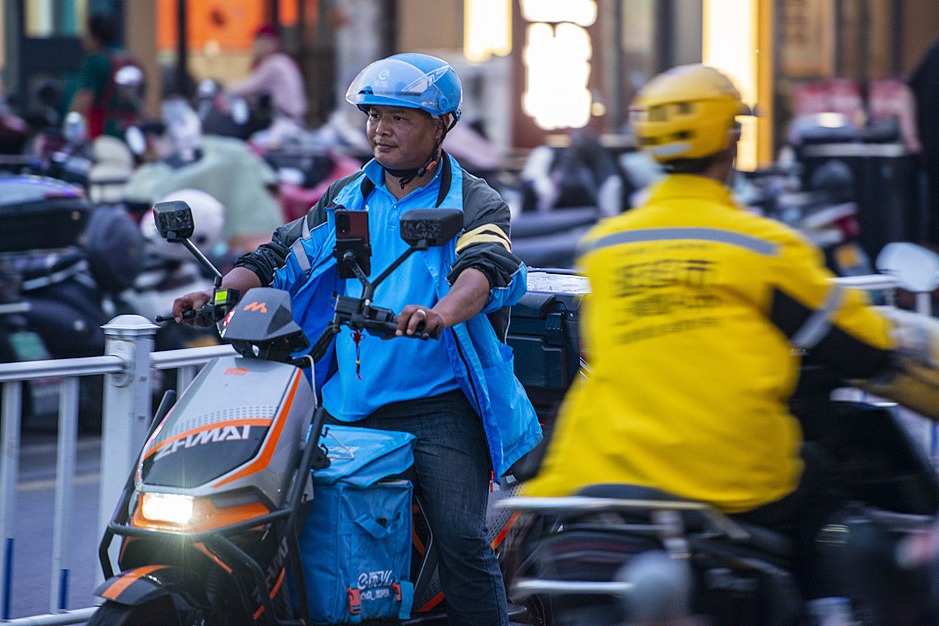
China leads the world in the number of freelancers and self-employed people, with the ratio at least 15 percent of the entire working population, Ni said. The rise of the platform economy, for example, ride-hailing and food delivery services, has ushered in the new era.
China's legislative approach has been forward-looking. In October 2005, the Company Law was revised to allow the formation of a "one-person limited liability company" for the first time.
"But it does not mean that OPCs will be the mainstream, but rather, hiring relations will be more loose in the future. We can anticipate a mixture of large corporations and OPCs," said Ni.
Contact the writers at shijing@chinadaily.com.cn






Editor's Pick










