


A win-win map for relations with US
By Erik Solheim | China Daily Global | Updated: 2026-05-22 09:41


Some of the most powerful business leaders of the United States came to Beijing last week. For years, many in Washington have talked about decoupling, about pulling the two economies apart. These corporate leaders gave their answer to that idea, and their answer was to come to Beijing. They came because they can read a balance sheet. And the balance sheet tells them that the future runs through China, not around it.
That is part of the real story of the head-of-state summit between China and the US. The gap exists between what Washington often says and what American business does. And that gap tells us something important.
All US attempts to contain China's development have failed to reach their objectives. Tariffs did not weaken Chinese industry. Export controls did not slow China down. The result has been the opposite. Denied the best US chips, Chinese engineers learned to do more with less, and the gap between the best US and Chinese systems closed from years to months. This is not a story of China winning and the US losing. The containment strategy did not work out because it was built on a false picture of what these two countries are to each other.
This false picture has a name. It is the zero-sum idea. It is the belief that whatever China gains, the US loses, and whatever the US gains, China loses. It often runs through Western newspapers and Western foreign policy unchallenged. It should be challenged, because it is wrong. In the early Cold War, it fit the world well enough. The US and the Soviet Union shared almost no real trade and no shared prosperity. In that world, one side's gain often was the other's loss. But that world is gone. The US and China are among each other's largest trading partners. Their factories, their universities and their capital are bound together at every level. To bring the zero-sum map into this relationship is to navigate a new century with an outdated zero-sum mindset.
Actually, China and the US have more common interests than differences.
The cost of the zero-sum habit is real. When every gain for the other side is marked as your defeat, cooperation starts to look like surrender. A sensible compromise looks like a betrayal. Problems that two serious governments could solve together are left to rot, because to solve them would be to let the other side win.
But almost none of the great problems of our time are zero-sum. Instead, consider: A stable climate, a generation in Africa or South Asia lifted out of poverty and into school and decent health, and a bigger global economy to share. None of these has a winner and a loser. The whole world rises together or it does not rise at all.
I have worked across Asia for decades, and I can tell you plainly that China, India and much of the continent do not reach instinctively for the zero-sum lens. It is a Western habit. Habits can be unlearned.
Iran shows what unlearning it would make possible. Set the reflex aside and look only at the interests on the table. Everyone wants the Strait of Hormuz kept open. No one gains from a wider war.
If the zero-sum map is the wrong one, the right one can be drawn. This is some substance I would read into President Xi Jinping's call for a "constructive strategic stability" relationship. Stability of that order rests on institutions. It is the patient construction of the channels through which a misunderstanding can be disarmed before it ever becomes a war.
So the real question in Beijing was never who won the better deal. It was whether two great powers can set down the old map. More than half a century ago, former US president Richard Nixon and former US secretary of state Henry Kissinger, Chairman Mao Zedong and Premier Zhou Enlai began the diplomacy that ended a generation of hostility. The week changed the world. I would ask people to remember how it was actually done. By refusing to pretend the differences away, the two sides made the common ground they did find believable. That is what optimism without naivety looks like.
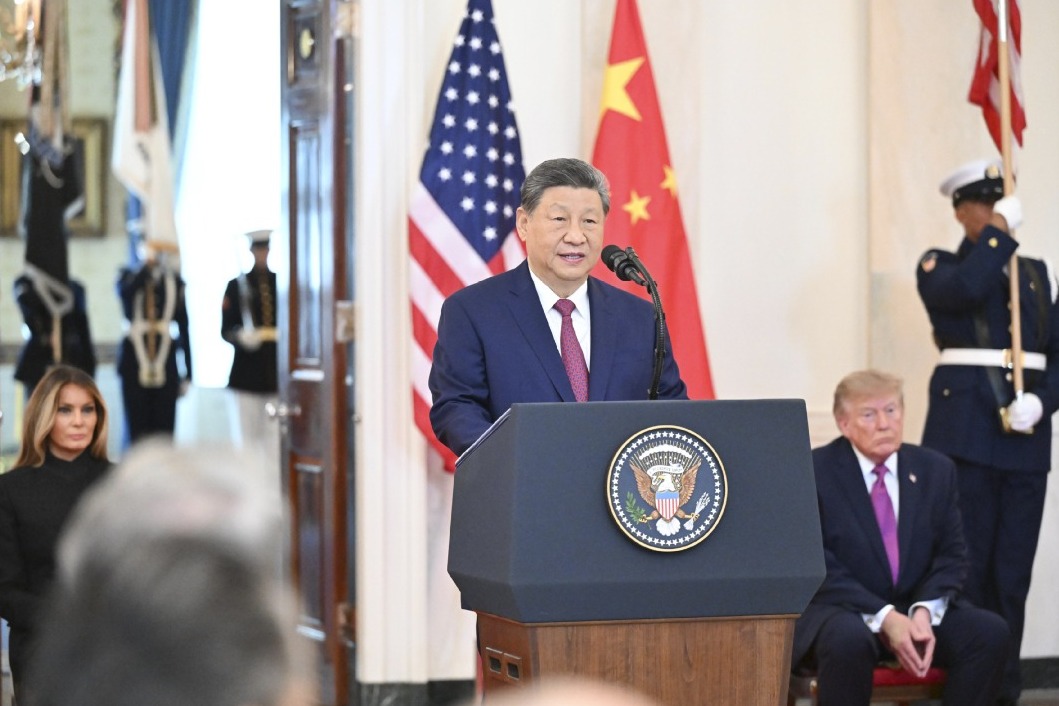
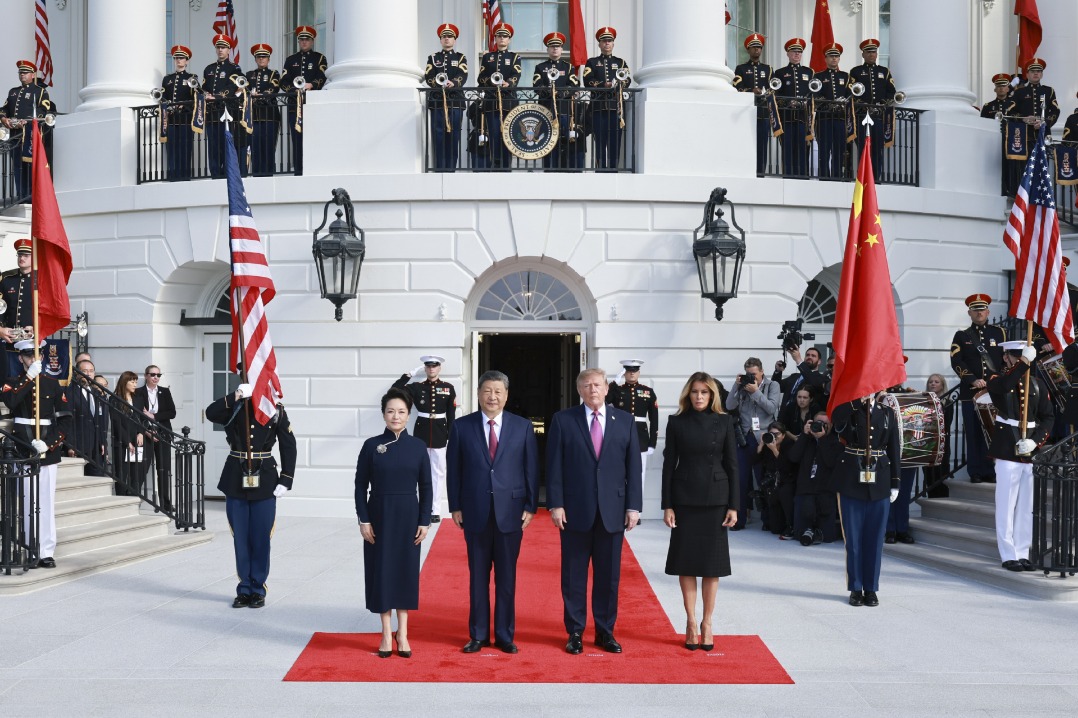
That is the spirit this moment asks for. The summit in Beijing can become a new start, followed by a meeting in Washington later this year.
Standing in Beijing in 1972, Nixon raised his glass and borrowed a line from one of Chairman Mao's poems. So many deeds cry out to be done, he said, and always urgently. Ten thousand years are too long. Seize the day, seize the hour.
More than 50 years later, with the climate, with artificial intelligence, with the security of the world's energy, none of which either nation can solve alone, the hour presses again. China's success and the US' success need not be bought at each other's expense. Each can be the making of the other. That is a truer description of the world than the zero-sum story the West has told itself for far too long.
The author is the chair of the Europe-Asia Center and the former under-secretary-general of the United Nations.
The views do not necessarily reflect those of China Daily.






Editor's Pick










