


French archives on Japan's invasion given to Hunan museum
By LI MUYUN and ZHU YOUFANG in Changsha | chinadaily.com.cn | Updated: 2026-07-09 22:02


A collection of declassified French diplomatic records documenting Japan's invasion of China was formally handed over to a museum in Hunan province on Thursday.
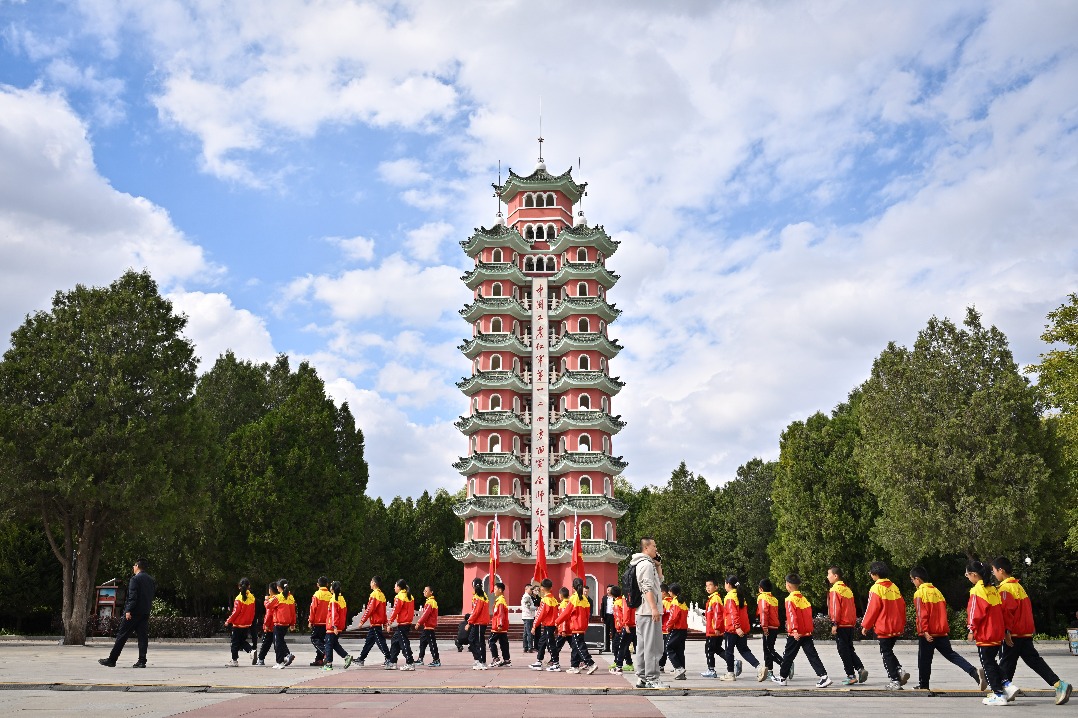
The Memorial Hall of the Victory of the Chinese People in the War of Resistance Against Japanese Aggression and the Acceptance of Japan's Surrender in Zhijiang Dong autonomous county, Hunan province, on Thursday.
The museum — the Memorial Hall of the Victory of the Chinese People in the War of Resistance Against Japanese Aggression and the Acceptance of Japan's Surrender — said the documents, which had been declassified by the French government, were donated by two French citizens, Bastien Rata and Marcus Detrez, along with Chinese citizen Zhong Haosong. They gathered the materials from the diplomatic archives center of the French Ministry of Foreign Affairs in Nantes.

The records contain wartime documents, once secret, that provide a third-party perspective on Japan's military aggression and the Chinese people's resistance, researchers at the memorial hall said.
Among the documents are records of the relocation of Peking, Tsinghua and Nankai universities to Changsha following the July 7th Incident in 1937; accounts of the local anti-aircraft troops shooting down four Japanese warplanes in Hengyang, Hunan, in 1938; and evidence of Japan's large-scale bombing campaigns in Chengdu and Chongqing.
The three donors have been actively involved in international peace advocacy and aim to present a comprehensive view of China's wartime history to a global audience. They have been combing through French archives and organizing documents to bring wartime evidence back to China. Recognizing Zhijiang's profound historical significance during the war, they chose the city as the final destination for the records.
In 1945, after Japan's unconditional surrender, Japanese troops signed the first memorandum of surrender in Zhijiang. This was followed by similar events in other cities across China. Fifty years later, a memorial hall commemorating the surrender was established in Zhijiang and opened to the public.

The newly donated materials fill a gap in the memorial hall's overseas collection and strengthen the chain of evidence documenting Japan's invasion and the resistance of the Chinese people, according to Wu Jianhong, director of the memorial hall.
"We will conduct in-depth research on the archives and preserve them digitally," Wu said, adding that a special exhibition space will be created to present the materials.
"These documents will also play an important role in our youth education programs," Wu added. "We want young people to learn about history beyond their textbooks and understand the value of peace."





Editor's Pick










